

When Catriona Vo stepped into her first classroom, she wasn’t just beginning a career – she was answering a calling.
Guided by mentors who saw potential in her long before she did, Vo discovered the profound impact great teaching can have on young lives. Today, as Director of Teaching and Learning (Secondary) at Groves Christian College, she leads with that same belief — that relationships, reflection and collaboration lie at the heart of powerful learning.
When she’s not in the classroom, she hosts a podcast where she discusses “all things teaching and research and explores what’s going on in the field and what this means for sustaining teachers”. The podcast has included interviews with celebrated educators like Eddie Woo, Dr Julie Arnold and Professor Danny Liu.
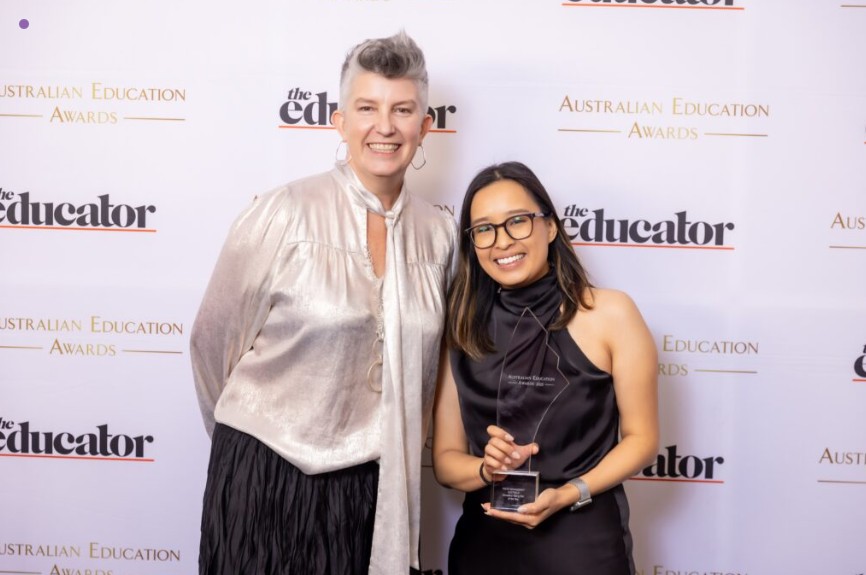
On August 8, at the 2025 Australian Education Awards, this passion and dedication to the profession earned Vo the FACTS Management Australia Education Rising Star of the Year Award – an accolade that recognises the most outstanding teacher in a school in Australia who has been an educator for five years or less.
Below, The Educator speaks to Vo about the experiences that shaped her journey into education, the values that define her leadership, how a culture of shared learning has strengthened her practice, and the message she hopes to pass on to the next generation of teachers.
TE: What inspired you to become a teacher?
I became a teacher because of the teachers who invested in me. They saw potential in me before I could see it in myself, and the depths of their expertise, guidance and expectations showed me that teaching has a transformative impact on people’s lives. Every day brings a chance to see young people discover something new about themselves and the world around them, and that’s what keeps me deeply passionate about this work.
TE: How would you describe the philosophy that underpins how you approach your work as Director of Teaching and Learning?
For me, teaching is relational work anchored in relationships. I see my role as empowering teachers to grow in confidence and clarity about their practice, while also creating the conditions where we can learn from one another and engage in what Jim Cummins (2001) calls “collaborative relations of power”.
When spaces are created for teachers to come together and engage in rich professional conversations about learning, teaching practice and impact, that’s when we start to see classrooms transformed — and with them, the lives of students.
TE: You mentioned the supportive culture of professional learning at Groves Christian College. Can you elaborate, and share an example of how you’ve thrived as a teacher as a result?
At Groves Christian College, professional learning is something we do with each other, not to each other. There’s a dialogic culture among teachers — sharing what works, being honest about improvement, and constantly refining our practice and expertise.
We’ve built structures like coaching cycles and collaborative teams that make it easy to learn from one another and share local classroom practice. I’ve grown a lot through that process, surrounded by colleagues at every stage of their careers who are passionate, curious, and deeply committed to seeing their students flourish.
I’ve particularly thrived through these professional conversations in the field of language and literacy, which have inspired me to extend my learnings into research. In 2024, I had the opportunity to present my work in the United States at the National Council of Teachers of English Conference (NCTE) — a career highlight and experience made possible and sustained by the College’s ongoing commitment to professional growth and teacher learning.
TE: What would you say to inspire young adults who are considering a teaching degree?
Teaching is challenging, but it’s deeply transformative. It’s work that shapes lives — including your own. You never stop learning, never stop growing, and never stop being amazed by what young people are capable of.