

Recent reports show that Australia’s teacher workforce is running on fumes, with teachers now clocking an average 46.4 hours a week – a full five hours longer than the OECD average.
And as more educators consider leaving the profession altogether, the consequences for students – and for the future of schooling – are becoming increasingly stark.
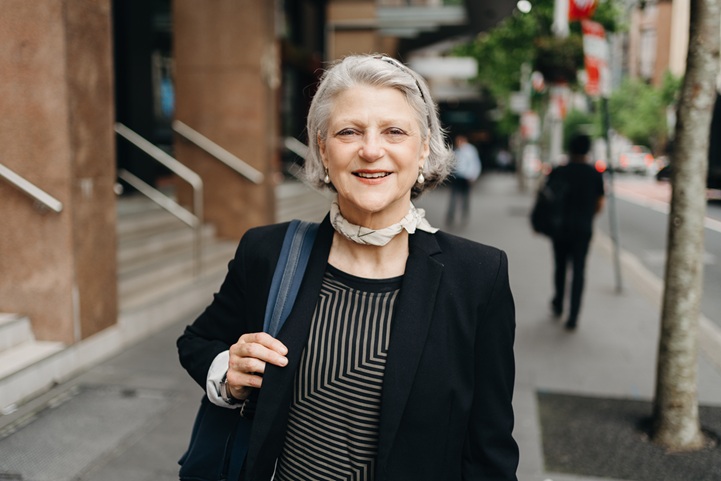
In her upcoming book, ‘The Mental Health of Our Teachers: Re-imagining Another Future’ Dr Debra Phillips, an education lecturer at Australian Catholic University (ACU), draws on a decade of research into depression, suicidality and teacher wellbeing to explain why supporting educators requires more than quick fixes.
Preparing teachers for the realities of the classroom
“My experience of teacher burnout and depression allows me an insight into what others endure, the reasons they attempt to endure it, and what exacerbates the depression into burnout,” Dr Phillips told The Educator.
“My research after burnout informed me that teachers across the globe are experiencing burnout and leaving the profession for similar reasons to Australian teachers.”
Dr Phillips said the ACU units she’s designed for undergrad and postgrad teachers are aimed at preparing them for the real-life situations they’ll meet in classrooms.
“The students are presented with the most recent evidence-based knowledge and strategies that strengthen a teacher’s mental health,” she said. “For example, there is more and more emerging evidence about bullying tactics from parents, students and their colleagues that erode teacher confidence and professional efficacy.”
A mental health crisis starting early
Dr Phillips said the stories shared by her students show just how unprepared many feel for the workplace realities they’re suddenly confronted with.
“One undergraduate student, after experiencing bullying from a colleague during placement, said that they did not expect an adult in the workplace to use similar bullying techniques that students use in the schoolyard.”
Dr Phillips’ new book pulls together stories shared with her during her years as a teacher and later as a researcher. By weaving in these real-life experiences – her own and those of other educators – she shows that many teachers are still dealing with impossible deadlines, heavy admin loads and, at times, outright abuse from colleagues, parents and students.
The book also shines a spotlight on women teachers, who make up more than 70% of the global workforce and nearly 80% here in Australia.
“I draw attention to the inter-relationship of gender, misogyny, domestic violence and workplace bullying,” Dr Phillips said.
Another issue that is addressed is that of the increase of self-harm and mental ill-health matters amongst teacher undergraduates and early career teachers, she noted.
“The chapter about undergraduates also explores some of the comprehensive strategies the universities are implementing.”
We can’t keep blaming teachers for a broken system
Looking back on the 2025 school year, Dr Phillips’ book urges a rethink how teachers’ mental health is viewed beyond “fixing” the individual.
“There is no easy or quick ‘fix’. Although increasing teacher salaries to be commensurate with other graduate degree professions – and this is explored within the book – is required,” she said. “There must be other institutional changes to retain our teachers in the profession.”
As we move into a world of rapid technological change and of use of AI applications, Dr Phillips suggested it may be timely for schooling authorities to consider the purpose of schools and how the school campus and the school day can be re-configured to better serve communities.
“A partnership with home-schooling is an option,” she said. “Another option would be to consider how a portfolio of student work rather than external exams may be a more beneficial appraisal of student capacity.”
Small daily habits that make a big difference
Dr Phillips said a growing body of research shows that most people who become educators and classroom teachers do so “because of a firm commitment to social justice and the common good.”
“Many researched studies and the comments from my research participants overwhelmingly mention that this is the reason they enter the profession, remain in the profession, endure difficult situations, and, for some, the reason they return to the profession,” Dr Philipps said.
Dr Phillips said she attended two recent conferences that shared the following best practices which offer the most enduring benefits:
Apple Therapy: A diet rich in whole foods. This is difficult when it has been a horrid morning. The desire is to choose Tim Tams and muffins. But the energy and nutrient value of fresh fruit is more sustaining.
Walking Therapy: A walk in the sunshine each day. This can be difficult when you have care responsibilities before and after the school day. Schedule a short walk of 10 minutes during recess or lunchtime. If possible, take a 20–30-minute walk in a garden or bushland after school.
Talk Therapy: Talk to your colleagues, friends, family and neighbours. Speak to another person. Collegial relationships are the most reliable protective, preventative and restorative practices for teachers’ mental health.”