

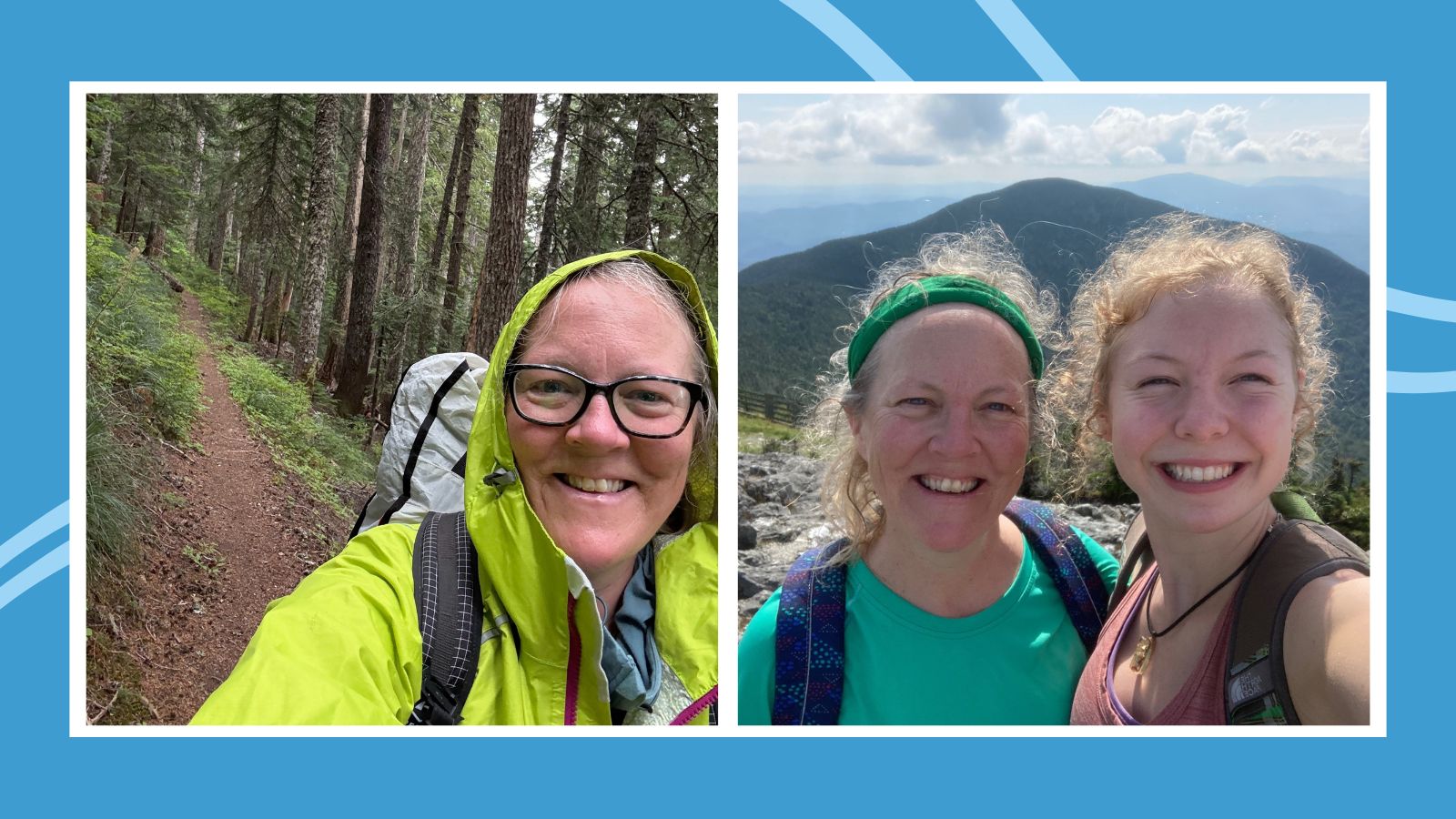
Anyone who’s ever spent an afternoon in detention knows the drill: a silent classroom, a packet of work, and a teacher who would probably rather be anywhere else. At Morse High School in Bath, Maine, school counselor and Outing Club advisor Leslie Trundy wondered if there was a better way.
What if, instead of sitting at a desk for three hours for detention, students could spend two hours walking through the woods with a trusted adult—still serving a consequence but also getting fresh air, reflection time, and connection?
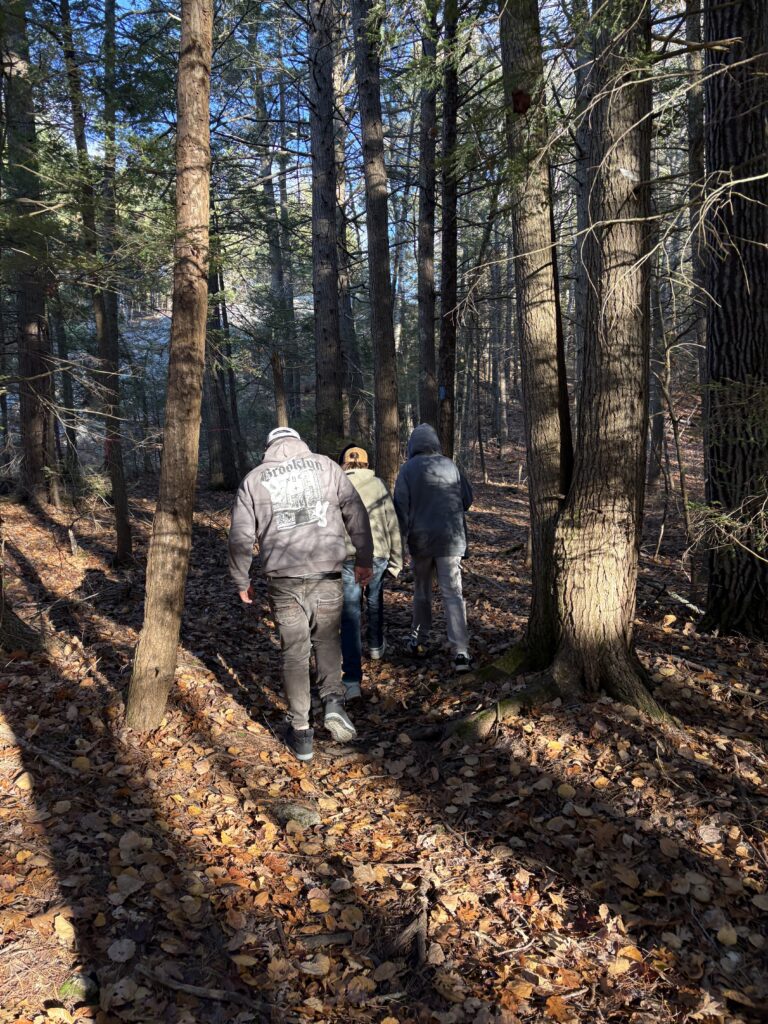
That question led to Morse High School’s detention hikes—a weekly option where many students now choose a 3.5-mile hike on a nearby trail over traditional detention. The idea has since been featured on Maine Public, NPR, and other outlets, sparking conversations among educators about discipline, mental health, and the power of nature.
We spoke with school counselor Leslie Trundy about how the program started, what it looks like in practice, and what advice she has for teachers who might want to try something similar at their own schools. Take a look at our Q&A with her. Plus get advice for ways to start your own similar program.

Q: What inspired you to start offering hikes as an alternative to traditional detention?
Trundy: In the fall of 2024, I was in my fourth year as our school’s Outing Club advisor, and I attended a leadership conference for advisors at Camp Mechuwana in Winthrop, Maine. My goal going in was pretty simple: I wanted to broaden my reach and invite students who might never see themselves as “outdoorsy” or join a club like mine.
The conference happened to fall on what would have been my mom’s 88th birthday. She was a special education teacher who loved the natural world. When I was a kid, she’d flip over logs so we could see what lived underneath and taught me how to pick up a garter snake. That curiosity stayed with me.
In my 20s, I thru-hiked the Appalachian Trail from Georgia to Maine. It took six and a half months, and it was there that I decided to become a school counselor. Walking has always been where I find headspace. I’ve seen it work for my own kids and for the students I take on outings. So I started wondering: Could we take the concept of detention and move it outdoors? Could a walk in the woods be a consequence that also heals? I knew it was worth a try.
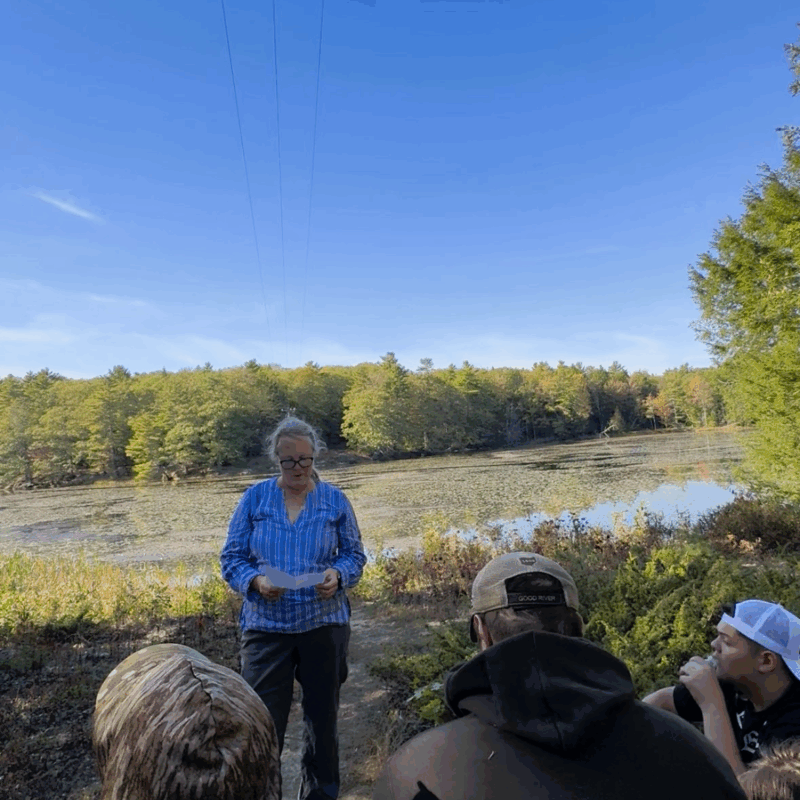
Q: How did you pitch the idea to your school administration, and what was their reaction?
Trundy: I brought it to our admin team during a regular meeting. I explained what I wanted to try and why—how I hoped time in nature might help students reflect, connect, and still “pay back” their time to the school.
Their response was immediate: “Do you want to start this Thursday?”
By October 2024, the first detention hike was scheduled. At Morse, students who receive a one-, two-, or three-hour detention can choose a two-hour hike instead. Most who opt in are serving a three-hour consequence—often for having their phone outside of its YONDR pouch, failing to serve a previous detention, or being disrespectful to staff, property, or peers.
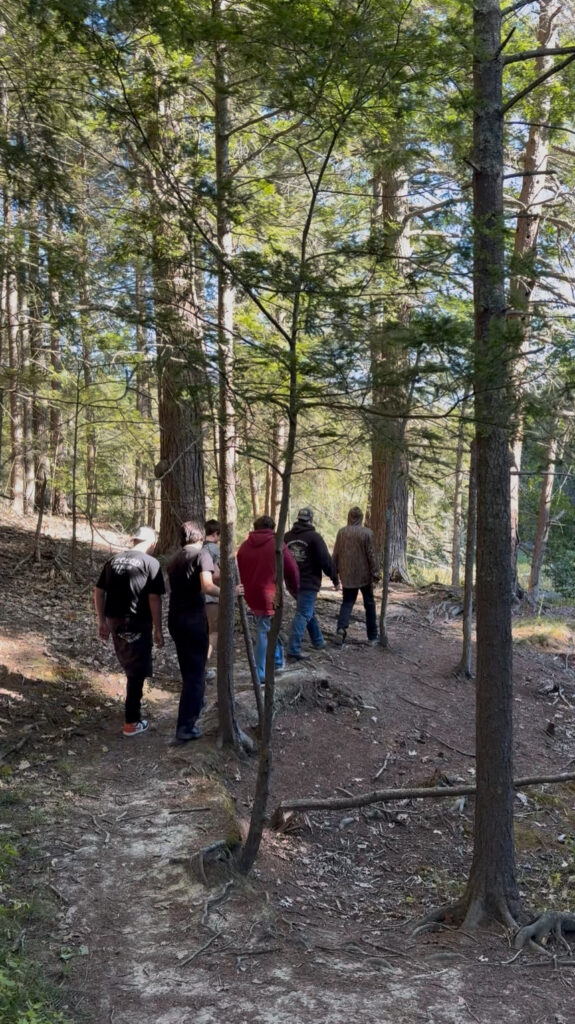
Q: What did those first hikes look like, and how has the routine evolved?
Trundy: The first few hikes were wonderful—and a little shorter than I anticipated. We had three to five students, and I had to quickly learn how to gauge the group’s pace and use different trail loops to lengthen or shorten the route.
We leave the high school on foot, walk down to the ball fields, and enter the Whiskeag Trail. The route crosses a road, passes through a cemetery, and then reenters the woods before looping back to campus. I always carry a first aid kit, snacks, and water, and I explain the plan, the rules, and where we’re headed.
As we walk, students often start talking—about why they’re there, what’s going on in their lives, or just regular teenager stuff. Early on, one student came on a second hike even though he didn’t have detention. That’s when I knew something was happening here.
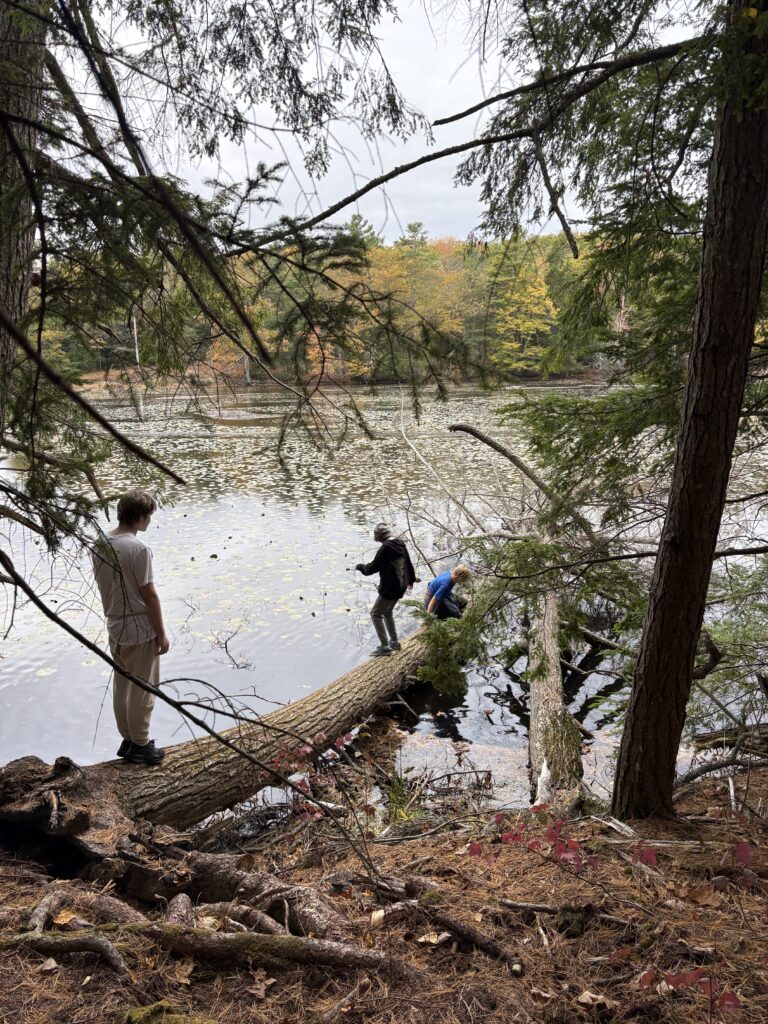
Q: How do students respond before, during, and after the hikes?
Trundy: Before the hike, it really depends on their comfort level with me and with being outdoors. Sometimes an administrator will introduce us first, and I walk them through what to wear and bring so it feels less intimidating.
During the hike, I’m constantly scanning—Are they warm enough? Who’s hanging back? Who’s ready to lead? I vary the pace, separate the group briefly for quiet reflection when it makes sense, and check in with kids who seem withdrawn or upset. I always let them know I have first aid, snacks, and water, and that they’re allowed to walk in silence if talking feels like too much.
Afterward, we all know each other differently. We greet each other by name in the hallway. There’s this shared memory—like seeing a bald eagle, slipping on the first snow, or how wet our shoes were that day. I always thank them for walking with me. Kids often thank me back.
Want to start something similar?
Trundy is quick to point out that what works in a wooded corner of Maine might look different in a desert town, a dense city, or a district with different policies. But she believes the core idea—shifting some discipline from punitive to restorative and moving it outdoors when possible—is adaptable.
Here are some of her practical tips for educators:
1. Start with your “who, what, where, when, how.”
- Who: Decide which students are eligible. At Morse High School, any student assigned a one-, two-, or three-hour detention can choose the hike instead, with parent permission.
- What: Clarify the structure. Trundy’s hikes are about two hours long, roughly equivalent to a three-hour detention. Students walk in groups, with clear norms around safety, behavior, and respect for the environment.
- Where: Use what you have. Their primary route is the Whiskeag Trail, but in icy conditions, she sometimes leads a more urban walk that still ends in the woods. If you don’t have a forest nearby, consider a safe loop around campus, a park, or neighborhood streets.
- When: Consistency helps. At Morse, detention hikes happen after school on Thursdays from about 2:05 to 4:00 p.m.
- How: Partner closely with admin. At Trundy’s school, administrators inform families of the option, track who’s attending, and ensure the hike is listed as an approved way to serve detention.
2. Get your safety and logistics in order.
- Permissions: Find out what your district requires for off-campus activities or “walking field trips.” Trundy uses a digital permission slip that covers taking students off campus.
- Training: In Maine, Trundy holds an Educational Trip Leader certification and Wilderness First Aid, in addition to her training as a school counselor. Your context may not require as much, but make sure at least one adult is trained in first aid and familiar with the route.
- Gear: She keeps a first aid kit, snacks, water, ponchos, and spare hats and gloves for kids who come unprepared. Students are encouraged to dress in layers and wear closed-toe shoes, but she also gently offers extra gear if they’re cold on the trail.
- Group size: Talk with the admin about a safe student-to-adult ratio. If detention numbers are high, you may need a second adult or an assistant, or you can cap each hike.
3. Be clear that it’s still a consequence—just a different kind.
Some critics worry that hiking sounds like a reward. Trundy understands the concern but says students rarely experience it that way on a cold, rainy day. Sometimes the hike does feel like a punishment—they’re expending effort, they’re tired, but they still feel seen and supported. She frames the hike as:
- A way to repair (through conversation, reflection, and showing up)
- A way to repay time to the school
- A chance to reset through movement and nature
4. Build in small rituals: snacks, stories, and quiet.
You don’t have to be a poetry expert to borrow Trundy’s idea of reading a short nature-based poem partway through the hike. Keeping it simple matters more than making it perfect. She also recommends:
- A predictable midway break for water and snacks
- A brief, age-appropriate reflection (a poem, quote, or question)
- Occasional short stretches of silent walking
“Because of me, I hope more kids spend more time outside.”
Looking ahead, Trundy plans to continue the program and keep gathering data as the students who’ve hiked with her move through high school.
She’s already seen leadership grow: One sophomore who attended three detention hikes later joined the Outing Club, became a go-to leader on trips, recruited friends, cooked meals, and even made her counselor’s bed at a lake house retreat. Another student, a junior firefighter and avid mountain biker, ended up leading the group on a new local trail he knew well.
“My hope is that because of this program, more students spend more time outdoors—not just in high school, but for the rest of their lives,” Trundy says. “If that grows out of a detention, I’ll take it.”
If you’re an educator wondering whether your students would ever say yes to something like this, Trundy has one last piece of advice:
“Don’t underestimate them. Give them the option—and then see who shows up at the trailhead.”