
By Kristina Piskur
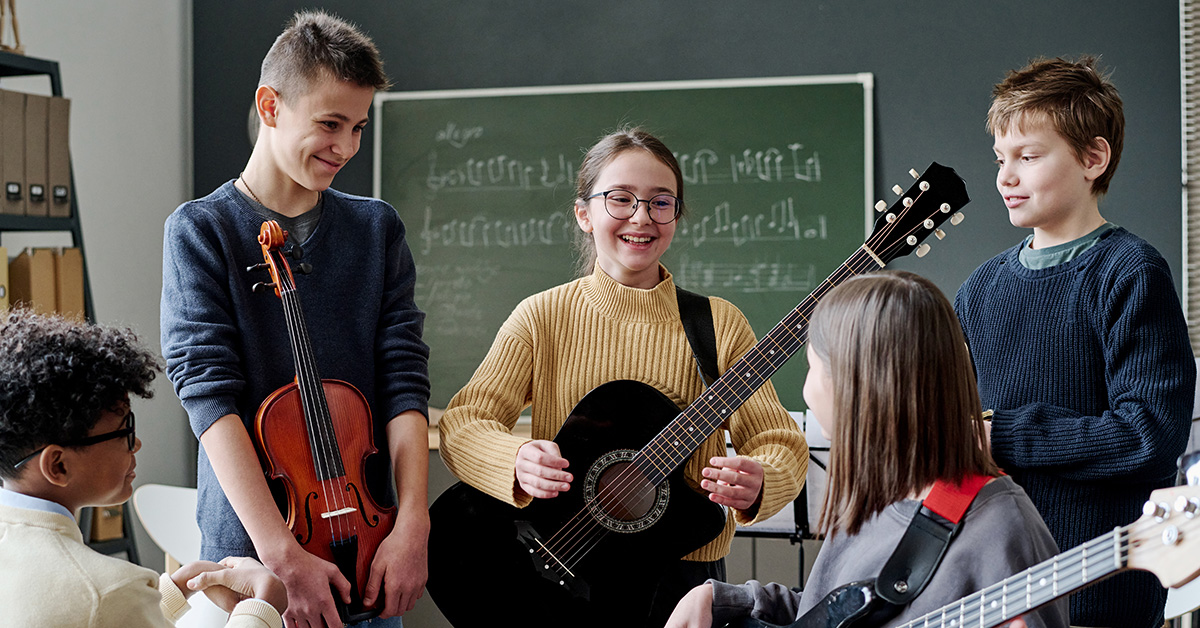
MELODY (Music Education for Learning Opportunities and Development of Youngsters) is an Erasmus+ project co-funded by the European Union with a mission that is both innovative and timely: to use the universal language of music as a powerful educational tool to enhance children’s participation in democratic life, promote knowledge of EU values, and foster inclusion and civic engagement.
In an era where children and young people are constantly bombarded with digital stimuli—notifications, short videos, online games, rapid streams of information—their ability to concentrate and truly connect with those around them is increasingly affected. Music offers a necessary counterpoint to this accelerated pace, becoming a space for calm, attention, and presence.
Listening to music together invites young people to slow down, tune in to each other, and share a common experience, uninterrupted by screens. In such moments, they learn to truly listen, respect differences, feel shared emotions, and cooperate naturally.
Studies show that collective musical activities increase empathy, reduce group tensions, and strengthen the sense of belonging. In a society where digital isolation is becoming the norm, music—especially when experienced together—can be a universal language capable of rebuilding bridges between young people, stimulating healthy, authentic, and lasting social relationships.
Targeted at students aged 6–14, MELODY is building a cross-curricular methodology that integrates music with citizenship education. The approach prioritises non-formal, engaging learning experiences that encourage students’ creativity, critical thinking, and ability to express their opinions—skills fundamental to a thriving democracy.
Whether through singing, rhythm exercises, experimenting with sound, or exploring genres such as rap, classical, or pop, children learn not only musical skills but also the democratic values of inclusion, non-discrimination, solidarity, participation, and collaboration.
One of the early successes of the project comes from international collaboration between partner organizations from Germany, Italy, and Romania. Representatives—including educators, musicians, and youth workers—formed an international team and took part in a skills assessment before and after their collaboration. The progress they reported is substantial:
- 70% of team members improved their ability to use music as a teaching tool;
- 75% of team members recognised music’s value for strengthening democratic engagement;
- 85% reported greater integration of inclusion and non-discrimination in their professional practices.
These results show the project’s potential not only to transform classroom practice but also to strengthen Europe’s democratic culture through early education.
A Collective Effort
Another strength of MELODY lies in its diverse ecosystem of partner organizations, each bringing deep experience in education, youth work, and cultural participation. Analysed and described in detail in the project’s Handbook of Best Practices, the following programs inspired the methodology used in the MELODY project:
- Educational Music Tools for Human Rights (Germany), led by Roter Baum Berlin, provides educators with creative tools to teach human rights through music in schools and youth centres.
- Opera Domani (Italy) engages more than 100,000 children annually in participatory opera productions, turning performance into a tool for civic expression.
- Tinemobil – The Mobile Youth Centre (Romania) brings educational and civic activities to remote villages, ensuring equal access to culture and participation opportunities.
Together, these best practices form part of a dynamic toolkit now available to educators across Europe—a resource designed to inspire, engage, and empower the next generation of European citizens. It is available to download in 4 different languages on the project webpage.
About the Toolkit
The Music for Citizenship Education toolkit is designed to help educators make democratic values tangible and relatable through music. Its purpose is to offer practical activities that bring concepts such as inclusion, participation, equality, and human rights into the everyday experience of students.
It can be used in classrooms, youth centres, libraries, after-school programs, or cultural settings, adapting easily to different groups, age ranges, and levels of musical experience.
By integrating music with civic education, the toolkit equips educators with a fresh and inclusive approach to preparing young people to become empathetic, engaged, and responsible citizens. It offers ready-to-use activities structured around five priorities:
- Common Values
- Civic Engagement
- Participation
- Inclusion, Diversity, and Non-Discrimination
- Equality
Activities require little preparation, use simple materials, and range from beginner to advanced musical competence. Many are accessible to teachers with no formal musical training, reflecting the project’s commitment to inclusion and practicality.
Pilot Actions
In three partner countries the MELODY methodology was piloted in schools, youth centres, and libraries. The activities were tested in order to best understand their dynamics and impact in different settings. Feedback from the facilitators and students was integrated in the final version of the toolkit, including suggestions and tips inspired by these pilot actions.
1. Germany: “Harmony” in a Youth Centre
At Jugendfunkhaus Berlin, educators implemented the activity “Harmony” with a theatre group of 12–16-year-old students from mixed linguistic and cultural backgrounds.
The activity used simple vocal exercises to help students tune in to themselves and one another. Despite its simplicity, it became a powerful tool for:
- Building trust and group cohesion;
- Promoting attentive listening;
- Encouraging respectful collaboration.
For many participants—some newly arrived in Germany, others struggling with traditional classroom structures—the musical activity created a non-formal, emotionally safe learning environment where everyone could participate equally.
2. Romania: Civic Education in a Village Library
In Măneciu, a rural community in the south of Romania, the local librarian facilitated two MELODY activities—“Understanding Courage” and “Flip the Script”—with children aged 8–12.
Held in the village library, these sessions brought together children from different schools who did not previously know each other. The non-formal setting encouraged:
- Greater openness and communication;
- Meaningful reflection on cooperation, courage, and fairness;
- Improved confidence among children who rarely engaged in extracurricular activities.
The librarian, despite not being a trained educator, found the toolkit accessible, flexible, and easy to implement, demonstrating that MELODY can be adopted in a wide variety of educational environments.
3. Italy: “Invent Freely” in an Inclusive Primary School
At the E. De Amicis primary school in Macerata, music teachers piloted “Invent Freely,” an activity blending rhythm, melody, and creative expression. Working with a culturally diverse group of 9–10-year-olds, teachers observed:
- Strong inclusion across linguistic and cultural differences;
- Enthusiastic participation;
- Improved confidence and group collaboration.
Children described the activity as “beautiful,” “funny,” and “wonderful,” highlighting the emotional impact that creative musical experiences can have on their engagement and sense of belonging.
Want to follow MELODY’s journey?
Stay connected with and be part of the growing community redefining education through music. Learn more about MELODY on the project’s website or Facebook page.

After completing her political science studies in Ljubljana, Slovenia, Kristina Piskur moved to Romania through an EU volunteering program, an experience that evolved from a one-year stay into a lifelong commitment. For the past ten years, she has been a youth worker and volunteer community manager in a small Romanian village, collaborating with a local NGO that provides learning opportunities for young people and hosts international volunteers.