
FACING A DISTURBING REALITY
Andrew ‘Bernie’ Bernard looks at the way in which the ideas, identity and attitudes of many adolescent boys are being shaped by the unhealthy world of the ‘man box’.
A recent workshop
Sitting on a chair in the middle of the stage, I unclip the lid of a glass container and take out ten Post-it notes. The tone of my student workshop has now changed and the young people sit forward, listening and watching intently.
‘Never asking for help’ is written on the first note.
I explain that in the ‘Manosphere’ or the ‘Red Pill Movement’ or however you want to label the world of unhealthy masculinity, this is deemed to be a good thing. It’s what real men do. Asking for help – even if you desperately need it – just makes you less of a man, doesn’t it?
The note goes back into the container and I hold up the next one.
‘Being strong.’ It’s what makes a man a man, don’t you think? As does, ‘Not showing weakness’. Both go into the container along with ‘Controlling women’, ‘Hypersexuality’, and more.
When the notes are all back in, I clip the four clips back in place, each one representing a stage from childhood to young adulthood.
The Man Box
The ‘Man Box’ – a young male’s subconscious sense of who they are, who they should be, how they should act, how they should treat others, what makes them a man – is in place. The notion of the Man Box comes from the work of Paul Kivel in the 80s who wrote ‘Act Like a Man Box’, describing how,
Boys […] have different strategies for trying to survive in the box, or sneak out of it at times, but the scars from living within the walls of the box are long lasting and painful.
More recently, research funded by Unilever’s Axe, (the smell of every adolescent classroom with boys in it), concluded
The Man Box is alive and well in the US, the UK, and Mexico, with severe, real, and troubling effects on young men’s and young women’s lives.

Entering the Man Box
Of course, boys and young men never really choose the elements of manhood or masculinity with which they identify. They seep into their behaviours, their attitudes and, slowly but surely, shape their identity as they unconsciously start adopting these beliefs. These character traits come to define their version of ‘manliness’, traits they also then use to police their family, friends, classmates and colleagues.
We all operate in this way and we don’t even know we’re doing it, but it’s the hidden, subconscious nature of it, which means having an open conversation around masculinities and manliness is so vital. Especially when our beliefs and identities are both challenged (‘Are you a real man?’) and reinforced (‘You’re like me so of course you are!’) by shirtless men shouting into podcast microphones and the pernicious algorithms that quickly identify you’re a male and send you a relentless stream of what ‘real men’ need.
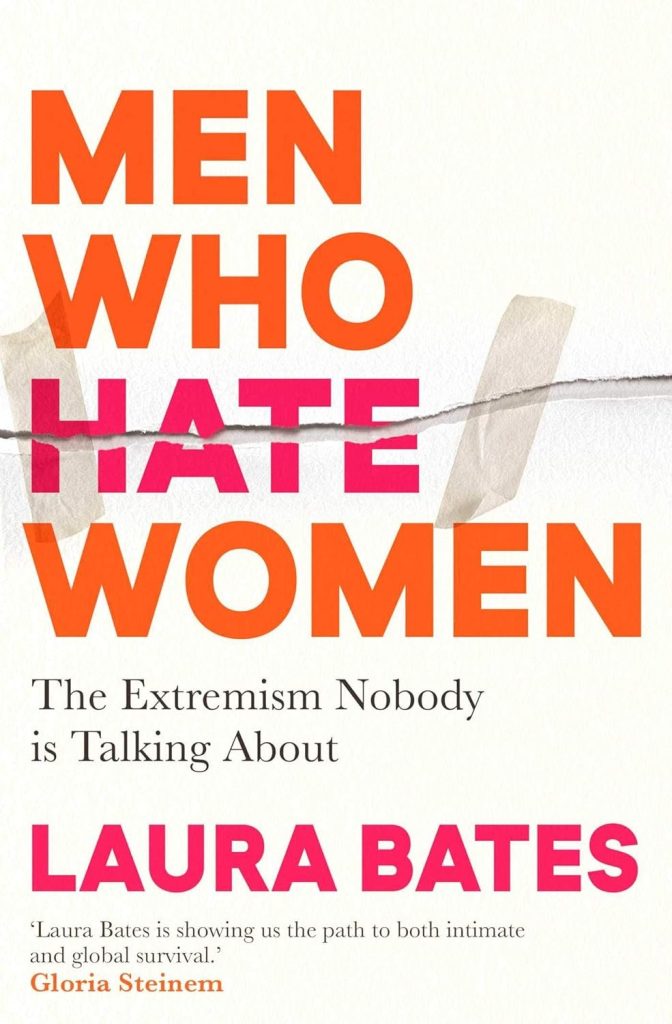
This is the world of the manosphere, as described by Laura Bates in her 2020 book Men Who Hate Women[i].
Drawn in by incendiary rhetoric about feminism ‘going too far’, dating strategies or even fitness routines, young men can find themselves quickly fed ideas of male supremacy, misogyny and versions of masculinity which can justifiably be called ‘toxic’.
New research
In November 2025, an Australian charity supporting young people dealing with criminal justice, poor mental health, addiction and any number of social, health and economic issues produced what they called The Adolescent Man Box. It was ‘the first study focusing on the attitudes towards masculinity among Australian adolescents’ and looked at the exact issues I’ve just described.
They found that of the boys who follow the ‘Man Box’ rules:
- Nearly half (46%) agree or strongly agree that no one really knows them well. This is double the 23% who didn’t follow Man Box rules.
- 27% had been intentionally physically hurt in the past month. (12% of non-followers claimed this)
- 27% also believed that if a man is physically violent to his partner, then the partner probably deserved it or provoked that reaction. (just 2% of non-Man Box followers agreed).
- 35% said they would retaliate if rejected by a prospective partner – more than three times the 11% who agreed of the non-Man Box thinkers.
- 27% said that they/their friends would create AI fake nude images of people they knew, nearly seven times more than the 4% of non-Man Box adherents.
It’s also worth highlighting that 85% of Adolescent Man Box followers said they had experienced poor mental health within the past fortnight and the majority of those did not seek help.
The Men’s Project Director at the charity said that whilst the findings made for grim reading, on a more positive side almost all of the 1,400 respondents stated that they felt boys should treat girls as equals (96%) and almost all were disturbed by the harassment that women and girls experience.
Why schools are important
Because school is the universal service for children, I believe it’s important we use this privilege to open discussions with young people (and parents/carers) about the Man Box in a safe and non-judgemental environment.
The manosphere/masculinity influencer content is adept at pre-programming defensiveness into young men and boys so, without tackling these issues head-on, we aren’t going to help young men and boys, especially when one of the locks keeping them in the Man Box is that asking for help and making a change makes them less of a man in the first place.
As an adolescent, I was firmly wedded to the Man Box for a several years, as I tell the young men and women in my school workshops. Looking back, it was a pretty dire and dangerous time and now I campaign, through my work in schools and my online presence (@_WhatMakesAMan_ on Instagram), to help others get out of the Man Box – or stop themselves ending up in there in the first place.
But I can’t do it alone. It’s on us all as adults and educators and parents to open hearts, eyes and minds to safer, healthier and happier men and boys. Starting now.

Andrew Bernard is speaker, trainer and social activist. He is an Independent Thinking Associate

FEATURE IMAGE: by Isidore Decamon For Unsplash+
Support Images: by Marco Bianchetti on Unsplash
REFERENCES
[1] Kivel, P. (2006) Boys will be men: Guiding your sons from boyhood to manhood. Available at: https://paulkivel.com/wp-content/uploads/2015/07/boyswillbemen.pdf
[2] Heilman, B., Barker, G. and Harrison, A. (2017) The Man Box: A study on being a young man in the US, UK, and Mexico. Washington, DC and London: Promundo-US and Unilever. Available at: https://www.equimundo.org/wp-content/uploads/2017/03/TheManBox-Full-EN-Final-29.03.2017-POSTPRINT.v3-web.pdf
[3] Bates, L. (2020) Men who hate women: From incels to pickup artists, the truth about extreme misogyny and how it affects us all. London: Simon & Schuster.
The post UNLOCKING THE MAN BOX appeared first on Consilium Education.