

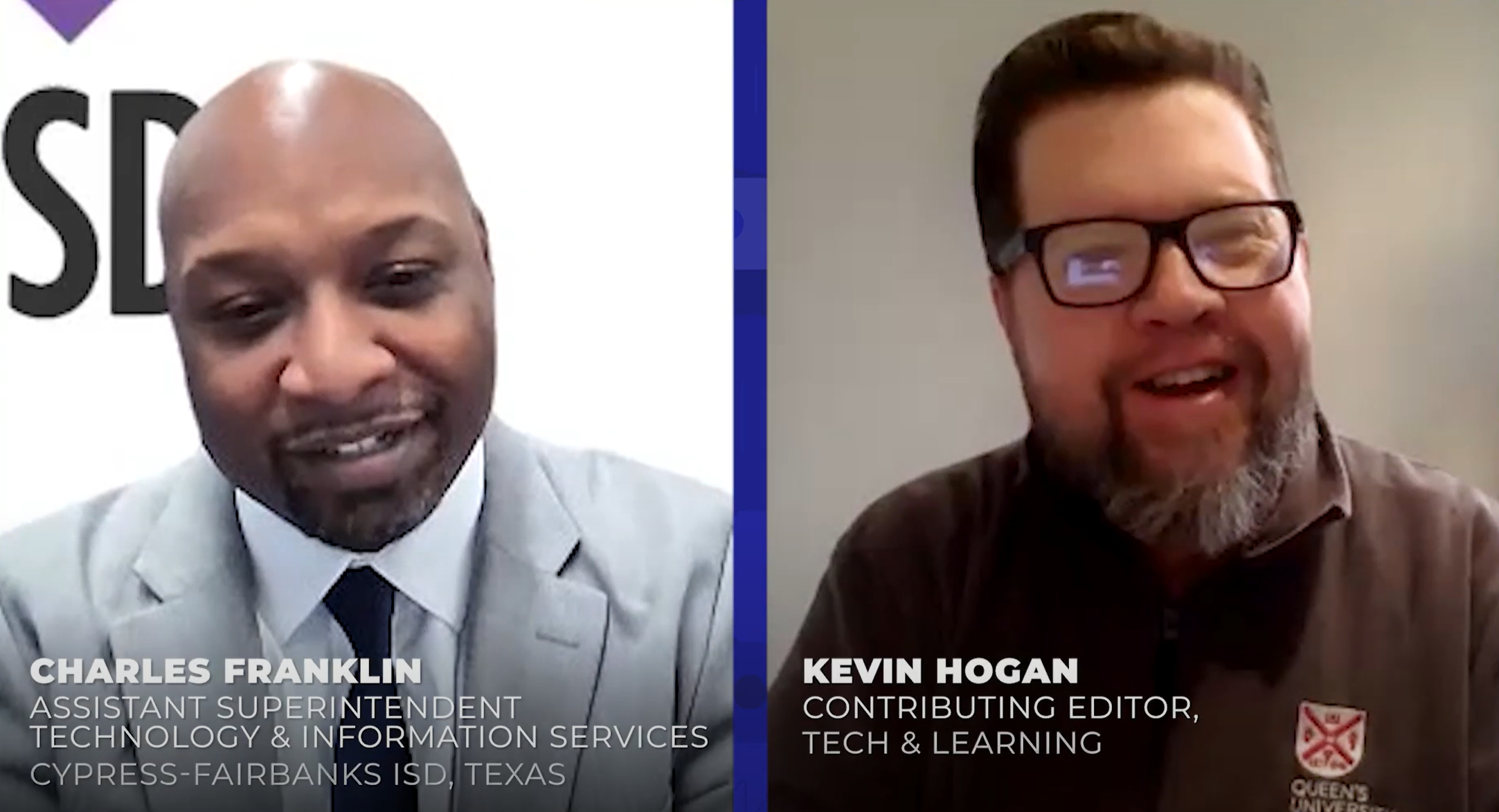

Watch the video above or download/listen below.
When Charles Franklin thinks about his role as a technology leader in one of Texas’s largest school districts, everything starts with security. Not because it’s the most exciting topic in edtech — he’d readily admit it isn’t — but because it underpins everything else the district tries to accomplish.
“Security is widespread around everything that we do,” Franklin says. “Even if it’s not directly related, there’s always some interdependency.”
Article continues below
His district is one of only nine in Texas to earn the Trusted Learning Environment (TLE) certification from CoSN, a rigorous credential that requires districts to document and provide evidence of their cybersecurity controls — and then recertify every two years.
The process, Franklin explains, is less about impressing a review board and more about creating institutional discipline. “It’s not just that we’re saying we’re doing something,” he says. “We’re showing that we’re doing it and somebody is reviewing it.” That accountability structure also communicates something important to the community: the district takes student data seriously.
On the data privacy side, Franklin’s team maintains a dedicated staff member focused exclusively on vendor agreements — a significant investment, but one that pays dividends. Every vendor relationship is governed by a formal data privacy agreement that scopes what data can be collected, how long it’s retained, and who bears liability in the event of a breach. The district also leverages the Student Data Privacy Consortium (SDPC) and One EdTech to vet products and adopt existing agreements rather than negotiating from scratch each time.
For smaller districts without those resources, Franklin points to state-level organizations such as TETL — Texas Education Technology Leaders — as a starting point. Through those networks, districts can access templates, share best practices, and connect with peers who have already done the hard work.
Looking ahead, the district is launching a Virtual Pathways program to attract and retain students in a competitive enrollment environment, and a major data lake project designed to help administrators make smarter, evidence-based decisions across curriculum, finance, and student outcomes.