In a district with more than 20,000 students set right on the banks of the Microsoft campus in Bellevue, Washington, a natural goal seems to be getting everyone to speak the same language when it comes to school direction and cohesion.
Ironically though, this district is home to students literally speaking more than 117 languages.
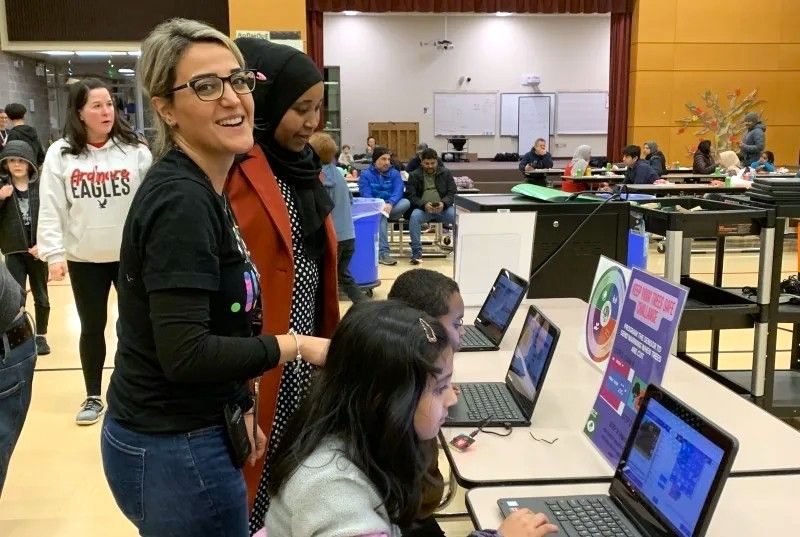
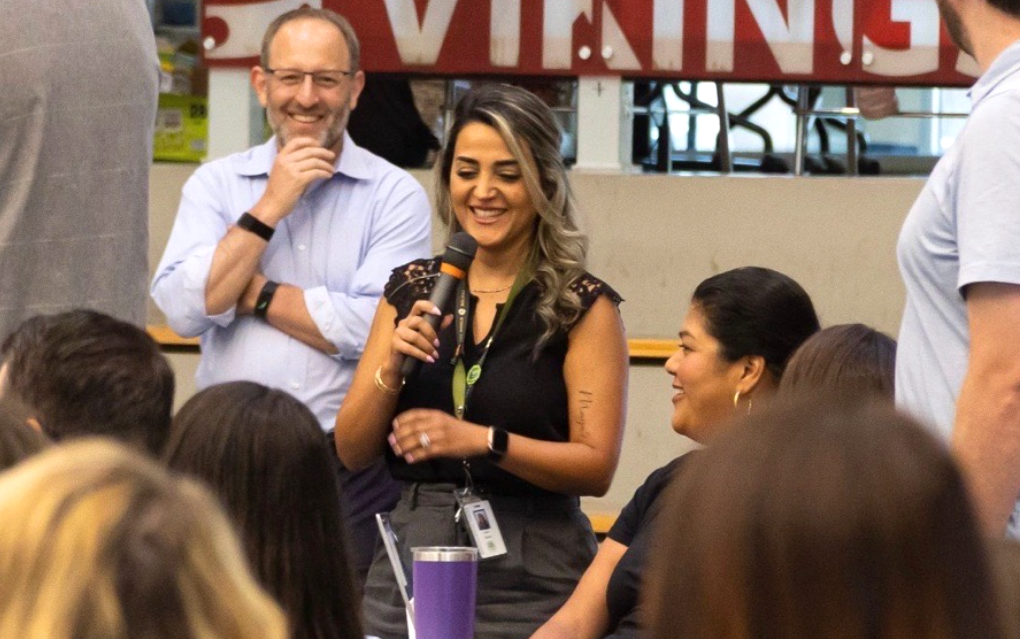
“Just at Ardmore, we have students speaking 37 or 38 languages, which gives you a picture of how diverse our school is,” says Yusra Obaid, Principal of Ardmore Elementary School, who was recently recognized for her leadership with a Tech & Learning Innovative Leader Award.
Article continues below
Bellevue School District not only celebrates that reality, but builds on their beautiful blend of cultures and backgrounds with a global competency initiative. One element of this is the Multilingualism for All language programs that include both Spanish and Mandarin programs, with unique language opportunities in Arabic, Korean, and Hindi. BSD middle and highschoolers can take Arabic, French, Hindi, Japanese, Korean, Mandarin, and Spanish.
“Students learn the majority of their day in English, with an hour and 20 minutes of daily Arabic instruction in language arts with additional translanguaging throughout the day,” says Obaid. “If you walk into our Arabic classroom, you can’t tell the difference between it and a general ed classroom. Half of our classes are multi-language learners. The vision of Ardmore is to affirm and identify this idea that our kids come to us speaking either one or multiple languages. We provide opportunity for those kids and make sure that any students who don’t speak another language at home can learn in some way or form here.”
That vision is creating results.
“There is a science where students learning a new language at an early age tend to do better in math, science and overall academics,” says Obaid. “This is an accelerated program because kids are actually learning two languages at the same time, which places extra cognitive demands on students. It helps shape their brain in a different way.”
Using Tech Translates to Success
While many of the students come from backgrounds in which they learned languages naturally in the home, it never hurts to use the latest tech to aid acquisition.
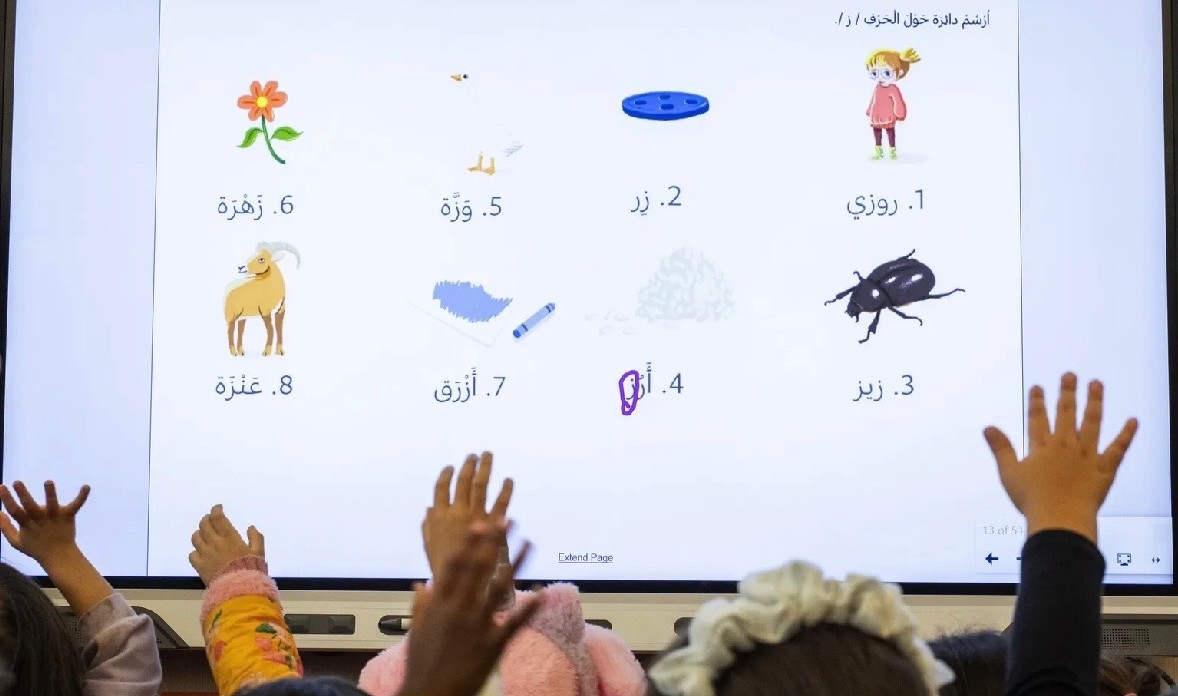
“There’s a range of tools that make learning more accessible to kids, even language learning,” says Obaid, noting BDS is a Microsoft district. “We know a lot about language acquisition and students learn by repetition and visuals. Our teachers use our whiteboard touch screens in an interactive way to have kids repeat the language. They press on it and can hear the word pronounced. They do image and word matching, they annotate specific words, drag and blend certain letters together — it’s created an accessibility for language learning in general.”
Obaid says these platforms bring together the four different domains of language acquisition (listening, reading, writing and speaking) more effectively than simple worksheets.
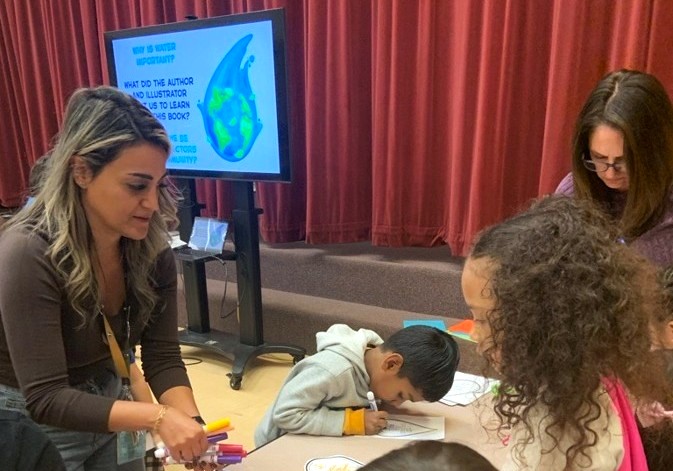
The program creates language learners, but also has a bigger picture of enhancing global citizenship.
“When kids come to us, we want to create global citizens who are thinking not just about their local community, but the larger world and their impact on it,” says Obaid. “We want to create that sense of community that our actions affect others not only here in Bellevue, but in the world.”
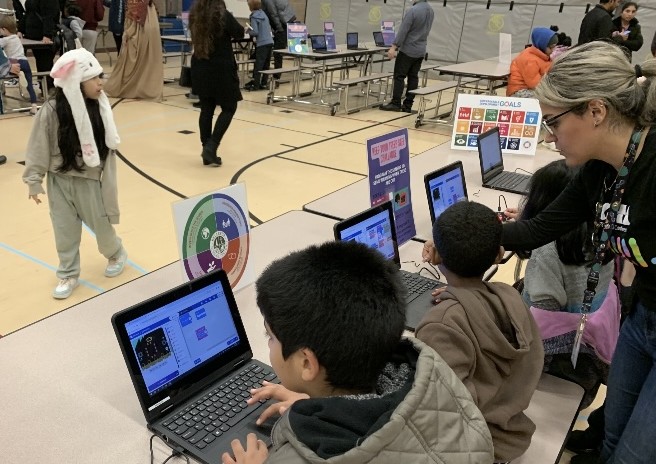
Obaid has integrated the Global Goals of UN Sustainability framework across grade levels to support this effort on a daily basis.
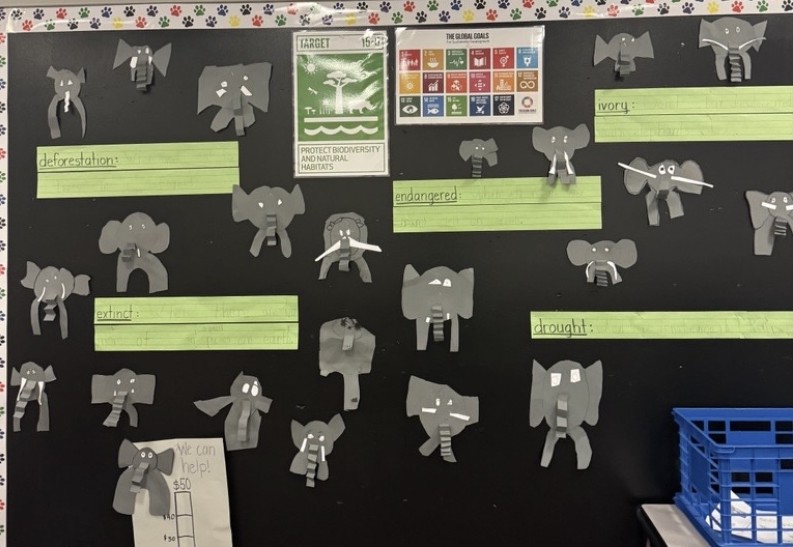
For example, for first grade, it offers a literacy unit about animals focused on building vocabulary about endangered animals. “They learned about all the animals and then focused on elephants. ‘How do we protect elephants? They’re being endangered,’” says Obaid. “Students learned about dangers involved in their habitat, and then raised money and adopted elephants which they continue to nurture and care about. The organization sent a certificate and they have a website with a live camera feed.”
Using technology to connect a lesson to the real world still continues to be effective.
“It’s really cool to just see kids thinking, ‘Wow, we learned about this, and now we actually did something that helped this animal survive those dangers in a place on the other side of the world,’” says Obaid.
3 Tips on Creating Global Initiatives in the Classroom
Obaid offers this advice to other educators:
1. Don’t wait to make change. “We can get stuck in a place of ‘It has to be perfect, do I have the funding?’” she says, emphasizing the importance of partnering with students and families to learn their aspirations and goals. “Languages and global citizenship were important for our families, so we didn’t wait for things to happen, we just acted by starting with simple things and letting it grow.”
2. Community partnership is huge. “Look within the community for expertise, rather than thinking about outside resources,” Obaid says. “Shifting that idea to where is capacity and expertise within our whole community — our families, our teachers, everybody who walks through our building are potential partners.”
3. Engage all stakeholders right from the start. Assess, adjust, and collect feedback with everything that you do to demonstrate the success for stakeholders. “When something is innovative and new, partnering with the people who you’re serving the most helps,” she says. “We have listening sessions. We collect numerical data. We listen to stories from kids. We do empathy interviews. This is how we continue to refine and adjust anything that we bring into our school.”
Finding Local Funding for Global Awareness
The thought of tapping already-stretched budgets for bonus initiatives can be intimidating, but the adage of “use your resources” certainly applies.
“When we think about innovation and change with a financial aspect, sometimes we forget about the open resources, the free availability, the opportunities in our local community that exist where we can make connections,” Obaid says.
The first grade project which made such an impact on the students was born of a simple wildlife trust website and adoption program. Local fundraising helped with the rest.
“Tapping areas of expertise and opportunities within our local community might not necessarily include a direct financial aspect, but are still very valuable,” she says. “It’s about relevance. It’s about connection. It’s about kids thinking, ‘Wow, what I’m learning matters, and I can do something.’ It’s not always about money.”
Creative problem solving goes a long way, but the district also benefits from the Bellevue Schools Foundation, filled with local stakeholders.
“One of the really great things we’re really proud of is our amazing educators,” Obaid says. “They really go all out looking through different organizations and partnerships. They would reach out to the Pacific Science Center, ‘Hey, the budget is really tight. Would you be willing to host us?’ Our educators do a really good job in advocating and finding opportunities for community partnership.”
Another way of generating funding is spreading word about the innovative programs at the school. Ardmore got a big boost of publicity when Trevor Noah decided to join the school’s “Hour of Coding.” As Microsoft’s Chief Question Officer, the comedian and actor sat in on a fifth-grade class and discussed tech with Ardmore teachers.
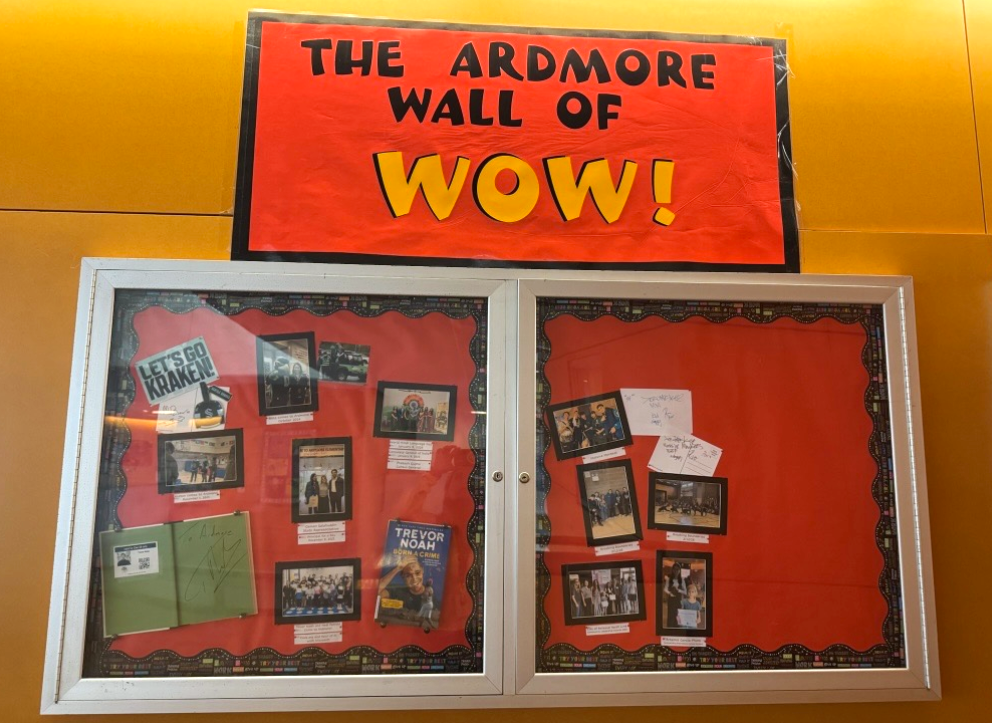
“It was such a great connection,” Obaid says. “We have a whole ‘Wall of Wow’ at Ardmore where we post photos and news articles—every time our school gets recognized or we have a special visitor. It’s a great inspiration for us to continue to reach for the stars.”