

By Dr. Yuvraj Verma, Caroline Hudgins, Adriane Gill, and Rachel Campbell
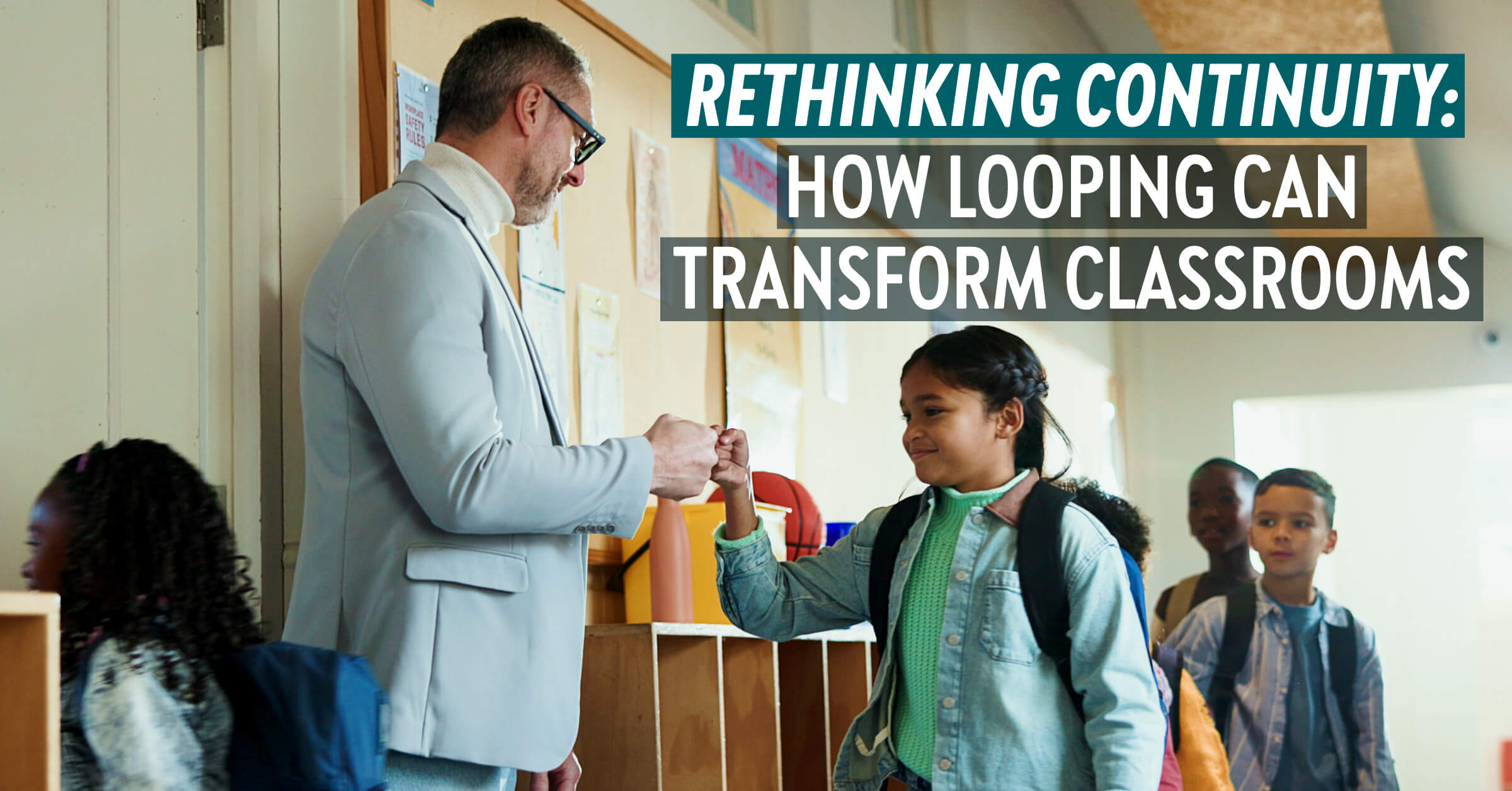
The term “looping” refers to teachers staying with the same group of students for two or more consecutive years. Research confirms that students perform better when they experience a stable environment with consistent relationships (Nichols and Nichols, 2002; Pianta et al., 2008). One of the ways to achieve this is through looping.
This strategy also improves academic outcomes, because teachers are familiar with students’ learning styles and areas of need. Plus, there’s always something comforting about seeing a familiar face.
We have been experiencing a plethora of advantages from looping up with many of our past sixth- or seventh-grade students from last school year to this year. And we would like to share them here.

Dr. Yuvraj Verma is a TEAMS math teacher at Bessemer City Middle School in Alabama and an Adjunct Professor of Graduate Education at William Howard Taft University in Colorado. He holds a BA in Sociology from Iona University, an MAT in Elementary and Special Education from the Relay Graduate School of Education, and an MBA in Healthcare Administration, EdS in Education Administration, and EdD in Technology and Leadership from William Howard Taft University.
Caroline Hudgins is an English Teacher at Bessemer City Middle School. She holds a BSE in Secondary English Language Arts from the University of Alabama.
Adriane Gill is a TEAMS Math Teacher at Bessemer City Middle School in Alabama. She holds a BS in Computer Science from Grambling State University, an MBA from Samford University, and a Certification in Secondary Mathematics Education from the University of Alabama at Birmingham.

Rachel Campbell is an English Teacher at Bessemer City Middle School in Alabama. She holds a BA in English from the University of Alabama at Birmingham and an AA degree in Pharmacy from Jefferson State Community College. Rachel is pursuing a MSEd in Secondary English Language Arts Education at Jacksonville State University.