

Think about what it actually takes to be a successful learner. It’s not just someone who follows instructions well. It’s someone who can set a goal, figure out how to reach it, monitor their own progress, and adjust when things aren’t working. That’s self-direction. And it’s one of the most valuable skills a student can develop.
A 2020 study found that self-directed learning has a measurable impact on student motivation and academic achievement. And it should be developed starting in the earliest years of school. Yet many classrooms still default to the opposite: teachers making the decisions, and students compliantly following along. Research also shows that high-control instruction doesn’t just limit engagement—it teaches kids to avoid challenge rather than rise to it.
Here’s what self-direction actually is, why it matters, and how to build it deliberately in your classroom—along with six free activities from the Van Andel Institute for Education.
What Is Self-Direction Exactly?
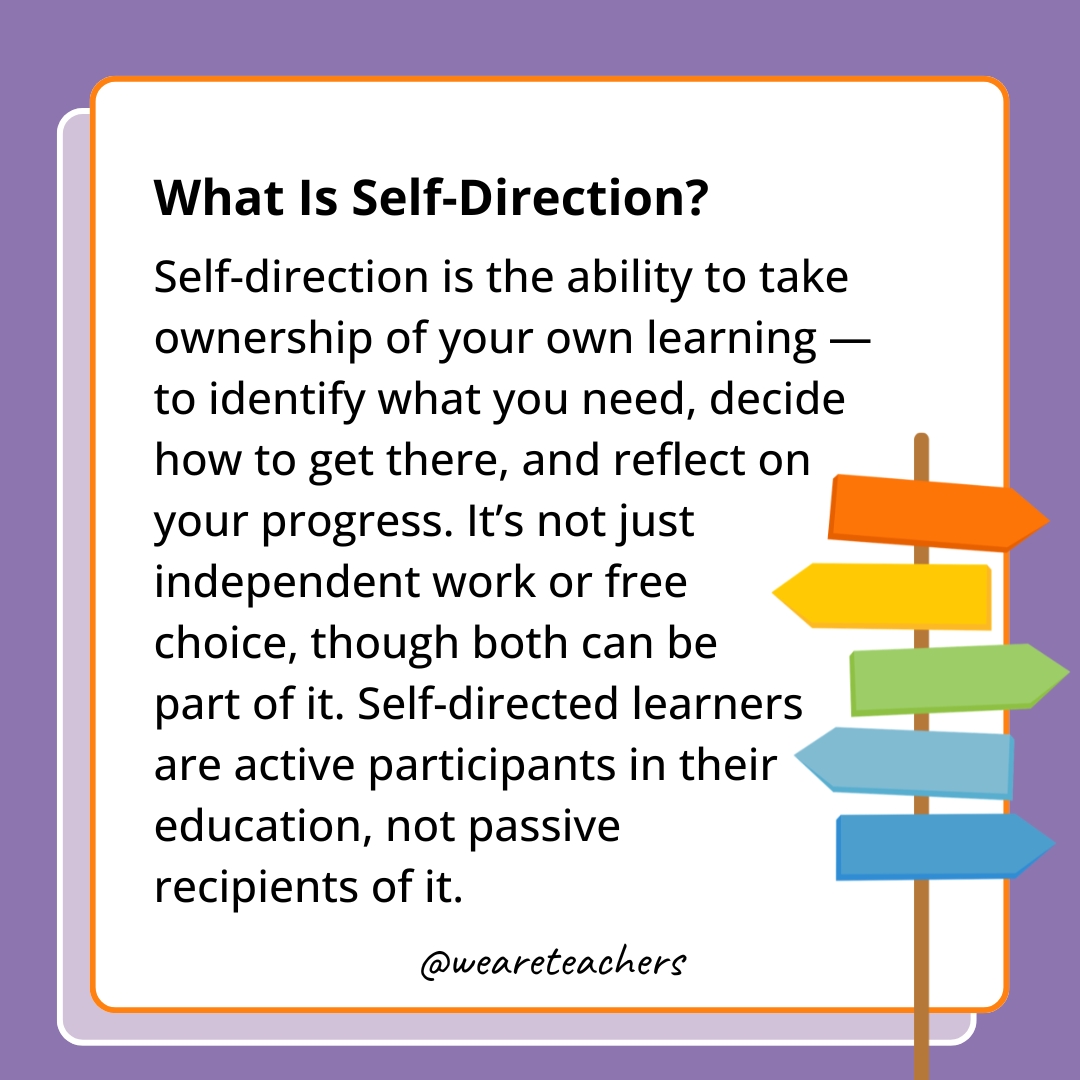
Self-direction is the ability to take ownership of your own learning—to identify what you need, decide how to get there, and reflect on your progress. It’s not just independent work or free choice, though both can be part of it. Self-directed learners are active participants in their education, not passive recipients of it.
Dr. Kate Spence, Director of the Peter Sammartino School of Education at Fairleigh Dickinson University, describes what this looks like in practice: “Teachers can foster self-directed learning through integrating strategies like learning contracts that include mutually established goals or flexible assessments. Providing students with the opportunity to identify resources and self-monitor their progress are other key components.”
It’s worth noting that self-direction exists on a spectrum. On one end, teachers make all the decisions. On the other, students make them all. Dr. Spence points to free schools like Brooklyn Free School and Summerhill as the most ambitious examples—democratic environments where students set their own curriculum, assessments, and schedules entirely. Most classrooms won’t swing that far, nor do they need to. But the principle is worth borrowing: The more ownership students have over their learning, the more invested they become in it.
Why Self-Direction Matters
Self-direction isn’t just a classroom strategy. It’s a life skill. Students who manage their own learning develop critical thinking, resilience, and autonomy—skills they’ll carry long after they leave school.
Dr. Spence is direct about the stakes: “Self-directed learning helps increase student engagement, fosters critical thinking, and can develop autonomy.” But she also acknowledges the honest challenge: “If students are not accustomed to this sort of learning expectation, they may initially resist accepting a more active role in guiding their experience. It requires more cognitive engagement and may initially feel harder.” That initial resistance is normal—and it’s not a reason to pull back. It’s a sign that something more meaningful is being asked of students. The goal isn’t comfort, it’s growth.
What Self-Direction Looks Like at Different Ages
Self-direction doesn’t look the same in kindergarten as it does in high school—and it shouldn’t. The scaffolding changes, but the core principle stays the same: Students are active participants in decisions about their learning.
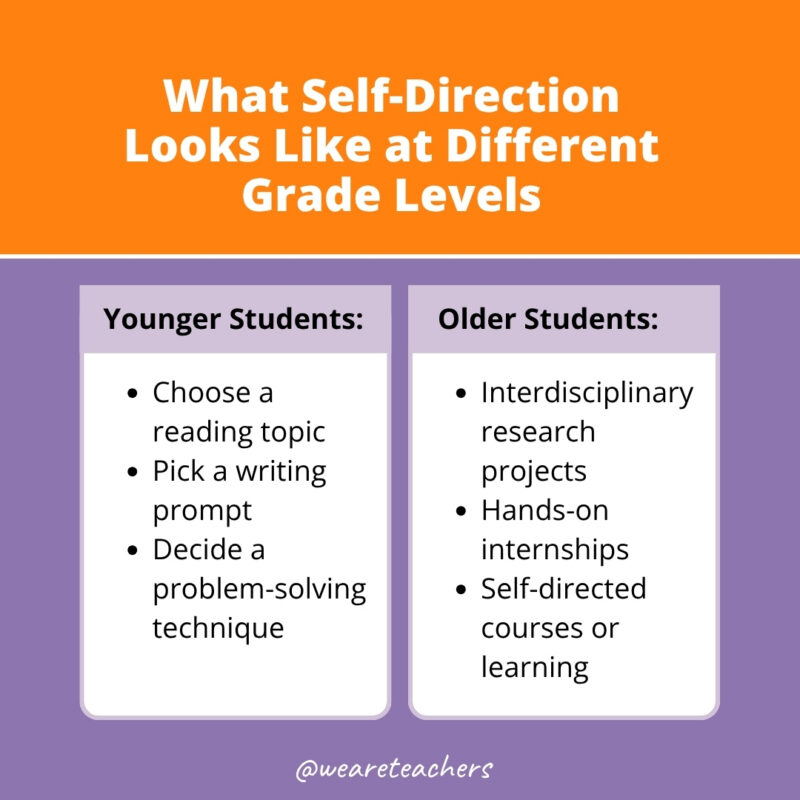
For younger students, self-direction might mean choosing a reading topic, picking a writing prompt, or deciding how to approach a problem. For older students, it can go much further. Dr. Spence notes that “self-directed learning for older students can include internships or practicum experiences,” and that “some of the most effective longer-term self-directed projects for middle and high school students are self-directed interdisciplinary research projects.”
In an ideal school experience, Dr. Spence says, “students would have the opportunity to engage in self-directed learning across the whole of their careers.” For educators working with older students who haven’t had much experience with this, she recommends “consistency, structure, and transparency around the purposes of the shift toward more learner autonomy.”
How To Build Self-Direction in Your Classroom
Teaching self-direction requires a shift in how teachers think about their role. As Dr. Spence explains, “Implementing self-directed learning requires a different approach to planning and curriculum design because instruction focuses on the development of common competencies or skills rather than the transmission of specific content.” In other words, you’re not stepping back—you’re building the structures that allow students to step forward. Here are some short, but powerful activities from Van Andel Institute you can use to get started.
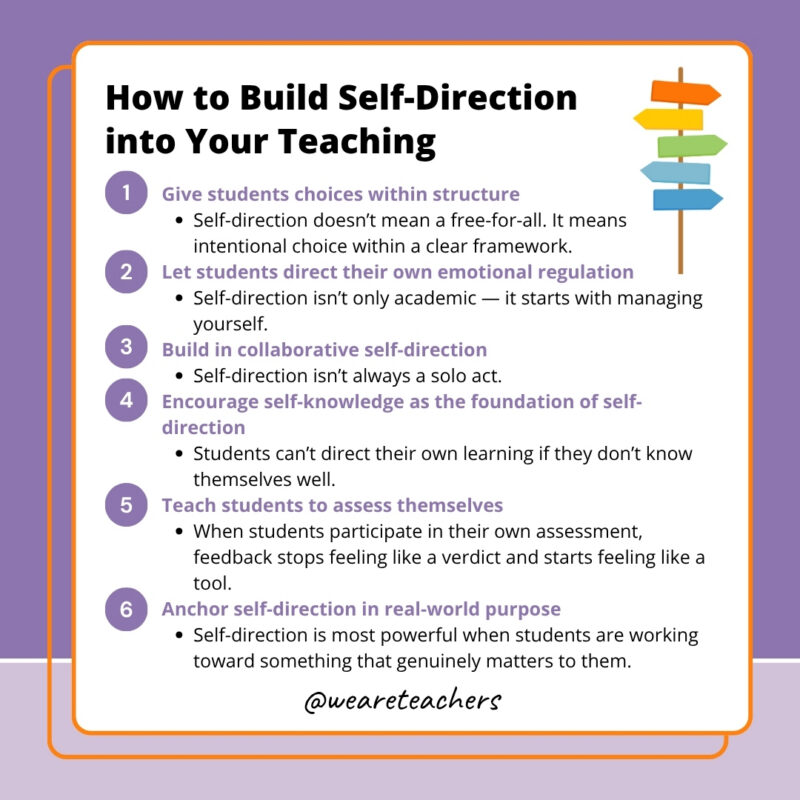
1. Give students choices within structure
Self-direction doesn’t mean a free-for-all. It means intentional choice within a clear framework. Reading BINGO, in the March Into Reading Timely Topic from VAI Education, is a simple example of this done well—students are encouraged to read while having genuine agency in how they accomplish that goal. The structure is there; the ownership is theirs.
2. Let students direct their own emotional regulation
Self-direction isn’t only academic, it starts with managing yourself. VAI Education’s Mindful Simon, in their Daily SEL Games & Activities, uses the familiar “Simon Says” format to help students explore different coping mechanisms and discover what works for them. That process—trying something, noticing how it feels, deciding whether it works—is exactly the reflective thinking self-directed learners use every day.
3. Build in collaborative self-direction
Self-direction isn’t always a solo act. VAI Education’s Tandem Tales, in the Daily SEL Games & Activities, asks students to co-write a story with a partner, choosing the direction of the narrative together. Students practice making decisions, negotiating ideas, and taking ownership of a shared outcome—all key components of self-directed thinking.
4. Encourage self-knowledge as the foundation of self-direction
Students can’t direct their own learning if they don’t know themselves well. The Introspection Journal from VAI Education’s Daily SEL Games & Activities lets students choose their own writing prompts and explore their own thoughts and perspectives. Over time, this kind of reflective practice builds the self-awareness that underpins all self-directed learning.
5. Teach students to assess themselves
One of Dr. Spence’s key components of self-directed learning is self-monitoring—and that requires students to develop an honest, accurate sense of their own strengths and areas for growth. VAI Education’s Rank Your Rubric strategy does exactly this: Students note areas of strength and areas for growth, and choose where they want feedback. When students participate in their own assessment, feedback stops feeling like a verdict and starts feeling like a tool. And as a bonus, this saves you time. You can hone right in on the very parts of the rubric students identified as needing work.
6. Anchor self-direction in real-world purpose
Self-direction is most powerful when students are working toward something that genuinely matters to them. VAI Education’s Habitat Heroes is a cross-curricular unit that invites students to choose a local animal, research it, and build its habitat. The choice is theirs from the start—which means the investment is too. That’s self-directed learning at its best: purposeful, personal, and driven from within.
The Bottom Line
Self-direction isn’t a personality trait some kids are born with. It’s a skill that can be built, practiced, and strengthened—with the right structures, the right support, and teachers willing to share the decision-making.
As Dr. Spence puts it, “Being able to facilitate students in managing their own learning requires the teacher to develop structures, systems, and processes to support student ownership.” That’s not a small ask. But the payoff—students who are engaged, autonomous, and genuinely invested in their own growth—is worth every bit of it.