

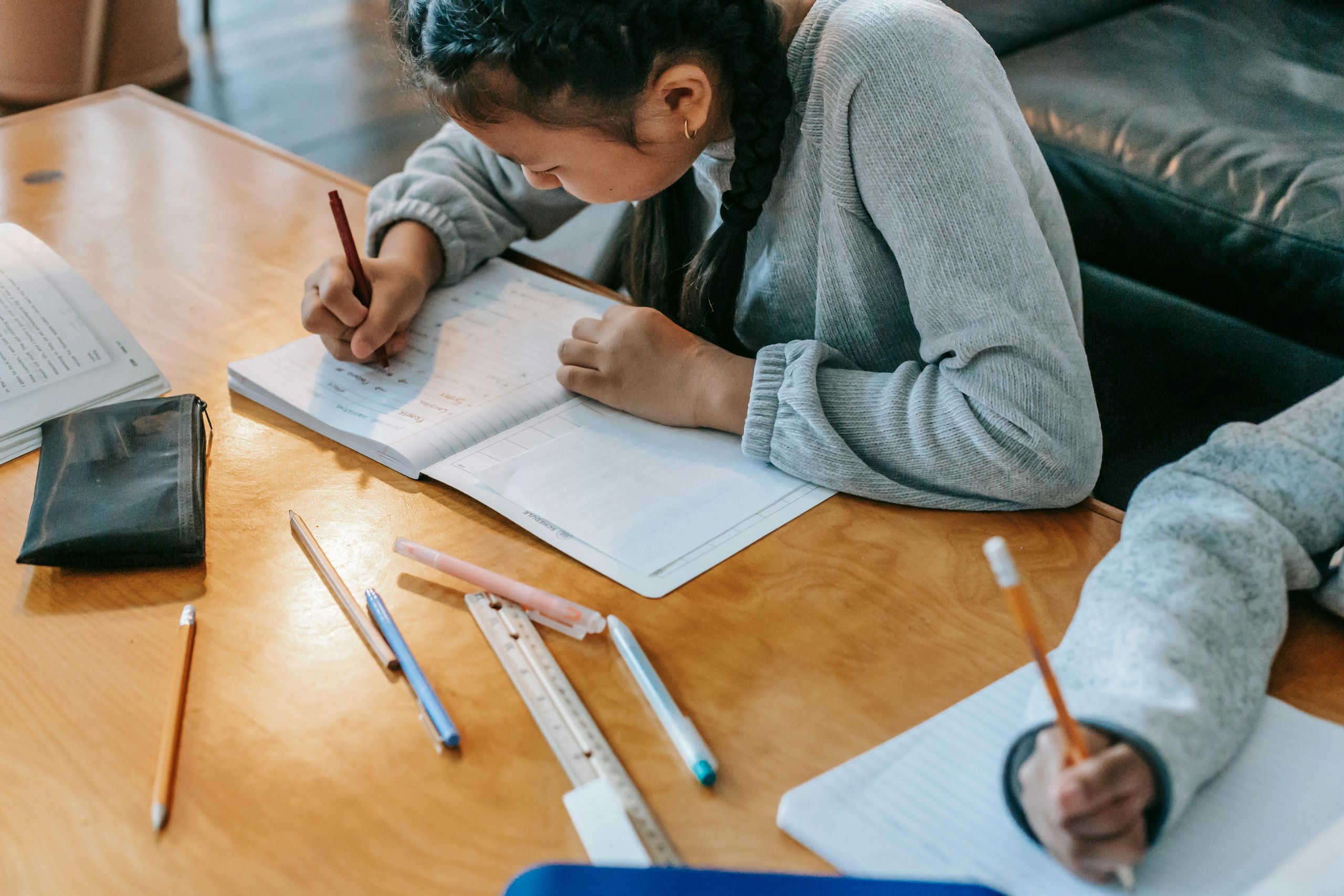
The recent trend of pushback against tech in the classroom is seeing schools across the country moving away from emphasizing 1-2-1 digital devices and focusing on old-fashioned classroom and group activities.
Dennis R. Willingham, superintendent of Walker County Schools in Alabama, recently realized how this trend has touched his own district when a principal told him about witnessing student behavior that had not been seen in years: the passed note.
“A little tear came in my eye that the kids were actually writing instead of texting,” this educator told Willingham.
In addition to reviving the once-extinct practice of students writing notes to one another, the new trend is cutting back on distractions in the classroom and helping support student learning, Willingham says. It’s been pushed by a combination of events, including decreased funding for 1-2-1 programs in the post-COVID era and a general fatigue among teachers and students that we’re all spending too much time looking at screens.
Willingham discusses the benefits of screen-free time he’s seen in his district as well as the challenges around continuing to provide device access to students, which remains a necessity.
Less Screen Time, More Social Interaction
Back in 2018 and 2019, there was a big push to provide every student access to a digital device, Willingham says. That intensified during the pandemic, but now many in the education world are realizing the embrace of digital devices may have been a little too enthusiastic.
“Now the trend seems to have shifted back the other way, and people are calling for more direct instruction from the teacher, going back to more cooperative learning groups, and more student engagement within the classroom,” Willingham says. “The big reason for that is for the sake of social skills. Because not only in the schoolhouse but also outside of school doors, kids are absorbed by electronic devices, with their phones, with laptops. And so we are seeing that students are lacking in social skills.”
In Willingham’s district, this movement has been facilitated by state legislation banning cell phones in schools, which went into effect at the start of the academic year. Most people, including Willingham, have applauded the new policy.
“We’re receiving positive feedback from just about every stakeholder about these electronic devices being banned in our schools,” he says.
The Need For Devices
Despite the benefits of cell phone bans, the larger movement away from 1-2-1 devices isn’t all positive. Walker County Schools still has a 1-2-1 policy in place that is needed, Willingham says, but funding for the program long-term is in question since COVID-era funds have dried up and federal funding for education is currently uncertain.
“We have state-mandated assessments starting in second grade. And those state-mandated assessments are electronic,” Willingham says. “It’s kind of a Catch-22. The trend now is going away from 1-2-1, but at times you need the 1-2-1.”
Federal funds are crucial to continuing to provide that access in Walker County Schools.
“It is going to be a challenge going forward. It is not feasible to continue finding 1-2-1 because of the upgrades and updates. That’s not only with the hardware, but also with the computer systems and the software as well,” Willingham says. “We are a poverty district. We are about 70% poverty. And so we do rely on federal funding to keep our heads afloat.”
Advice On Going Device-Free
Ongoing uncertainty about federal funding notwithstanding, Willingham believes there is real benefits right now for teachers to provide more screenless activities in the classroom.
“Cooperative learning and student engagement, that’s really where it’s at. It’s proven to be effective for learning, and it’s also great for social skills, which we’re seeing that our students greatly need,” he says.
Perhaps ironically, AI can help educators prepare more old-fashioned, pen-and-paper and group activities.
“It’s fantastic you can type in, ‘I want to teach a lesson on standard A3, and I want to involve cooperative learning and group activities,’ and boom, you’ve got all of that at your fingertips,” Willingham says. “All you’ve got to just tweak it and make it your own.”
These types of group and in-person activities have the added bonus of limiting students’ increasing tendency to rely on AI themselves in unproductive ways, such as making it write a paper for them.
In a less digitized classroom, for instance, when students are writing notes back and forth to each other, you know, regardless of the content, that at least the students wrote the notes themselves.