
SHAPING GLOBAL PROBLEM-SOLVERS
Something seriously entrepreneurial has been happening in Glasgow schools in the past couple of years, as Philip Ford reports.
Future challenge
Education has always been focused on preparing young people for the future, but the challenges of doing so have, perhaps, never been greater. As the recent and rapid emergence of generative AI tools has demonstrated, we are living in a period of revolutionary technological change that is making the future of work increasingly hard to predict. Tasks and skills that, until recently, underpinned stable and predictable career paths can now be performed with minimal human oversight, and the job market is quickly changing shape in response.
Uniquely human
In such a landscape, many schools across the world are placing renewed emphasis on the uniquely human capabilities that are most likely to endure: creativity, adaptability, collaboration, critical thinking, and communication. These are rightly seen as essential, but the more difficult question is how they can be developed meaningfully and at scale within the realities of a school environment.
Learning by doing
No one becomes fitter by watching others run, or by merely studying the achievements of elite athletes. Growth requires deliberate practice, sustained effort, and exposure to meaningful challenge. The same is true of these human capabilities. They cannot be acquired passively, but must be built through experience. The most effective development programmes in any field are those that curate structured, purposeful opportunities for individuals to stretch themselves in a supportive environment.

At The High School of Glasgow, we set out to apply this principle to the challenge of future skills development. In collaboration with leading academics and industry experts, we developed START: a structured, immersive programme designed to equip young people with the skills, mindsets, and confidence they will need in an uncertain future.
What START involves
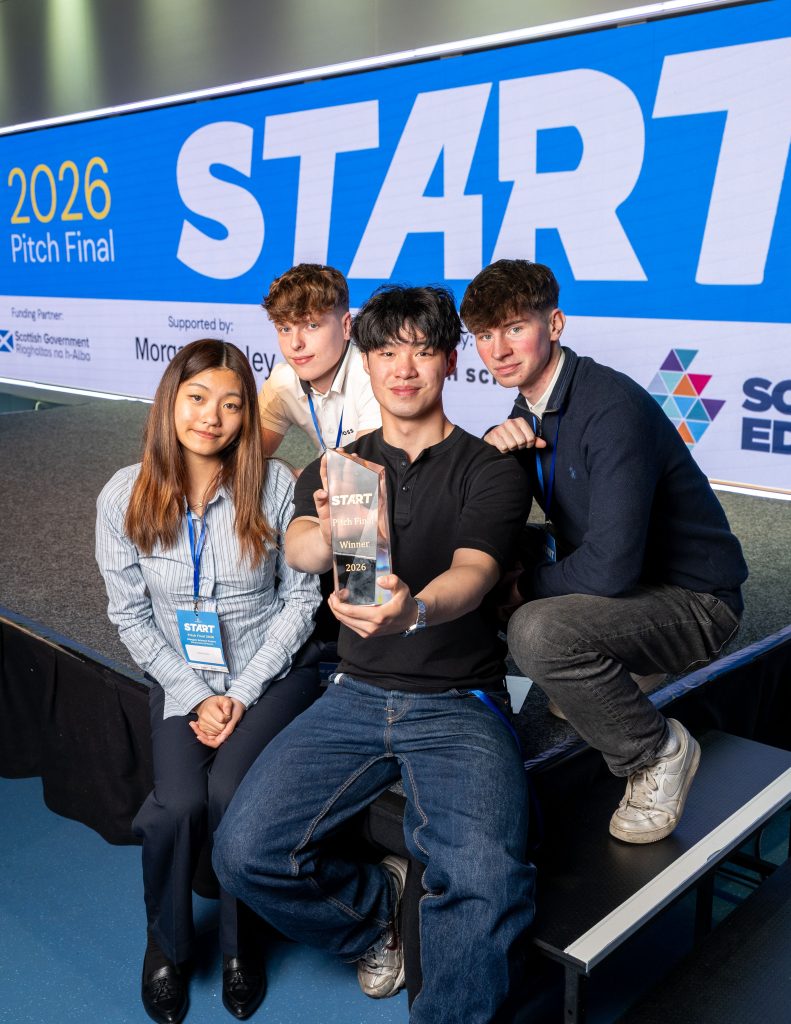
START is both an academic programme and a competition! It is now fully recognised as a Level 6 course within the Scottish Credit and Qualification Framework (SCQF) for S6 (Year 13, Grade 12) students, running from August to March and culminating in a city-wide pitching competition. This year the finals were held at the Glasgow Science Centre on the banks of the River Clyde.
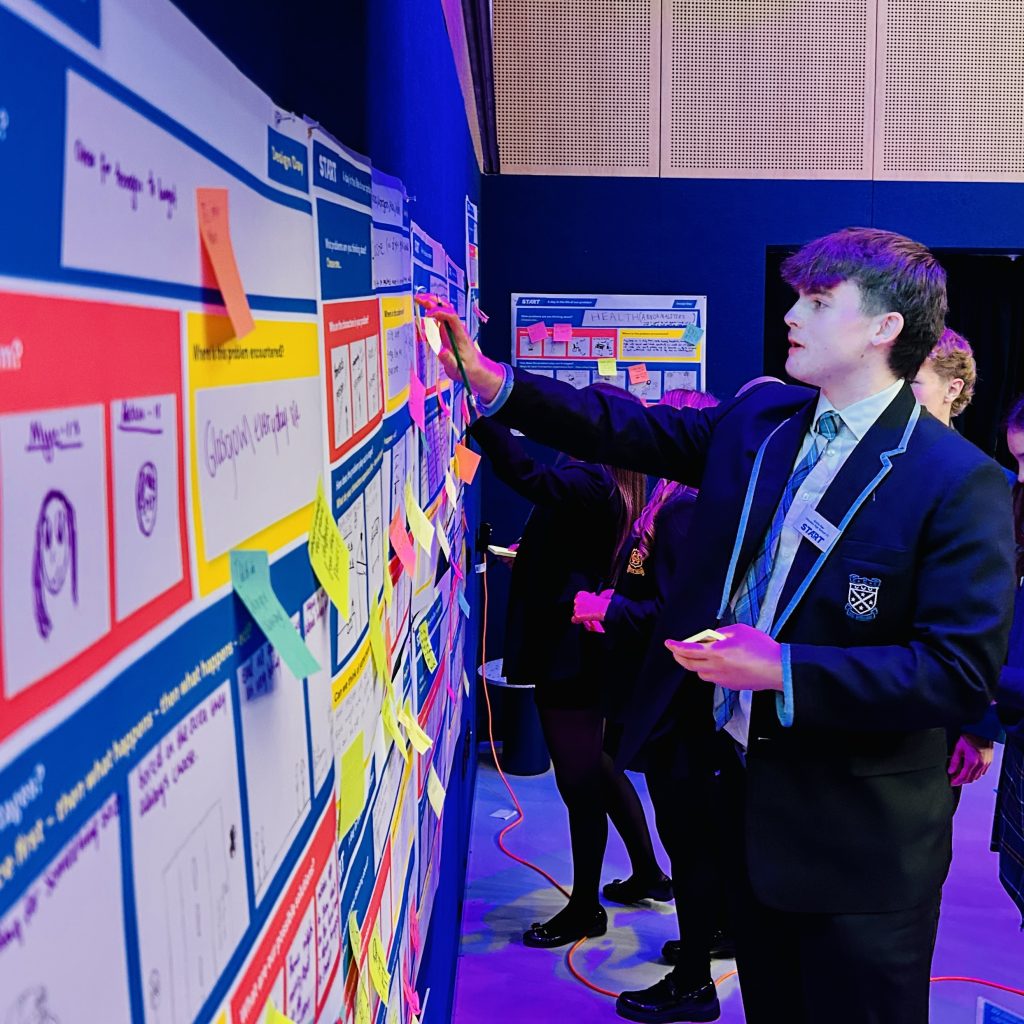
The programme brings the energy and discipline of a startup incubator into the school environment. Built on the foundations of design thinking and entrepreneurship, it places students in real-world problem-solving contexts where they must identify opportunities, test assumptions, engage with users, and iterate their ideas. Working in teams, students move through a carefully designed journey that includes problem discovery, customer validation, prototyping, business strategy, branding, and final pitching.
In doing so, they develop far more than theoretical understanding. Through our Online Portal, they build the confidence-enhancing evidence base of their resilience in overcoming setbacks, creativity through applying design tools that balance freedom and constraint, and clarity of thought through team discussion and pitching. They learn to analyse data, to tell compelling stories, to collaborate effectively and to present ideas with confidence. Crucially, they begin to see how their existing knowledge and interests can be applied beyond the classroom, giving their learning greater purpose.
The impact of START
From its earliest iterations, START has had a significant impact on students. One participant, for example, began his final year of school uncertain about his future and disengaged from traditional academic pathways. Through START, he discovered a genuine passion for problem-solving, applying his knowledge of computing to a real-world issue he had identified: safety at music festivals.
The result was Festag—a wearable smart medical alert system designed to provide a fast and reliable way to contact emergency services, display critical medical information, and connect users with family members when it matters most. By combining his interests in music and computing, the experience transformed how he engaged with learning.
He has since gone on to study Computing Science at university with a clear sense of purpose and a strong foundation of practical experience. He also remains connected to the programme, supporting and mentoring younger students. His story is not an isolated case, but a powerful illustration of what can happen when students are given the opportunity to apply their learning in meaningful ways.
A growing programme
Because of this impact, START is now being delivered in schools across Scotland and has established partnerships with organisations including the 2023 European Entrepreneurial University of the Year, The University of Strathclyde, Morgan Stanley and Scottish EDGE, one of the UK’s leading startup competitions. Support is growing: for Jill MacBryde, Associate Principal at Strathclyde
“START is amazing because it helps to bridge the gap between school and university, and it’s developing lots of skills and competencies that universities really want to see,”
Government Advisor, Professor Ross Tuffee, goes further, calling START in his view,
“the leading High School level entrepreneurial programme in the UK.”
Going international
Our ambition is to go beyond our national borders and, as the programme continues to evolve, we are now opening it to a small number of international partner schools for the 2026–27 academic year. Crucially, START is designed to complement, not compete with, existing academic structures. Amid rapid technological change, it is important to remember that students cannot make meaningful connections if they have no knowledge to connect. A report commissioned by the UK Design Council highlights that;
“tomorrow’s innovative companies and organisations will rely on people who can marry subject expertise with skills and knowledge from outside their individual specialisms.”
The future is not post-knowledge but interdisciplinary. It demands individuals who can draw on what they know and apply it in new, complex, and unpredictable contexts. This is precisely what START is designed to enable, providing schools with a structured, practical, and scalable way to develop the capabilities that matter most, without adding unnecessary burden or complexity.
In a world where information is increasingly accessible and routine tasks are increasingly automated, the ability to think, create, and adapt becomes the true differentiator. START offers a proven way for schools to cultivate these qualities, preparing their students not just to navigate the future, but to shape it.
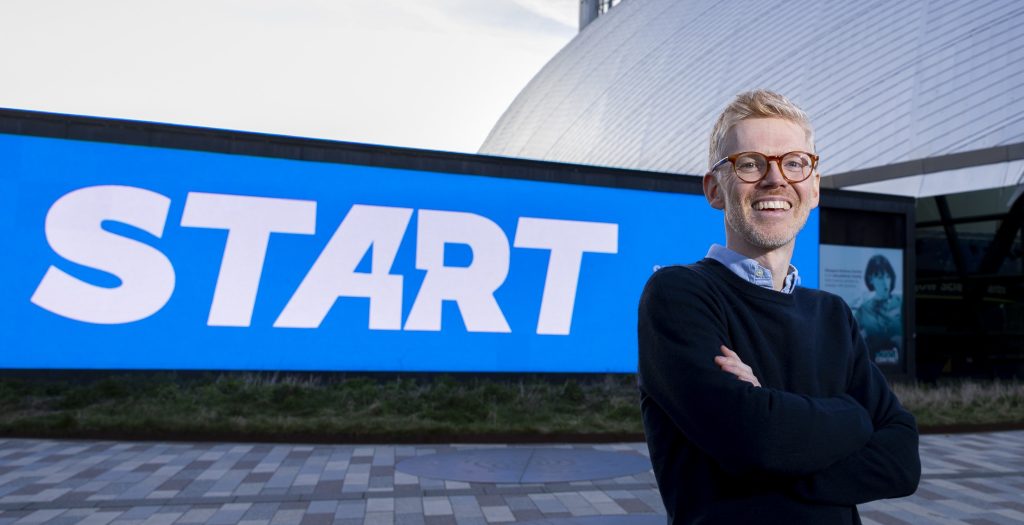
Philip Ford is the Head of S6 at The High School of Glasgow and the Founder of START
For more details about the START EXPERIENCE click here to download the START PDF
FEATURE IMAGE: by Mirea Mazzei on Unsplash
Support Images: kindly provided by The High School of Glasgow
Below – images from the 2026 final held in March.
The post START! appeared first on Consilium Education.