

This article is sponsored by Barker College
In an increasingly complex world marked by displacement and uncertainty, Marri Mittigar, meaning “Many Friends” in Darug, the language of First Nations Australians on whose lands the school stands, is something truly remarkable.
The co-educational school established by Barker College – located in Hornsby, NSW – serves children and young people of refugee experience.
After completing its first full year of operation, Marri Mittigar stands as a testament to what happens when education transcends academic achievement alone and embraces the whole child – their emotional wellbeing, culture and sense of belonging.
“A unique educational environment designed to nourish each child has been created at Marri Mittigar, with a focus on providing a safe space for self-expression and cultural identity, as well as inspiring the students to reach their full potential,” says Phillip Heath, AM, head of Barker College.
Tailored learning
The philosophy that distinguishes Marri Mittigar from conventional educational models is that rather than asking refugee students to abandon their heritage in pursuit of academic success, it deliberately intertwines these goals.
There’s a recognition that personal growth and cultural identity are foundational to educational achievement, particularly for refugee students, as many have experienced trauma, displacement and loss.
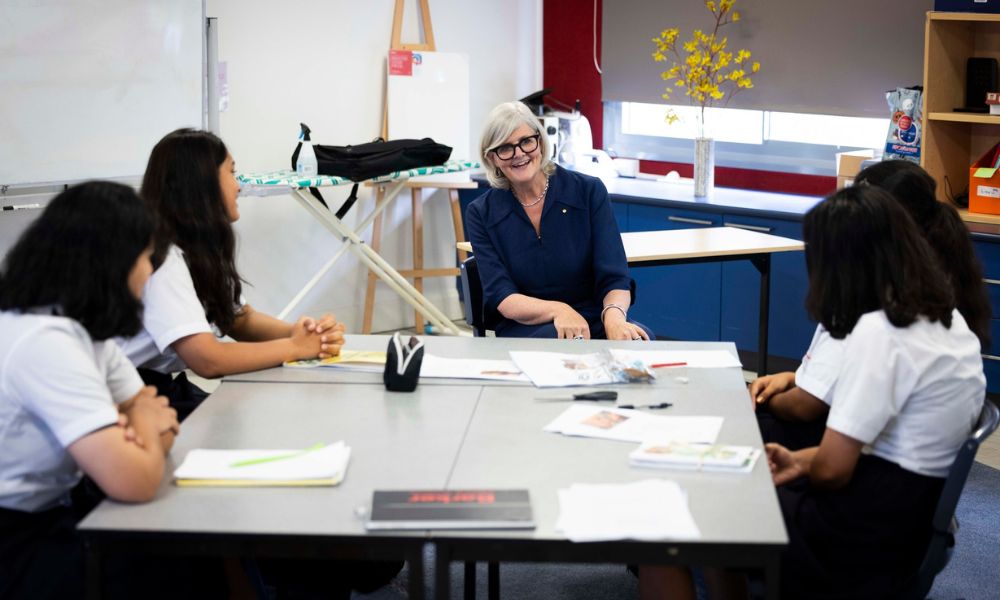
Julia West, head of campus at Marri Mittigar, explains this vision. She says, “We seek to provide an education for the children in a safe, nurturing environment so that they can return to mainstream schooling and succeed in their education and in society.”
This transition-focused approach ensures that Marri Mittigar serves not as a permanent separate institution, but as a bridge – a place where students gain confidence, language skills and emotional resilience before integrating into the mainstream Australian system.
First language development
Students spend part of each week immersed in their native languages, learning the songs, poetry, literature and history of their countries of origin. This is not merely nostalgic; it is educationally sound. Strong literacy in a first language provides a foundation that carries across to subsequent languages, facilitating multilingual proficiency.
Moreover, for some students, this preservation of language and culture acknowledges a profound truth: they may one day return to their countries of origin. “Although originating from all corners of the world, we are unified in the purpose of education,” adds West.
The school’s structure itself reflects thoughtful innovation. By accepting students aged 5–15, Marri Mittigar keeps sibling groups intact, another crucial factor for children who have already experienced separation and loss. Simultaneously, this age range creates natural mentorship opportunities, with older students providing leadership and support to younger cohorts.
Underlying the advantage this approach brings, Heath says, “Students have found a place of sanctuary and are carving a pathway towards a future life and education in Australia, because each student feels valued and supported.”
Team effort
The community foundation supporting Marri Mittigar is staggering. An average of 58 hours per week of volunteer labour has been contributed, encompassing literacy and numeracy support, chess coaching, Christmas celebrations, catering, working bees, medical and dental advice and housing support.
While much of this comes from Barker College families, external organisations, including Lions and Rotary Clubs, have also embraced the mission, demonstrating that Marri Mittigar’s values resonate beyond its campus.
Perhaps most significantly, Marri Mittigar represents the first special assistance school of its kind in Australia dedicated exclusively to children of refugee experience. This distinction has attracted widespread attention, including a visit from Ambassador Waissi of Afghanistan, who joined Persian language classes and engaged with Dari and Farsi-speaking students.
In its inaugural year, Marri Mittigar has created more than a school – it has created a community where refugee children can heal, grow and flourish.