

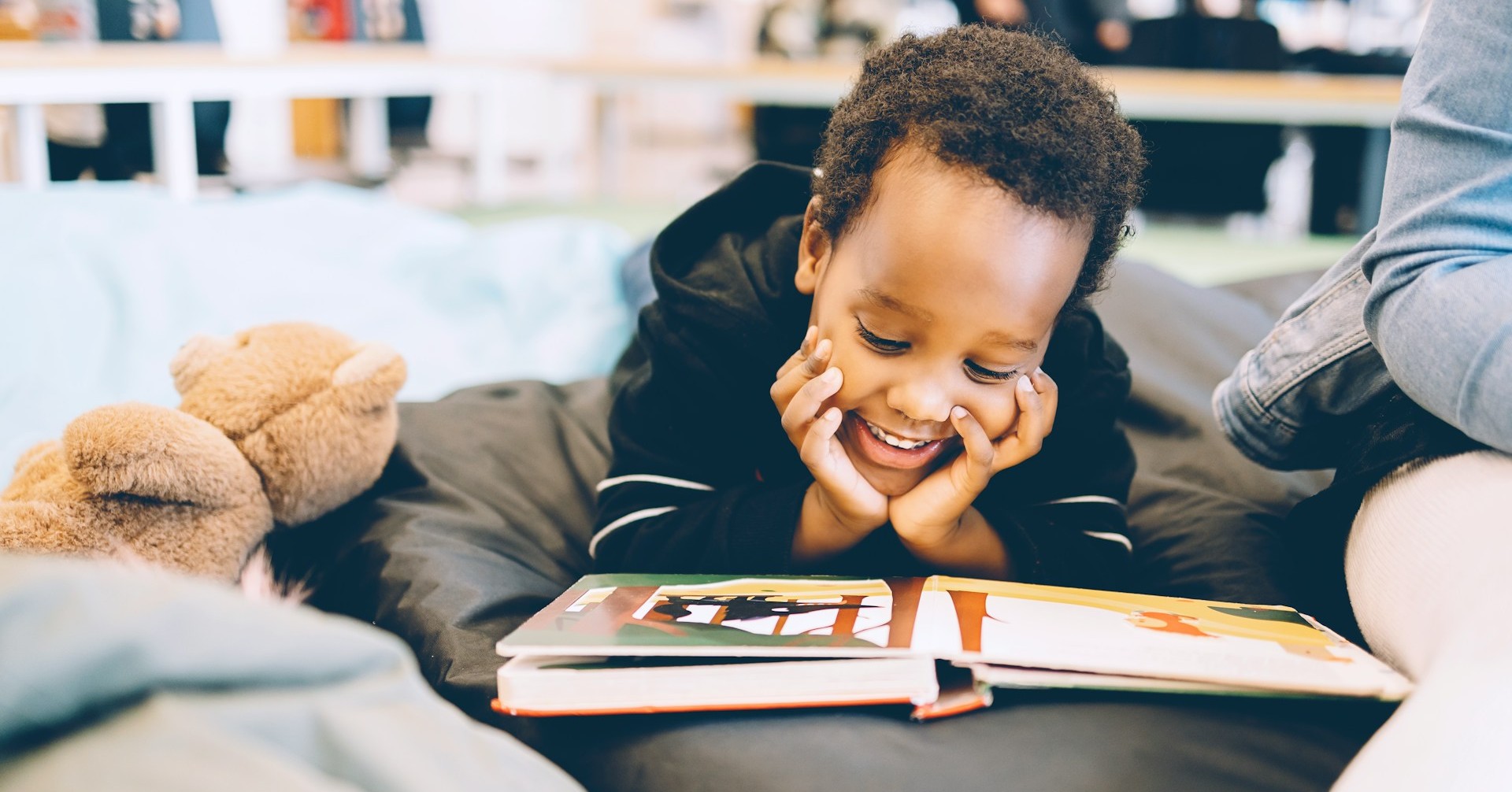
- Let them talk!
Selectively choosing how you define and describe reading time matters. For example, children may become excited and their volume may increase as they discuss stories with their peers – so, let them talk! My general rule of thumb for reading time is that all children are allowed to discuss and share the books they are reading, if I can read in my normal teacher voice and the children with me can hear.
- Shared reading ‘companion’
Students who choose to sit and listen to the teacher modelling a story will have the chance to hold ‘teddy’ during reading time. Whoever gets to hold ‘teddy’ has the ‘honour’ (not ‘role’ or ‘job’ – the description matters) of sharing with the class what the teacher read about.
- No designated seating
Students will know that in reading time they are able to choose where they sit and who they sit with to enjoy their book.
- Develop student autonomy
Let students have the choice to read by themselves, with others or with the teacher. This encourages all children to engage in reading, regardless of reading skills or ability.
- Discuss and share
During and after reading time, students and teacher have the opportunity to discuss, share and ask questions about the texts. When reading time is over, consider a designated time to discuss the texts engaged with, including a selected student from the teacher group to share what they read with the class.
- Teacher led enthusiasm!
If the teacher is excited about and enjoys reading time, so will the students!
- Make library borrowing purposeful
When my class and I go to the school library to borrow, they each have the opportunity to borrow two books. I tell my students they must choose one book that makes them love being a reader, and one book that will challenge them to become a better reader. This gives student autonomy and authority to make decisions for their learning. I make sure to check in with students and they share with me their ‘love’ and ‘challenge’ book they chose.
- Build connections in stories
Encourage your students to look for the many ways they can make connections to and from stories. For example:
- Text-to-text: noticing similarities between two books
- Text-to-world: seeing something in the book that they have learnt about
- Text-to-self: spotting a similarity between what they read about in a book and something they have experienced or are. If you model what these connections look like when reading with a group students will want to do the same.
- Get into the habit: my students know to raise their hand and share when they make any ‘connections’ with what they are reading in a book.