

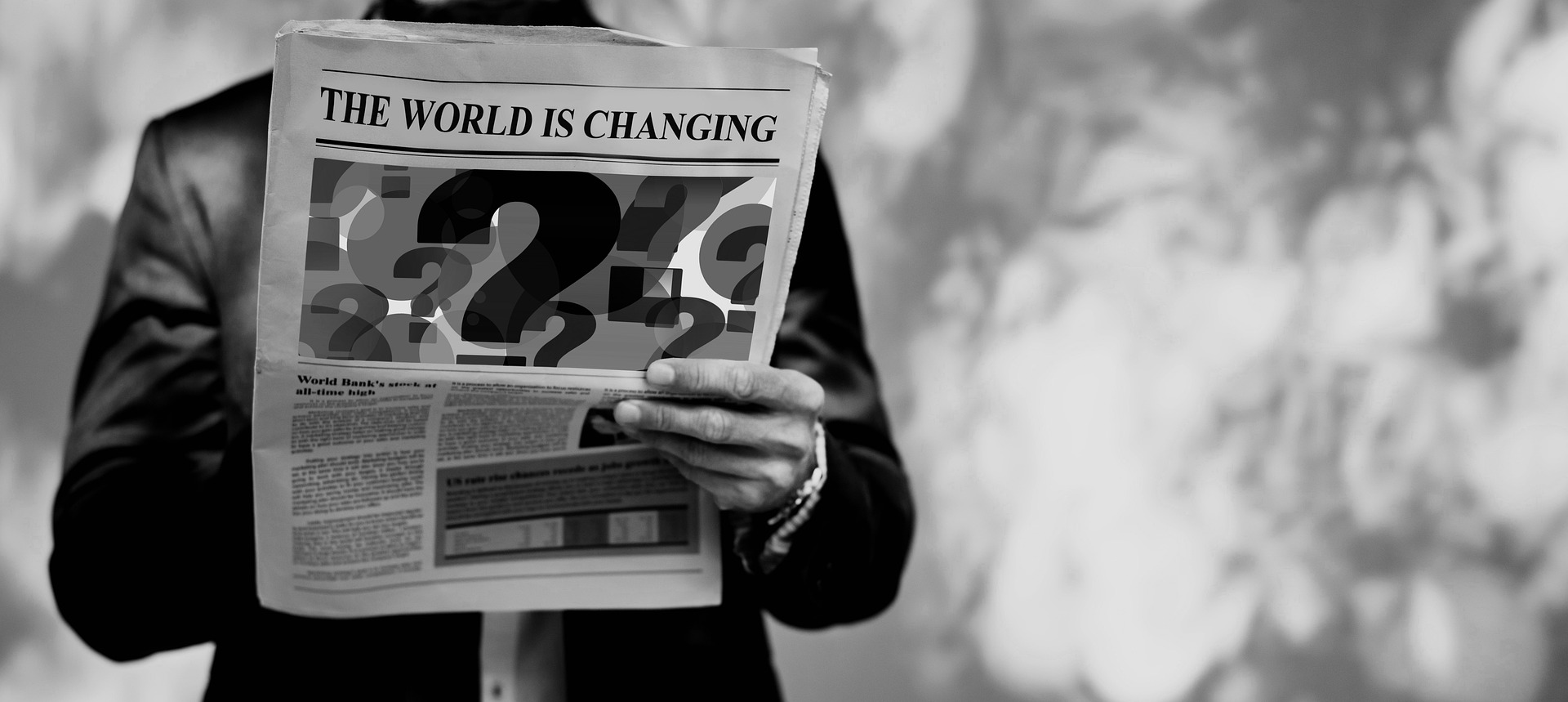
The globalised world that gave rise to the rapid growth of international education in the first quarter of the 21st Century has been changing, and not just as a result of a series of conflicts profoundly rocking the stage on which international schools have been established. Perhaps the identification of major western powers with the ideals of ‘the free world’ epitomised by Norman Rockwell’s 4 Freedoms was always an illusion, and yet something has altered and schools have to take into account a new kind of uncertainty.
Thinking outside the educational box has long been an imperative for school leaders – as James MacDonald’s excellent article on learning the language of business shows so well. But teachers around the world may also be increasingly impacted by new geopolitical realities, which Bibi Zainab Nasiri’s reflection on leaving her native Afghanistan shows so poignantly. We also think of the amazing work by the British International School of Ukraine as it has adapted to the most awful of circumstances over the last four (yes, four) years.
And yet, as Bibi Zainab argues, the realities she has faced have reinforced rather than shaken her commitment to teaching and education. And if Riyadh was the city where Frank Gardner was attacked in 2004, it too is changing, and, perhaps, in the process of becoming a hub for international education, as Almira Sirbayeva’s update from the Kingdom suggests.
Maybe international mindedness is still a force to be reckoned with in a changing world after all? However, it won’t be a simple world, and I, for one, am looking forward to Gardner’s take on it at the COBIS conference in May.