ON FIRSTS IN SCHOOLS
Struck by his first sight of snow on a distant mountain range, Dr. Nigel J Winnard reflects on the importance of acknowledging ‘firsts’ in school.
Snow on the Atlas
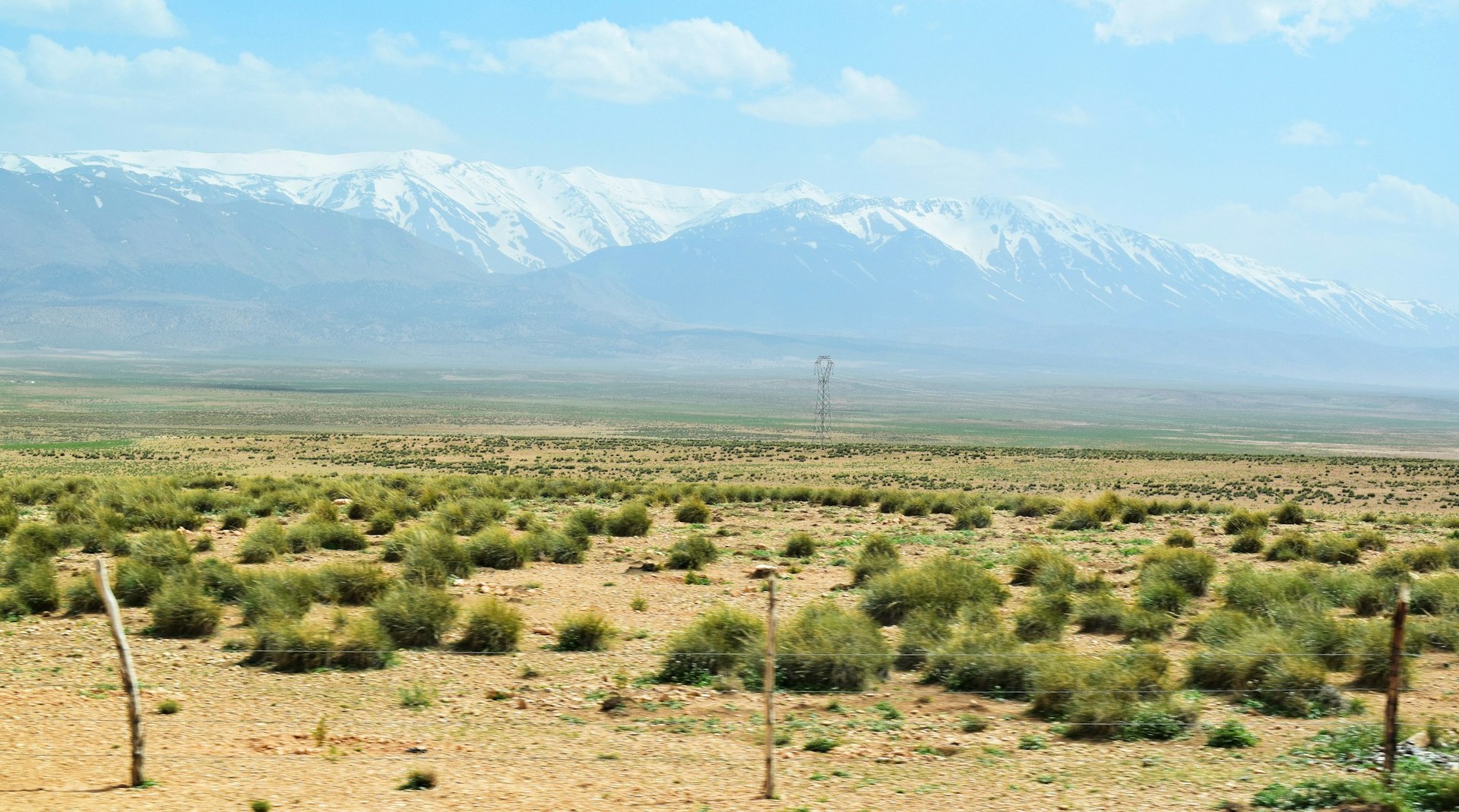
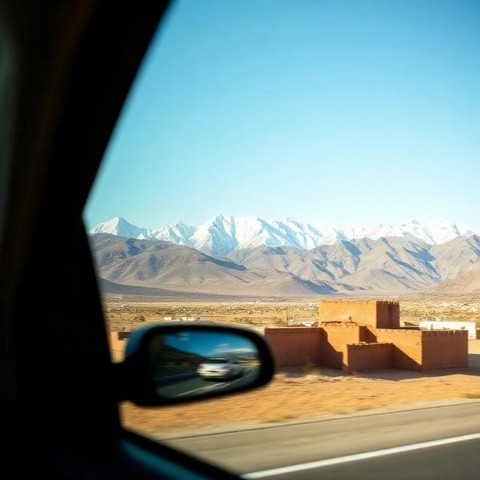
It happened, oddly enough, in Marrakech. After five decades on this planet, I had finally seen snow on mountains for the first time. Entirely by accident. Entirely without warning. I was in a taxi driving back to the medina when the horizon shifted. Beyond the heat and dust, the High Atlas rose into view, dusted with snow. For a moment I assumed it was a trick of the light. And yet there it was.
There is no shelf life on a first. No age at which wonder becomes unavailable. It arrives when it arrives. And when it does, it interrupts certainty, corrects assumption, briefly enlarges the world. Then, if we are not careful, we file it away and allow the ordinary machinery of the day to reclaim us.
Schools, I suspect, do this rather more than we acknowledge.
First encounters in schools
They are, in many respects, institutions of first encounters. The first independent sentence read aloud. The first time a child risks an unpopular answer. The first unmistakable sense of belonging, or its absence. The first public success. The first visible failure. Each one a small seismic event in the interior life of a young person. Each capable of expanding or contracting what that child believes themselves to be.
And yet how rarely do we pause long enough to feel their weight.

In research language, we speak of cognitive development, school belonging, resilience and transition. These are useful constructs. But they can also create a kind of clinical distance, a way of discussing what is happening to children without quite sitting with what it means to be them. The developmental evidence is unequivocal: cognitively rich and emotionally responsive settings strengthen language, reasoning and self-regulation in ways that shape long-term outcomes. But those macro conclusions are built upon moments so small they rarely enter research instruments, and so easily missed, they rarely enter conscious awareness. A child decodes a full sentence independently. A hesitant hand remains raised. For the learner, what matters is not the theoretical construct but the lived realisation, often sudden, private, briefly enormous, that I can do this. That moment deserves to be witnessed. Too often, it passes unremarked into the noise of a busy classroom.

Small steps to belonging
Belonging firsts are equally consequential and equally vulnerable to casual mishandling. Research demonstrates that students’ sense of school belonging is strongly associated with motivation, engagement and wellbeing. But belonging is not delivered as a programme. It is constructed through relational detail so fine-grained it is almost invisible to those doing the constructing, even as it is felt with great precision by those receiving it. The first time a teacher uses a child’s name with genuine warmth. The first time a contribution is treated as legitimate rather than peripheral. What troubles me is how casually these moments can be mishandled, not through malice but through distraction. A name mispronounced and left uncorrected. A child who waits, just slightly too long, for someone to notice they have arrived.
In international schools, where mobility is structural rather than incidental, this choreography becomes still more demanding. Across twelve years leading Khartoum International Community School and a further seven at Escola Americana do Rio de Janeiro, I watched this pattern repeat with remarkable consistency. The cities could hardly have been more different. The experience of the newly arrived child was, in its essentials, the same. For many students, identity is continually negotiated across borders, languages and systems. For Third Culture Kids, belonging is relational rather than geographical. Home becomes something carried in people rather than places. Each new arrival is both an act of courage and an act of faith that the new place will prove worthy of it.
A school can be cosmopolitan in composition and still leave a child feeling profoundly unseen.
The first welcome, the first assumption made about a student’s background, the first time their home language is affirmed rather than apologised for: all of it registers. And it registers deeply. In Khartoum, children arrived mid-year from postings that had ended abruptly, carrying the particular wariness of those who have learned not to invest too quickly. In Rio, students came fluent in the rituals of international school life, but still quietly alert to whether this particular community would make room for who they actually were. In both settings, the moments that determined belonging were rarely the formal ones. They happened in corridors, at the edge of playgrounds, in the five minutes before a lesson began.
Optimistic recognition
Performance firsts carry similar weight and similar risk. When success is attributed to fixed ability, students become protective and risk-averse; when it is linked to effort and strategy, they embrace subsequent challenge. We have known this for decades. And yet habits of praise that move through schools, You’re so bright, it just comes easily to you, continue to do quiet damage in plain sight. Failure firsts are often more formative still. Is difficulty treated as verdict or as information? Are expectations quietly lowered in ways that communicate a ceiling the child can sense but not name? That gap is where damage tends to occur.
A sense of optimism is essential. The adult who witnesses a child’s first genuine struggle and responds with curiosity rather than concern, with possibility rather than pity, is doing something quietly profound. They are modelling the very disposition that will serve that child across a lifetime.
Macro reassurance can itself become a form of inattention. If we are satisfied that the environment is broadly right, we may stop looking closely at the moments through which it operates. We may mistake a good system for good practice. We may assume that because belonging is valued institutionally, it is being experienced individually.
Everyday firsts
Those who work in schools participate daily in the firsts of young people, often without noticing. We are present at the first time a child tests whether their voice is welcome. At the first time they decide whether difficulty is disqualifying. At the first time they infer, from a glance or a tone they could not quite name, whether they are seen as capable, complex and genuinely valued.
We may not remember these moments. They will.
The snow on the Atlas was not a childhood wonder. It was a reminder that wonder does not expire, that the capacity for a genuine first remains available across a lifetime, if we are willing to look up from our assumptions.
Those of us who work in schools are surrounded by people for whom almost everything is still a first. A glance, a tone, a pause long enough to allow courage to gather can widen or narrow a young person’s sense of what they are capable of becoming. Every day contains someone’s first genuine question, first durable friendship, first honest recovery from public error. These are not incidental by-products of the educational enterprise. They are, in the most profound sense, the point of it.
Even familiar terrain may yet hold snow.

Dr. Nigel J. Winnard is an experienced international school leader, currently based in the UK
FEATURE IMAGE: by Med EDDARAMI on Unsplash
Support Images: our thanks to Nigel, lilartsy on Unsplash, Getty Images For Unsplash+ & Andrej Lišakov For Unsplash+
The post EVERY LANDSCAPE HOLDS SNOW appeared first on Consilium Education.