

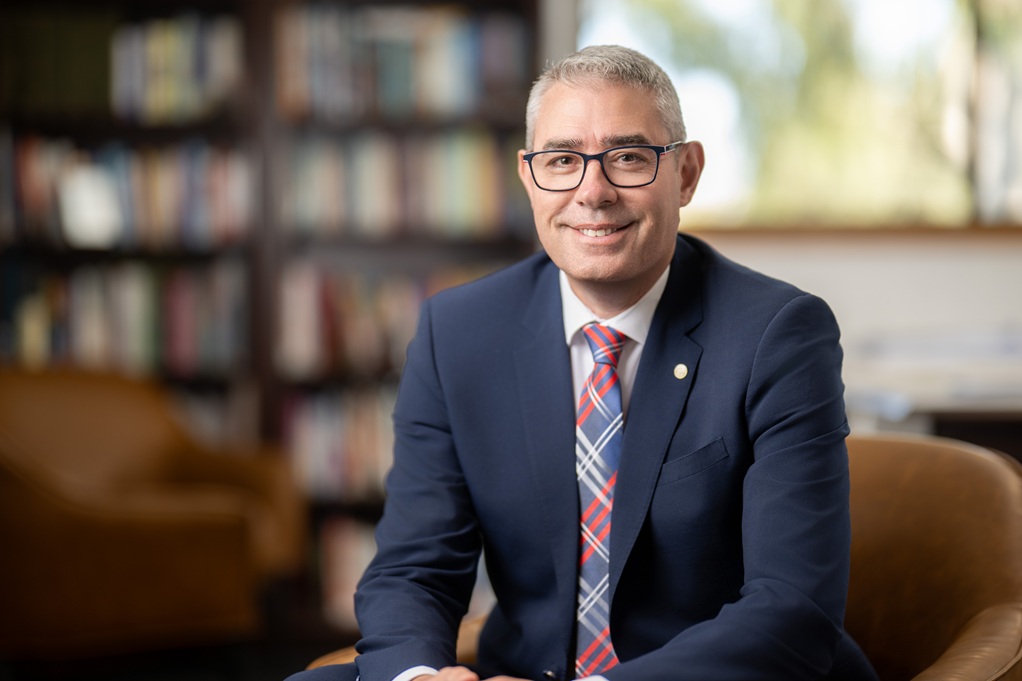
In many schools, principals influence students through assemblies, policies and the culture they set. But at one independent school in Sydney, the principal has chosen a far more personal approach to add to these levers.
Principal of Northholm Grammar, Nate Atkinson is determined to ensure every student has the best possible opportunity to succeed in the HSC, so he meets individually with every Year 12 student several times each term; an initiative that goes well beyond the traditional expectations of school leadership.
Each meeting is purposeful but conversational. Sitting one-on-one with students, this principal discusses study habits, academic progress and next practical steps as well as wellbeing and life beyond school. Together they review goals, adjust strategies, and identify challenges before they become barriers. The conversations often move naturally between academic coaching, personal encouragement, and mentoring about the future.
“For these students, Year 12 is one of the most significant seasons of their lives,” Atkinson told The Educator. “If I can sit with them, listen carefully, and help them think clearly about their next deliberate steps, that investment can shape how they approach both their studies and their future.”
His philosophy is simple: leadership in schools must be relational. In an era where the demands on school leaders have never been greater, with strategic planning, compliance, staffing, community expectations, it would be easy to conclude that there simply isn’t time for this kind of personal investment with students. Yet this principal believes the opposite is true.
“The busier leadership becomes, the more intentional we have to be about relationships. If we lose sight of the people in the midst of the work, we lose sight of the purpose of the work,” Atkinson said.
“As a principal, I don’t want my influence on students to be distant. I want every Year 12 student to know that the leader believes in them personally and is willing to walk alongside them during their most challenging academic year.”
The approach is not just inspiring; it aligns closely with contemporary Australian research about mentoring and student success.
Both the NSW Department of Education and the Australian Education Research Organisation (AERO) highlight that mentoring relationships between students and trusted adults can significantly improve wellbeing and educational outcomes, noting that a young person’s connection with a caring adult in school can positively influence engagement and achievement. Students who feel valued and connected to their school community are more likely to participate actively in learning and persist through academic challenges. An independent evaluation of mentoring initiatives conducted with Australian schools reported positive outcomes in students’ wellbeing and aspirations, factors closely linked with long-term academic success.
For this principal, those findings confirm something he has long believed.
“My experience has been that when students realise leadership genuinely knows them and cares about their progress, and they develop a clearer idea of what their future can look like, something changes,” Atkinson said.
“Their motivation becomes personal. They stop studying simply because they have to and start studying because they believe they can achieve something meaningful.”
The initiative also sends a powerful message to teachers. Staff see a leader modelling the same relational investment they aim to offer in their classrooms. Students, in turn, see a principal who is not distant but deeply engaged in their journey. In a time when educational leadership is often consumed by administrative pressures and system demands akin to that of aa CEO in a large corporation, this principal’s commitment serves as a reminder of the heart of schooling.
“If we give students time, belief, and guidance, the gains they make academically, and personally, can last a lifetime,” Atkinson said.
“When Principals take the same relational approach with students as their leadership, teaching and support teams, we have a system that supports achievement because leaders and teachers also feel supported”
For school leaders, Atkinson said the lesson is both simple and challenging.
“In the midst of an increasingly complex role, the most transformative leadership may still be found in the oldest educational practice of all; taking time to know a student well,” he said.
“Because sometimes the most powerful thing a principal can give a young person is not a speech, a policy, or a strategy, but their time, their attention, and their belief in what that student might yet become.”
*The above article was supplied to The Educator by Northholm Grammar and has been published with permission.