

From Artificial Intelligence and engineering to finance and medicine, mathematics quietly powers much of the modern world. Yet, reports show many young Australians are falling behind in this subject.
Recent national testing paints a worrying picture. Roughly one in three students are failing to meet key literacy and numeracy benchmarks in NAPLAN, while international assessments show only a small proportion of Australian students are reaching the highest levels in mathematics.
Against this backdrop, anecdotes that spotlight the transformative power of maths have never been more important.
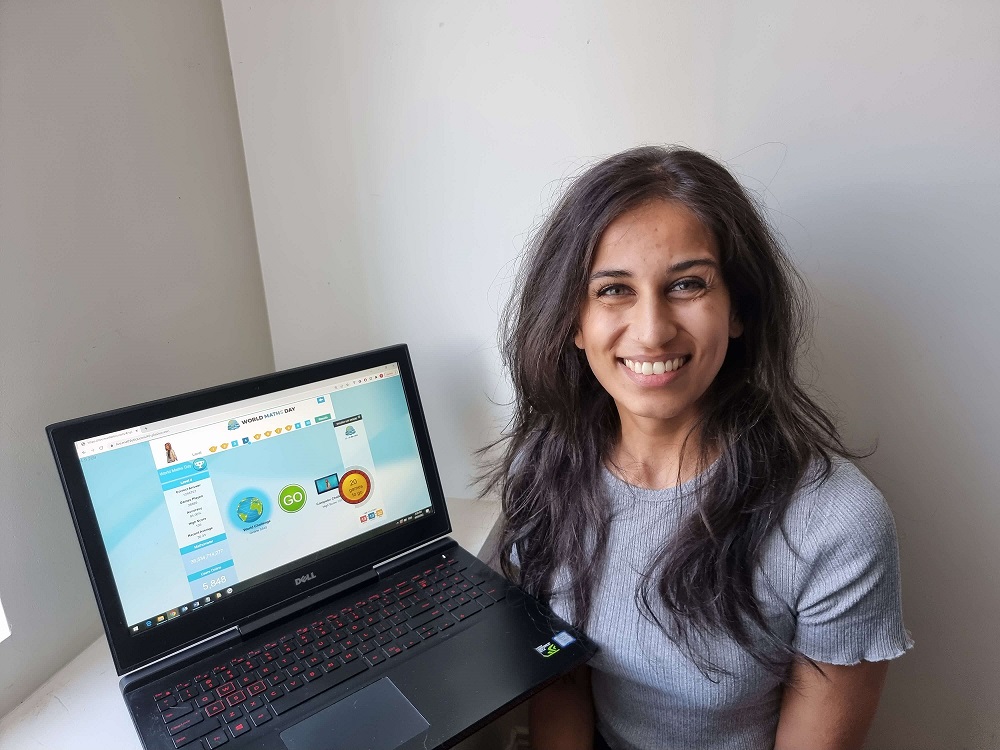
One such story belongs to Tatiana Devendranath-Bala, who has been dubbed Australia’s “Human Calculator”.
At just 14, she stunned the world when she won the 2008 World Maths Day competition, correctly answering more than 65,000 questions in 48 hours. A fiercely dedicated competitive mathlete, Devendranath-Bala practised with more than a million questions in the lead-up to the event.
Today, she serves as a World Maths Day ambassador and works at ANZ Bank leading major technology initiatives – applying the same analytical thinking that once powered her remarkable maths performances.
Helping to shift the mindset
Devendranath-Bala said young people should recognise maths as an important skill because it shapes how problems are solved, how decisions are made, how money is managed, and how we understand the world around us.
“Maths is involved in some form in almost every industry, but for many students, maths feels intimidating before it ever feels empowering,” Devendranath-Bala told The Educator.
“That’s why events like World Maths Day matter so much — they turn maths into something fun, social and allows students to build confidence.”
Devendranath-Bala pointed out that when students compete, collaborate and celebrate their progress, they start to see maths differently.
“It becomes a skill they can do, not something reserved for ‘geniuses.’ World Maths Day helps shift mindsets — and that shift can have a lifelong impact.”
Belief is the real barrier
The latest NAPLAN results show that while numeracy results are broadly stable overall, the gender gap remains, with boys still outperform girls in numeracy.
When asked what schools and teachers can do to better engage and inspire young girls to pursue maths with confidence and curiosity, Devendranath-Bala said girls must be taught to see themselves as capable mathematicians from the very beginning.
“Confidence grows when girls feel supported, encouraged and represented,” she said. “Teachers play a huge role in this — through the language they use, the examples they highlight and the opportunities they create for girls to lead and succeed in maths.”
Devendranath-Bala said showing real-world applications, celebrating effort over perfection and introducing female role models in STEM all make a difference.
“When girls see maths as creative, collaborative and relevant to their future, their curiosity grows. And once confidence takes hold, it opens doors to pathways they may never have considered.”
Small steps, big gains
One issue that has been holding many young people back is mathematics anxiety – a fear or apprehension of mathematical activities. A 2024 study warned that this can disrupt performance by fuelling worry, which reduces the attention students need for learning and tests.
Devendranath-Bala said for those who find the subject intimidating or frustrating but want to improve and build their confidence in mathematics, taking a baby steps approach and asking questions can make a big difference.
“Maths is a skill, and like any skill, confidence grows with practice, patience and the right support,” she said. “Start small — even 10 to 15 minutes of practice a few times a week can make a real difference.”
Devendranath-Bala said it is also important to celebrate progress, not perfection.
“If something feels hard, it doesn’t mean you’re bad at maths; it means you’re learning. And don’t be afraid to ask questions — curiosity is one of the most powerful tools you have,” she said.
“With consistent practice and a positive mindset, anyone can build strong maths skills.”
Find out more about Mathletics and World Maths Day here: mathletics.com/au/