

You can watch this week’s episode above or listen/download below.
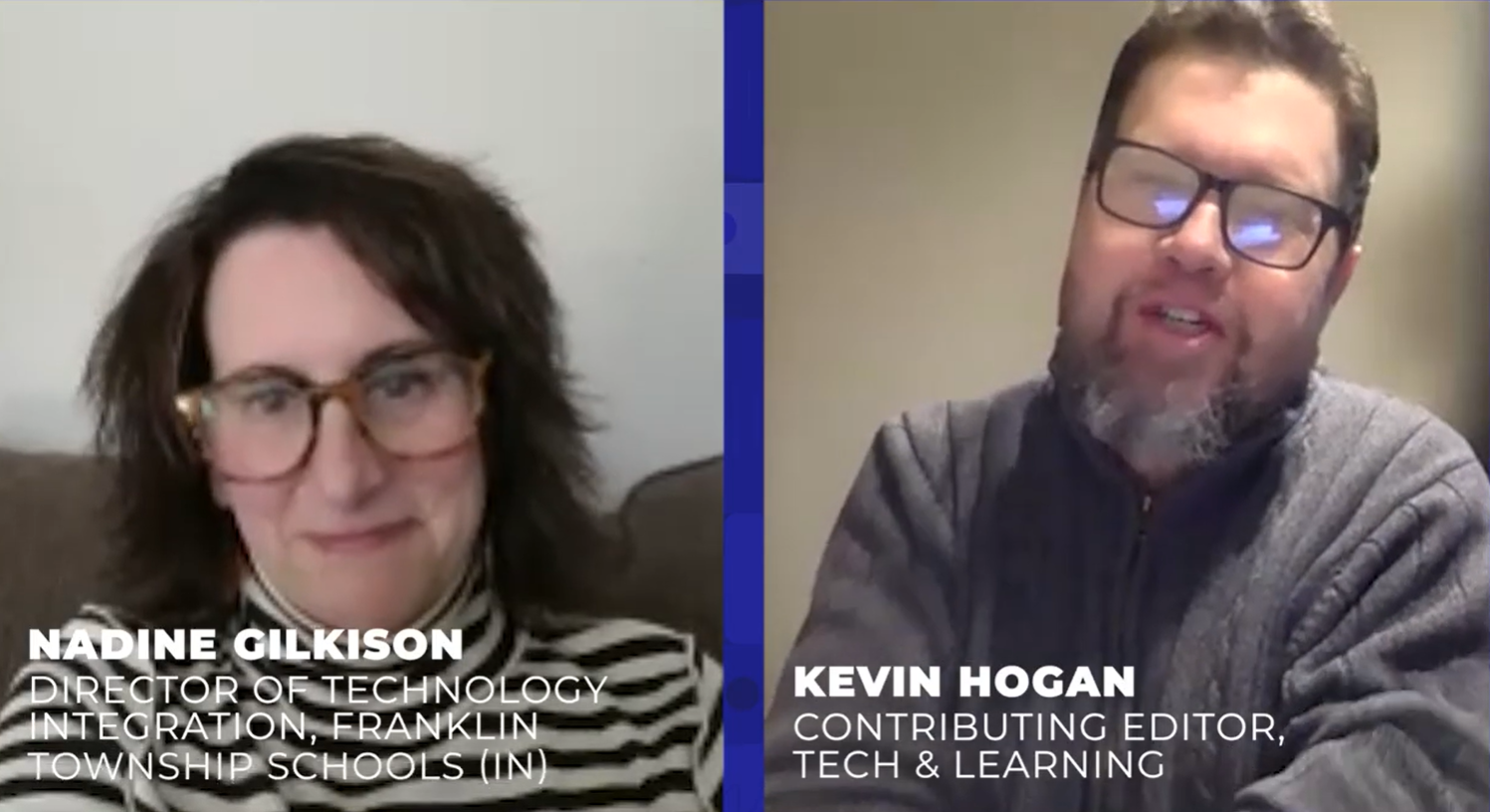
While many school districts remain stuck debating AI policies and compliance issues, Franklin Township Schools in Indiana has built something different: a culture in which artificial intelligence serves as a learning companion rather than another initiative to fear. I had a great spontaneous chat with Nadine complete with a cameo from the superintendent from his car!
Nadine, who has been the district’s Director of Technology Integration for 11 years, started her AI journey not with bans or restrictions, but with a year of foundational professional development. Her approach was simple yet strategic: help teachers understand how AI actually works before expecting them to use it.
“I had to explain to them that a tech tool is like a car,” Nadine says. “All of these different companies are cars, but underneath the hood, each one of them are connected to a large language model.” That basic analogy helped teachers move past the overwhelming flood of AI product announcements to understand the underlying technology.
The turning point came from a personal experience. Nadine’s dyslexic son came home from high school frustrated that his resource teachers, despite their best efforts, couldn’t possibly know all the content across his multiple subjects. “That was like this giant aha moment,” she says. She saw how AI tutoring could fill that gap.
Rather than rushing to a district-wide rollout, Franklin Township applied for Indiana’s digital learning grant and piloted School AI with special education and English language learner populations. The results spoke for themselves—from helping students work through thesis statements to instantly translating for a third-grader who spoke Punjabi.
The district’s approach reflects what Nadine calls, “AI safety as a design challenge rather than a compliance issue.” They chose School AI specifically because teachers can see student chat interactions—something Google’s Gemini integration doesn’t allow, even for Google admins.
“We don’t view AI as an initiative, we view it as a companion,” says Superintendent Dr. Chase Oteri. His advice to hesitant colleagues? “Starve the issues and feed the possibilities. That worst case scenario playing out in your head is not what’s going to happen.”