

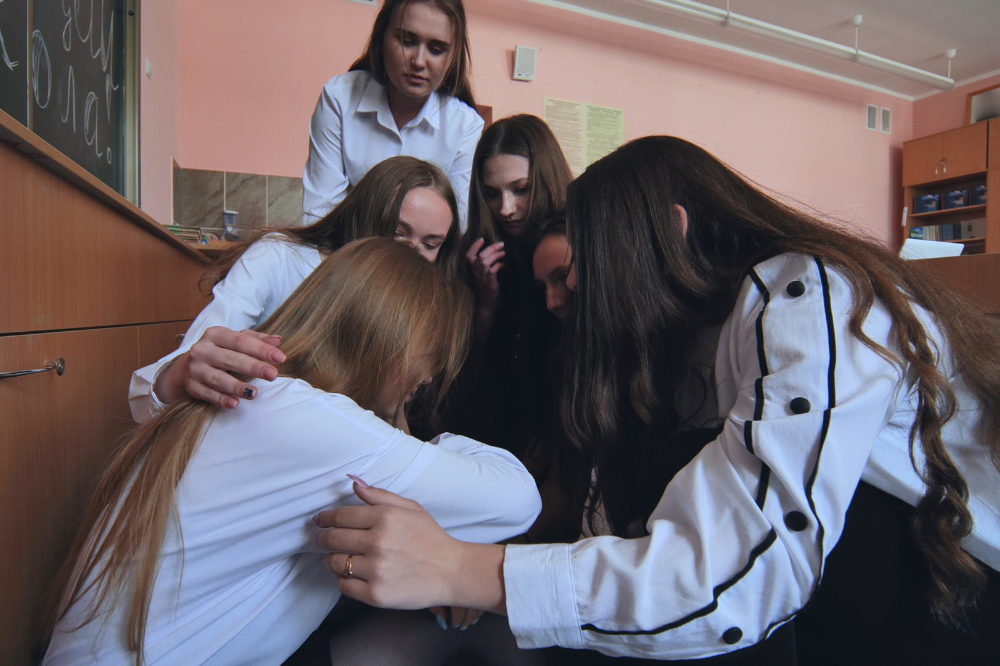
Across Australia, growing evidence shows mental health issues are taking hold earlier, with primary-aged children increasingly affected.
With most mental illnesses emerging before adulthood, schools and families sit on a critical intervention window. Get it right early, and outcomes change. Get it wrong, and the costs can last a lifetime.
Michael Hawton, a psychologist and former teacher with 35 years’ experience, currently works in more than 135 NSW primary and secondary schools, addressing high levels of student anxiety. In 2003, Hawton founded Parentshop, which has grown to become “Australia’s leading child, teen and adult anxiety and behaviour-change specialist.”
The problem with ‘rescuing’ anxious kids
In partnership with the New South Wales Primary Principals’ Association (NSWPPA), Parentshop developed The Anxiety Project (TAP) to address high levels of anxiety in NSW primary schools.
Hawton says the biggest points of difference between The Anxiety Project and other SEL programs are that The Anxiety Project is based on a whole-of-population change approach and it reduces ‘unhelpful’ accommodations by adults (which is a major contributor to child anxiety).
“These unhelpful accommodations occur when parents help their child to avoid normal life challenges, by ‘jumping in’ too often,” Hawton told The Educator.
“It is perhaps a normal response from a parent or a teacher to want to jump in and rescue a child from being in distress but the problem with this is that the more we jump in to rescue them, the less experience children get in dealing with these normal life challenges.”
By changing how adults interact with children, children can develop inner resourcefulness, Hawton said.
“We do lots of planning with schools to support their implementation of The Anxiety Project in aligning the project with each school’s own school improvement plan,” he said. “This means the project runs alongside existing school planning, with ongoing support based on social change planning used by UNICEF to effect change.”
Why the ‘hot’ moments matter
Hawton said the focus should shift away from quick fixes and towards a more holistic, whole-school response.
“One issue that we find is lots of SEL programs use a ‘fix-the-child’ model which says that by just teaching children meditation or to be grateful that that is somehow ‘good enough’. This isn’t enough,” he said.
“It is a sub-optimal solution. A much better approach lies in teaching children about their brains – and changing the behaviour of the adults around the child.”
Hawton said this involves teaching adults to support children in moments of discomfort – while also supporting them to ‘have a go’ at normal life challenges.
“We often find that lots of kids tend to avoid normal life challenges, and this is also true for even non-anxious kids,” he said. “This project also looks at changing the interactions between parents, staff, and children. You don’t have to be a psychologist to change these interactions.”
Hawton said a key strength of The Anxiety Project is helping leaders, teachers, and parents to respond to children in what are known as ‘hot’ moments.
“This is when a child is anxious in front of you. Sometimes children will shy away or feign in the face of a challenge. So, a lot of the training is how to equip teachers to know what to say and do in those ‘hot’ moments,” he said.
“If we don’t fix this in the near term, we will have many more kids who are so much more anxious, and this will put a massive strain on the mental health system.”
What happens when schools act early
Hawton pointed to a 2024 study by Patrick McGorry and others which shows that, in Australia, there has been a 50% increase in prevalence of diagnostic-level mental disorders in young people aged 16-24 since 2007.
“These problems begin in childhood,” Hawton said. “Early intervention is so important because a lot of this anxiety starts off as habits. By changing the habitual response in children very early in primary school, we want to change children’s orientation to facing normal life challenges.”
Find out more: Watch some clips from Patrick McGorry from a recent seminar; including also hearing from some current participating schools in The Anxiety Project here.
Hawton said the impact of the project extended well beyond student outcomes, with unexpected flow-on effects for teachers and school culture.
“One unexpected finding from our research was that teachers have come to us and said: ‘we’ve found new purpose in our role as a teacher’ and they have used the learnings from this project in their own family at home,” he said.
“Teachers tell us that they not only have a renewed sense of purpose in their jobs, but that it has changed the culture within the school. We weren’t looking for this, and we really didn’t expect it.”
‘Teachers are becoming more enthusiastic’
In the schools that are using The Anxiety Project, teachers regularly attend fortnightly morning Zoom cafes with the project leadership team during term to support ongoing implementation.
“The key messages that come across in these ‘Zoom cafes’ are that teachers are becoming more enthusiastic and involved in the project, and they share how they are making progress with their peers,” Hawton said.
“The researchers provide feedback regularly to schools in the project assisting them to understand how they were making progress, and the data has shown a decrease in children’s anxiety, as well as improvement in teachers’ ability to identify and manage children’s anxiety.”
You can find out more about The Anxiety Project and how to sign up here.