

By Karen Costa
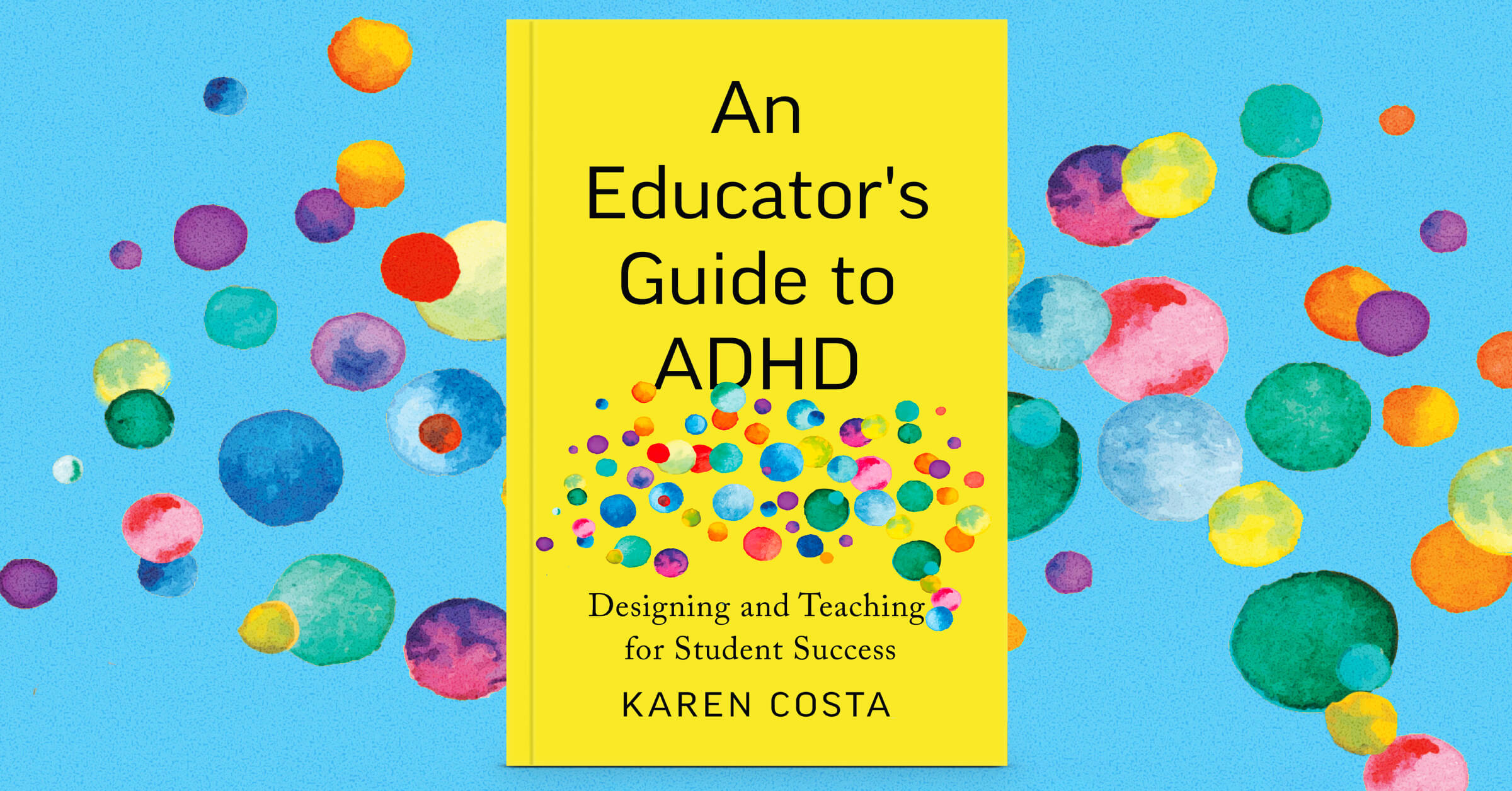
Later this month, my second book, An Educator’s Guide to ADHD: Designing and Teaching for Student Success, will be released into the world. Structured in two parts, the book invites educators to explore how they can better understand and support students with ADHD.
In the first part, I present my case for why mindsets about ADHD are typically deficit-based—focusing on what people with ADHD struggle with, rather than recognizing their strengths and potential. I know this firsthand. Even as a person with ADHD who has spent her career designing and teaching with inclusivity in mind, until I wrote this book, my own mindset about ADHD was fundamentally flawed.
The second part of the book offers educators practical strategies that they can immediately begin using in their classrooms. That’s important, of course, but the ability to use those practical strategies hinges on the first part: educators’ mindsets about ADHDers.
If teachers believe that their ADHD learners are broken and in need of fixing, that they have a deficit of attention, or that they are a burden on their class, these beliefs set everyone up to fail—both the educators themselves, and their students. All of these assumptions are simply not true.
Instead, here are four metaphors that teachers can use to start doing the work of shifting to a strengths-based, challenge-aware mindset about ADHD.
1. Open House
The metaphor that starts my book is to envision a house with all its windows thrown wide open. On a day like today, as I write this piece, I could reach out my hand and catch a falling snowflake. What a gift, right? But I’d also be pretty cold.
Similarly, the ADHD brain is one of cognitive flexibility and openness. It allows us to often be in total presence with the world around us, leading ADHDers to be energetic, creative, and passionate. On, the flip side, it also means that we are more exposed to overwhelm.
Our openness is not inherently wrong or right, just as the more closed nature of the neurotypical “house” is neither wrong nor right. They are simply different ways of being and experiencing our surroundings.
2. Pots and Colanders
Let’s imagine that you’re making pasta for dinner. In order to cook the pasta, do you need a pot or a colander? Which of those instruments is “better”?
Neither, of course. Instead, they each have different uses. Pasta first gets cooked in the pot, then it is drained with the colander.
A neurotypical brain is more like the pot—steady and contained, able to hold multiple thoughts long enough to process, prioritize, and act on them in an organized way. An ADHD brain, by contrast, is like a colander. Full of openings that let in far more stimuli at once. Ideas, sounds, emotions, tasks, and sensations pour in quickly. This flood of input sparks quick internal connections, resulting in a more fluid, interconnected neurological profile that’s believed to fuel our remarkable creativity.
But just as you can’t cook pasta in a colander, students with ADHD often need help from external structures in order to focus, organize, and manage tasks.
3. Sledding
When I grew up in the 1980s, we used to go sledding each winter at the overpass near the highway. It was a chaotic scene, where children and adults alike would rush to their cars with broken bones and bloodied noses after a rough trip down the hill. Boy, was it fun though.
Today, people go to sledding parks, where there are designated lanes and attendants to make sure you don’t crash into each other.
ADHD is the 1980s; we bring a lot of fun, but chaos can ensue. Neurotypical folks are today’s sledding parks, more orderly and precise. Each approach has its pros and cons.
4. Scenic Route
Did you travel by car to see loved ones over the holidays? If so, what route did you take? Did you drive as quickly as possible from point A to B? That’s one way, but it’s not the only way.
Maybe you chose to avoid the highway and take the winding back roads instead. Or perhaps you detoured to a bakery to pick up the perfect holiday pie, driving a little bit off the beaten path to get it.
What was the correct way to reach your destination?
Wrong question.
Here’s a better one: What was the way that best served you?
ADHD is the scenic route in life. We often prefer the road less traveled, and in many cases, we go where there are no roads and pave a new path. This is what works best for us.
What is your mindset about your ADHD learners? What have you been taught to believe about them? How might you open your mind up to new possibilities, beyond false dichotomies that limit all of us, into a new and better world where the truth of ADHD’s strengths and challenges are respected, understood, and appreciated?

Karen Costa is an author, adjunct faculty, and faculty development facilitator working in higher education. Her second book, An Educator’s Guide to ADHD: Designing and Teaching for Student Success, will be released by Johns Hopkins University Press on January 20, 2026.