
The Albanese Government’s social media ban has officially come into effect today, with major social media platforms instructed to start blocking children aged under 16 from creating accounts or face penalties of up to $49.5m if they fail to comply.
The Online Safety Amendment (Social Media Minimum Age) Act 2024, which passed Parliament in late November 2024 and came into effect today, force social media giants to take “reasonable steps” to keep under-16s off their platforms — or risk fines of up to $50 million.
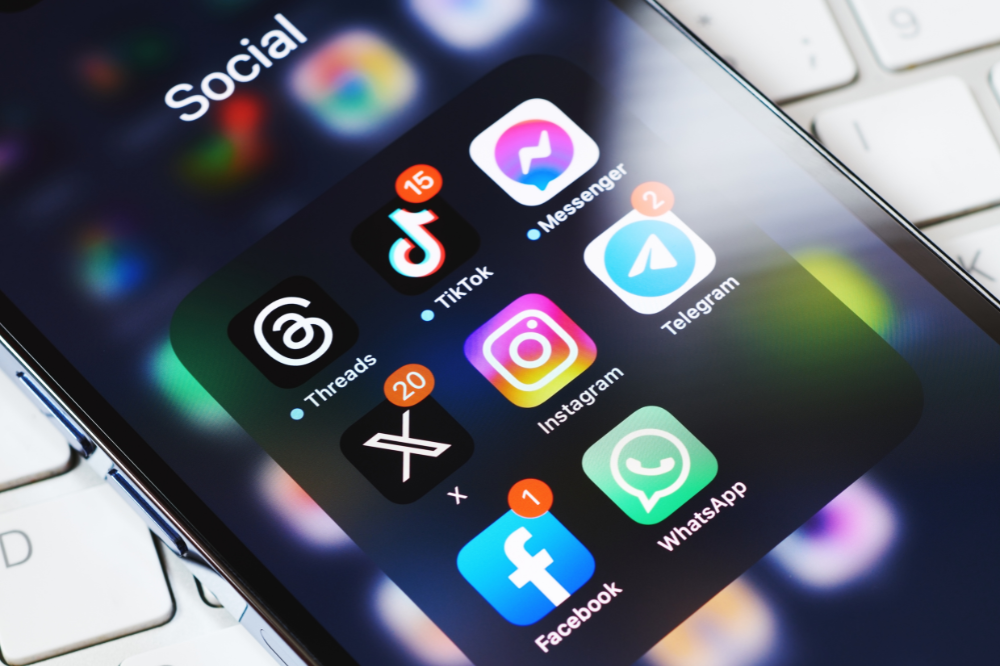
And it’s not just one or two apps in the firing line. Facebook, Instagram, Threads, X, YouTube, Snapchat, Reddit, Kick, Twitch and TikTok are all covered by the new laws, which the Federal Government says will make life safer for young Australians – both on and offline.
“Australians who’ve lost a son or a daughter, Australians who have seen the direct impact of social media causing social harm for their families, for their communities, people who have had the courage to take what is a personal tragedy and turn that into a commitment and determination that others who will follow will not go through the traumatic experience that they have,” Albanese said at a press conference in Kirribilli House today.
“This is indeed a proud day to be Australian, because – make no mistake – this reform will change lives for Australian kids, and allowing them to just have their childhood.”
Albanese also lauded parents who he said helped make the new law possible.
“To those parents… I just say, you have my admiration; I just bow down to you because this change has come from you, and it’s a government that has then responded.”
In a statement today, Australia’s eSafety Julie Inman Grant said the “world-leading” initiative was an important new addition to Australia’s online safety framework.
“Enforcing a minimum account age of 16 will create normative change and give young people a reprieve from powerful and persuasive design features built to keep them hooked, often enabling harmful content and conduct online,” Inman Grant said.
“We recognise no single safety measure is a silver bullet but restricting social media accounts for under 16s is part of a holistic approach that includes eSafety’s education and outreach; our complaint schemes; our role ensuring industry transparency and compliance with unlawful and age-restricted material codes and standards; and our work promoting Safety by Design.”
However, some experts question how the ban will work in practice.
Barney Tan, Professor and Head of School at the UNSW School of Information Systems and Technology Management (SISTM) cautioned that demand-side regulations, which rely heavily on controlling individual behaviour, can be tricky to enforce.
“Regulations may be more effective if they are focussed on the supply side – requiring social media platforms to implement robust safety mechanisms and processes,” Barney Tan, Professor and Head of School at the UNSW School of Information Systems and Technology Management (SISTM) told The Educator.
“This could include improved content moderation tools, age verification systems, and default privacy settings that prioritise child safety. By shifting the responsibility onto platforms, we create a more consistent and reliable structure for online safety, complementing parental involvement with systemic protections.”
Another expert has warned that the ban may have a particularly damaging impact on vulnerable youth.
Dr Alexia Maddox, Director of Digital Education and Senior Lecturer in Pedagogy and Education Futures in La Trobe University’s School of Education, said the ban – while well-intentioned – risks “significant unintended consequences”, particularly for vulnerable and marginalised youth.
“Research shows that social media platforms often provide crucial support networks for young people in rural and regional areas, LGBTQIA+ youth, and those with disabilities,” Dr Maddox told The Educator.
“There are also technical and privacy challenges in implementing age verification systems that would affect all users, not just young people.”
Perhaps most concerning, says Dr Maddox, is the likelihood that such restrictions would push young people toward less regulated platforms.
“On these platforms, young people may face greater risks, rather than addressing the fundamental issues of online safety.”