
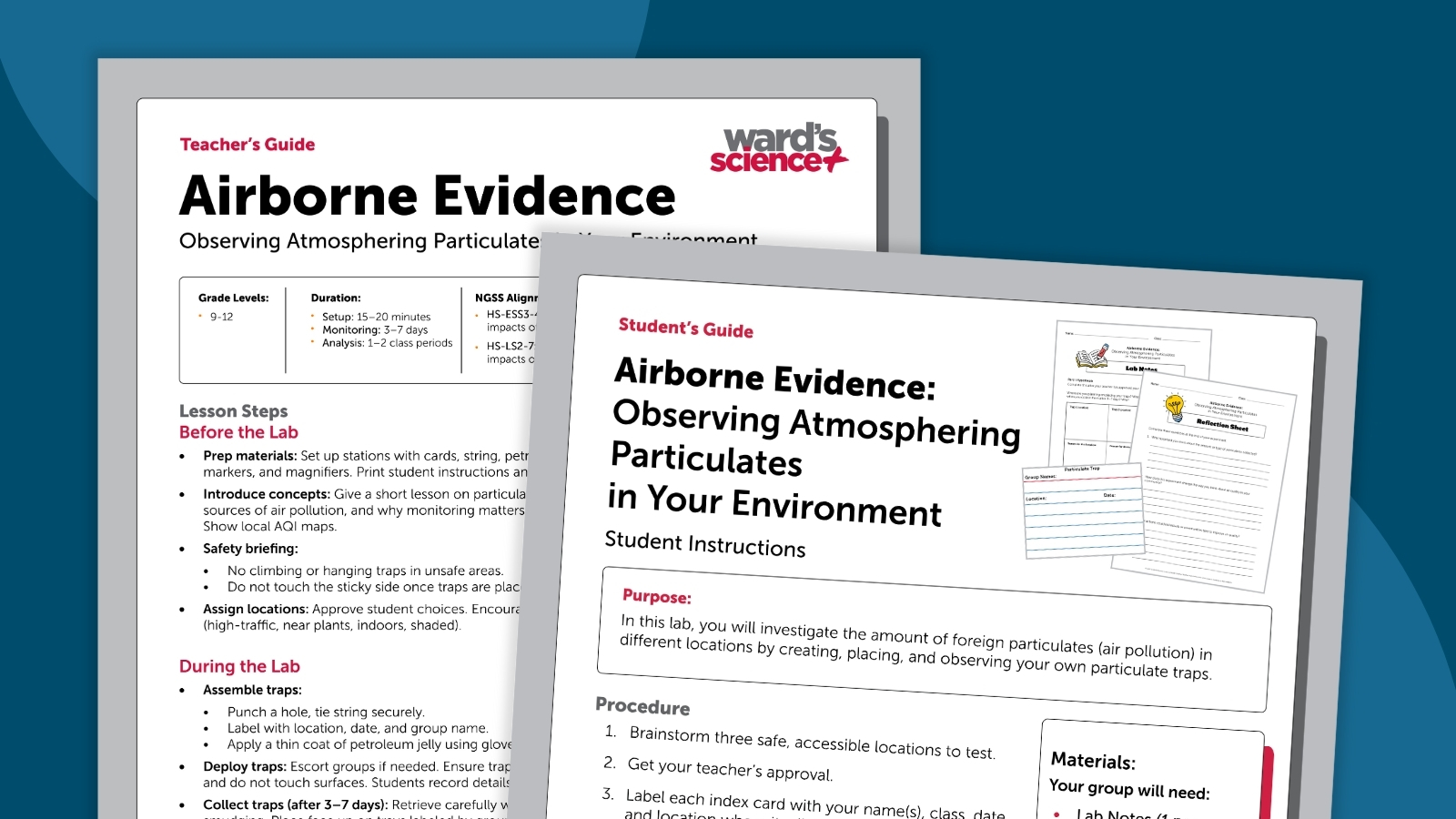
Air pollution is often invisible to the naked eye, but this memorable experiment makes it impossible to ignore. In this free, ready‑to‑use lesson plan from Ward’s Science, your students create petroleum‑jelly–coated index card particulate traps. After hanging them in various locations, they return later to observe the dust, fibers, soot, pollen, and other airborne evidence they’ve collected.
It’s a powerful way for students to see the impact of air quality firsthand and to compare results across the school environment. Best of all, this inquiry‑based activity requires minimal prep and fits beautifully into your earth science, AgSci, environmental science, biology, chemistry, or general science unit plans.
Here’s What’s Included in the Airborne Evidence Experiment Bundle
Bring This Engaging Air Quality Experiment to Your Classroom
Students can use this lab while studying pollution, ecosystems, weather, animal systems, or human‑environment interactions. It also works well when you simply want them to become more curious observers of the world around them. No matter the context, this activity provides a simple and high‑impact learning experience. Click the button below and fill out the form to snag your lesson plan for free!