

Jump to winners | Jump to methodology
New face of teaching – not just a job
This current generation of young teachers and educators has been shaped by rapid technological change, rising workload pressures and industry-wide workforce shortages. As a result, school leaders across the country say today’s standout early-career teachers are stepping up, bringing a powerful blend of adaptability, ambition and values-driven leadership to their roles.
Ben Moody, deputy head – teaching and instructional leadership at St Michael’s Grammar School, believes that the most effective young educators are those who see themselves as more than subject specialists pinned to a syllabus. “They need to be equipped with the global competencies that will enable them to flex and adapt to a volatile educator landscape,” he says.
Knowledge and content expertise still matter, but they are no longer sufficient on their own. What distinguishes top young teachers and educators, Moody suggests, is the way they model “exceptional attributes in creativity, critical thinking and learner agency” – the very capabilities Australian students will need for “an ever-evolving landscape of future work and learning”.
From the principal’s office, Westbourne Grammar School’s Adrian Camm sees a similar pattern. Rising Stars, in his view, combine initiative, drive and a willingness to learn fast. “Standout early-career educators bring initiative, drive and an ability to learn on the job,” he says. “They are humble, typically ambitious and solutions-focused and have high levels of academic and emotional intelligence.”
The combination of ambition tempered by humility and IQ balanced by EQ is becoming increasingly vital in schools where student needs are complex and community expectations are high.
Rising Stars find their feet fast
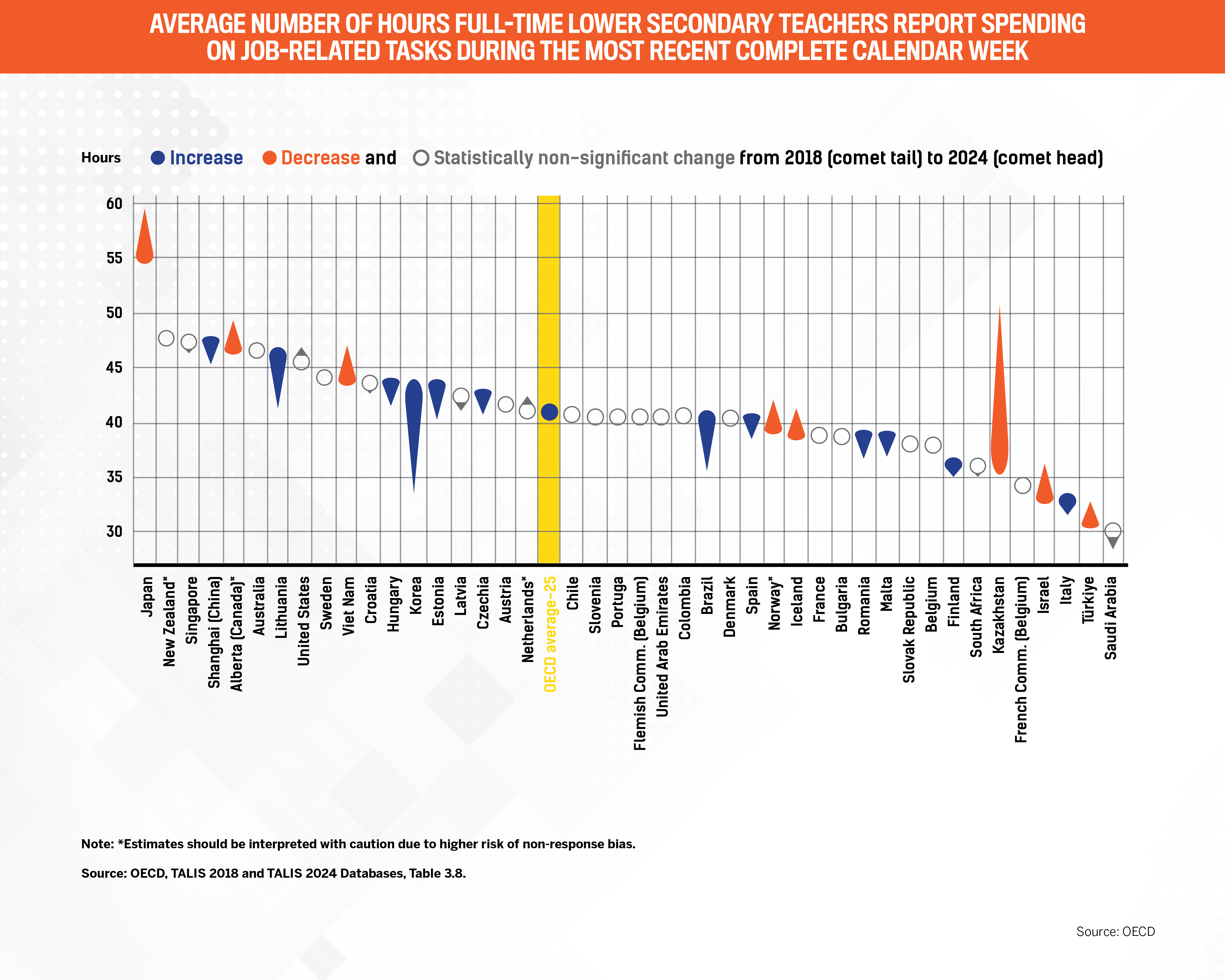
The OECD Teaching and Learning International Survey (TALIS) laid bare the challenges facing young teachers and educators in Australia:
-
The average age of teachers is 42, lower than the OECD average of 45.
-
The share of teachers aged 50 and above has not changed since 2018.
-
84% of teachers report that, all in all, they are satisfied with their jobs (lower than the OECD average of 89%), which is six percentage points lower than in 2018.
UNSW Sydney research found that 90% of teachers reported moderate to extremely severe levels of stress, while more than two-thirds experienced moderate to extremely severe symptoms of depression and anxiety. Moreover, 68.8% of teachers described their workload as largely or completely unmanageable.
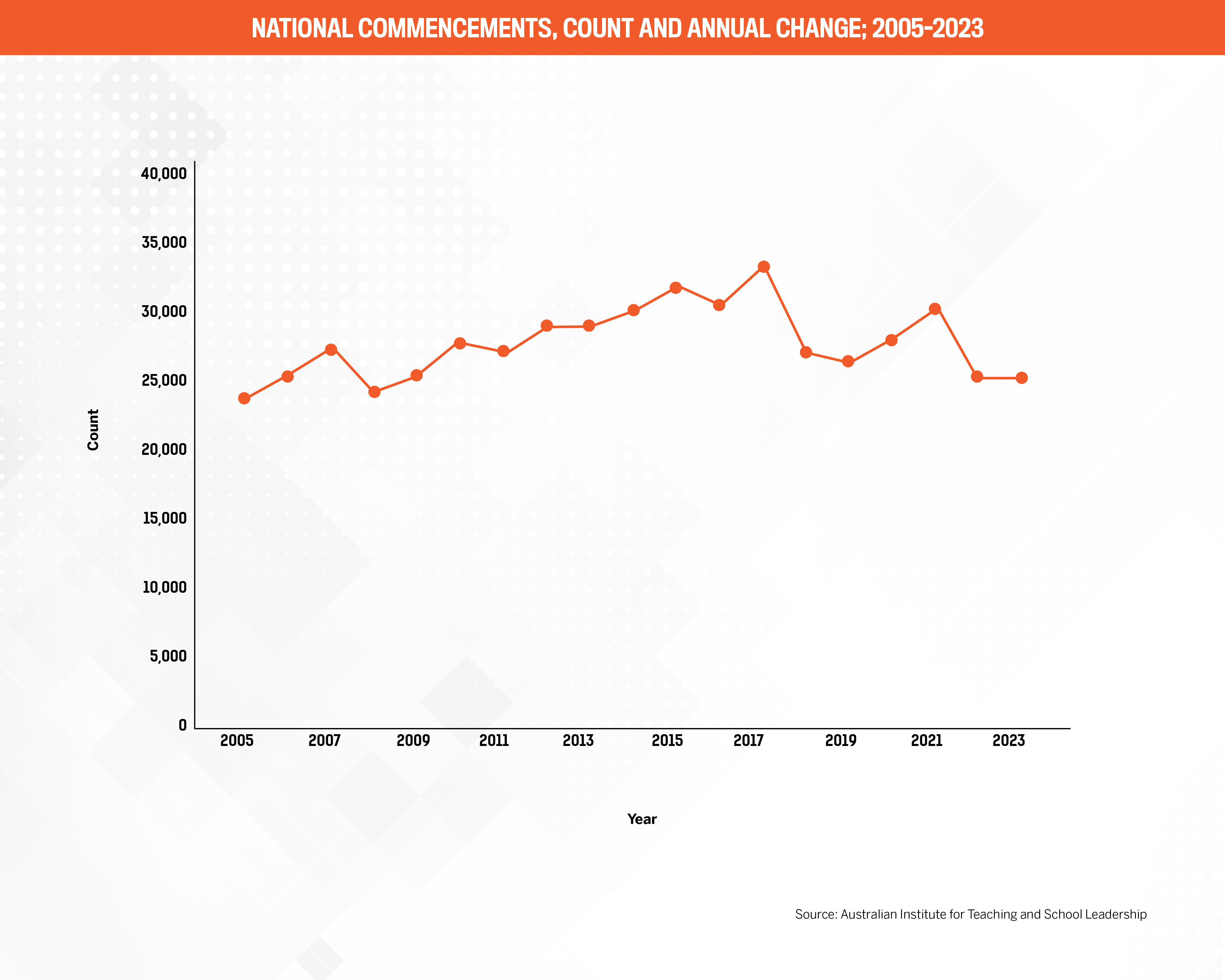
According to the Australian Institute for Teaching and School Leadership, ITE commencements remain at their lowest level since 2008, putting increased pressure on young teachers to showcase their leadership skills earlier.
In that context, the attributes Moody and Camm highlight are not “nice to haves” – they are the tools for success in 2026. Creativity allows young educators to redesign learning when the standard playbook isn’t working as well as it could. Critical thinking helps them make sense of competing demands and evidence. A strong sense of learner agency, modelled in their own practice, enables them to hand genuine responsibility to students.
The University of Sydney’s professor, Robyn Ewing, AM, co-director of the Creativity in Research, Engaging the Arts, Transforming Education, Health and Wellbeing (CREATE) centre, expects the best young educators to be constantly learning. “I see them as very collaborative and consultative of the people they’re working with and able to have work-life balance, compassion and empathy,” she says.
The Educator’s Rising Stars 2026, all aged 35 or under, are a group of standout professionals who have demonstrated these qualities along with effective leadership, innovation and achievement in their careers to date. They were selected following an in-depth review of all nominations.
Still only in her second full year, Courtney Lewis has become a cornerstone of her school community beyond the classroom. As a year-level leader (Year 9 and 10), she shapes the culture of an entire cohort, and in 2025, she stepped straight from graduation into her own classroom and the leadership role.
Those year-level leader roles were completely new at St Martins, with no predecessor and no processes to follow, so Lewis chose to be there “for the foundational work of these roles” and to set them up to benefit the school.
That willingness to build something from the ground up is underpinned by a leadership style rooted in empathy. Lewis feels the biggest thing in her role is having the ability to listen to students and colleagues alike about their issues and problems.
“I can’t jump in and fix everything for them, but just having somebody that they can sit and talk to about what’s happening for them, that’s really important,” she says. “I’ve worked out that listening is such an important part of this role.”
She has strengthened this already by completing professional development courses about coaching and developing listening skills. The impact is clear, as one colleague even brought her flowers after a conversation where Lewis provided comfort and support.
“I have had a few people go, ‘That’s not a part of your role’. But you can’t go ‘I do this, and I can’t do anything else’. I like to go outside the box because we, as educators, need to wear so many different hats,” she adds.


“I want to do more coaching and be there to support and mentor teachers as well, but I don’t want it to take me away from the kids in the classroom”
Courtney LewisSt Martins Lutheran College
Lewis brings the same relational focus to every student she teaches. In the classroom, she pairs clear expectations with deep respect, believing that respect goes both ways and must be extended to students as people. She is acutely aware that young people are still learning to manage and navigate their emotions and may arrive at school “angry with the world” without knowing why. Her response is compassion, empathy and understanding that tomorrow is a fresh start; no bad day will define a student in her eyes. That ethos has powerful ripple effects.
She explains, “I got a Christmas card from one student, and what she wrote in it just made me absolutely cry. I didn’t realise the impact that I’d had on her by just saying hello in the hallway and checking in every now and then.”
Her early success is also built on a rich life beyond school. Before teaching, Lewis spent years being a part of sporting community committees, coaching junior and senior teams and serving as secretary for junior regional leagues. She came to university later than usual, starting her degree when her son was six months old and her daughter was a toddler – a demanding period that proved her determination and work ethic.
“The life skills and having that type of life before coming into the classroom have definitely helped me as a person,” she says.
Perhaps most revealing is Lewis’ reaction to being named a Rising Star. “I wasn’t expecting it, as we don’t do this role for the recognition,” she says. “For me, it’s just about being there for the kids.”
William Duffield – St Joseph’s Nudgee College
As the driving force behind his school’s performing arts, William Duffield has overseen rapid growth across debating, esports and the Writers’ Circle – but what sets him apart as a Rising Star is his insistence that expansion must never outpace purpose.
“What has guided me is a deliberate focus on relationships and belonging. Performing Arts at Nudgee is not simply about performance but about forming young men who have the confidence to contribute, the courage to take risks, and the capacity to connect with others.”
Over the past year, his biggest challenge has been ensuring that increased participation does not come at the expense of culture. “This progression has deepened my understanding of the role the performing arts play within a school. It is not an addition to education but an essential part of it,” explains Duffield. “It is in these spaces that students learn to think critically, to speak with conviction, and to develop the confidence that carries into all aspects of their lives.”

“A teacher who makes a difference understands that education is not only about what is taught but also about who a student becomes”
William DuffieldSt Joseph’s Nudgee College
He works with staff and student leaders to build environments where boys feel known, supported, and challenged in equal measure, trusting that when this balance is right, meaningful growth follows. Where his focus was once on facilitating as many opportunities as possible, it has now become about shaping pathways.
Duffield adds, “Perhaps most significantly, my professional growth has been shaped by the people around me. The culture at Nudgee, one of generosity, mentorship and shared purpose, continues to challenge and refine my practice in ways that extend well beyond any formal learning.”
Looking ahead, Duffield’s goals are both ambitious and deeply grounded: to broaden participation across all year levels, deepen community connections, and embed authentic student leadership within each program, so that every boy who passes through performing arts leaves with a stronger sense of confidence, capability and belonging.
The way to create more stars
While TE’s Rising Stars 2026 are thriving, Australia’s educational sector is not without operational barriers, particularly for young educators and teachers.
OECD’s TALIS showed that in Australia, among teachers under age 30, 19% express their intention of leaving teaching within the next five years (similar to the OECD average: 20%). However, this share has increased by seven percentage points since 2018.
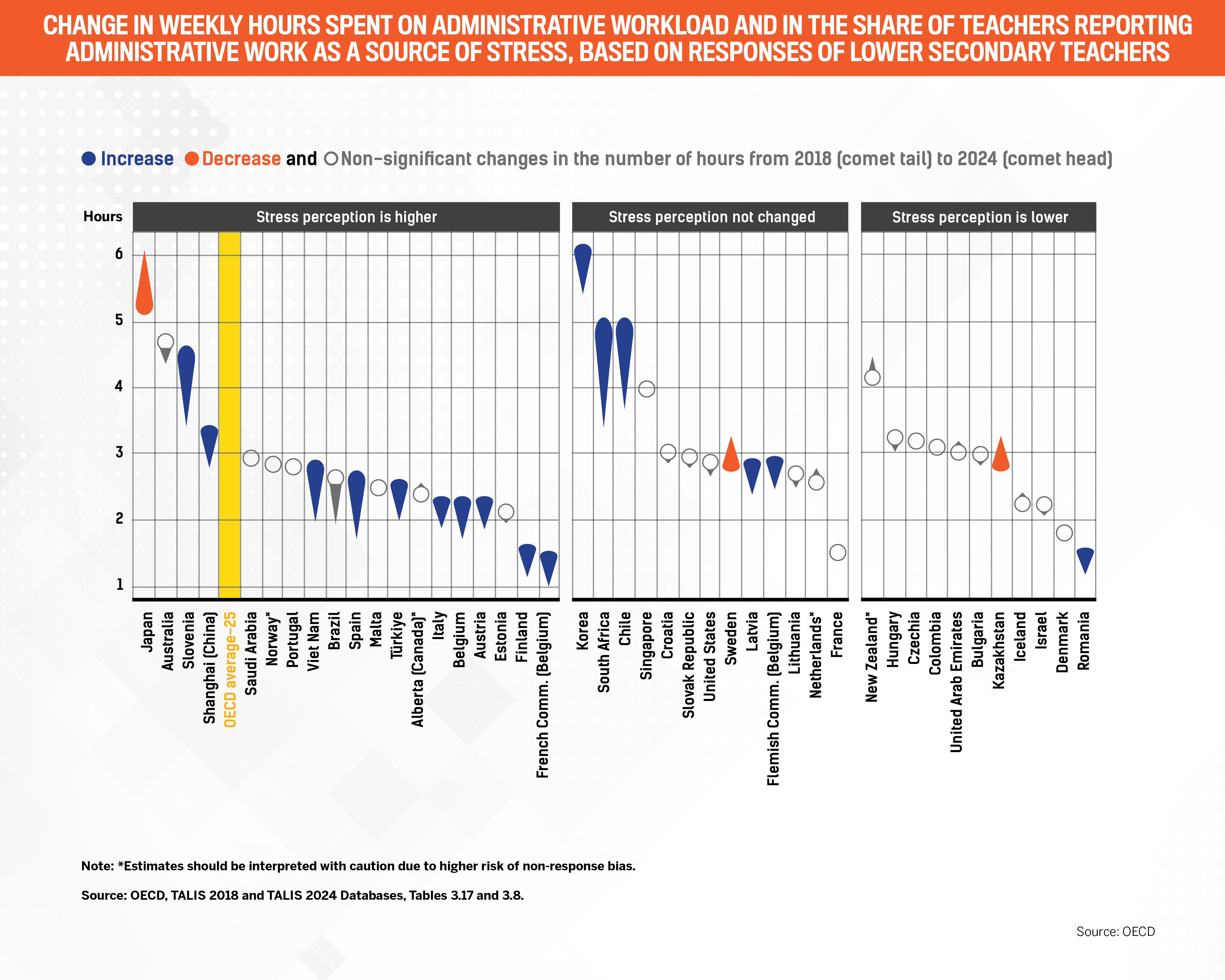
Part of the issue for young teachers detected by Professor Ewing is that they have to spend significant time on paperwork and procedures. She says, “That doesn’t allow enough time for the creativity and the innovation that they would like to; I think that can be a problem.”
Camm points to how society tends to view the teaching profession based on the public narrative. He wants to see teachers trusted as autonomous professionals. “We can address this by changing the negative rhetoric that is propagated about schools and teachers by some media outlets,” he says. “Instead, we should be telling positive stories about the great things happening in schools in this country.”
Camm also describes formal and informal mentoring as “critical” to the formation of a young teacher’s identity. The guidance he received early in his career, he recalls, was pivotal in shaping his sense of what was possible. “If early-career teachers are supported and made to feel like they belong, they then believe anything is possible in relation to their advancement,” he adds.
Moody highlights the increased expectations around peripheral administration and accountability. He says, “We must absolutely prioritise effective coaching and mentoring through both formal and informal processes.”
He emphasises the need to advocate for teachers as highly trained and skilled professionals who develop skills across a wide portfolio of disciplines. “Subject experts, relationship builders, counsellors, effective communicators and sources of daily inspiration and trusted connection – the breadth of attributes is quite unique,” he adds. “It should be more widely recognised and celebrated so that we can attract the very best young people to see value in a teaching career.”
Individuals
- Amy Griffin
Assistant Head of Year and Secondary Teacher
John Paul College - Antonella Lavorato
Newman Coordinator
St John Bosco College Engadine - Brooke Schofield
Primary Teacher and Primary Lead Teacher
OneSchool Global - Caiti Wade
Dean of Learning and Teaching
St Laurence’s College - Caitlin O’Hehir
Mathematics Coordinator
Rosebank College Five Dock - Cathy McKenna
Head of Campus (Mount Isa)
Queensland Pathways State College - Chedyn Webster
Sports Coordinator
St John Bosco College Engadine - Chloe Brown
Lead Teacher and Year Level Coordinator
John Paul College - Delia De Bellis
Newman Facilitator/Gifted and Talented Coordinator
Corpus Christi College Maroubra - Ellen Lewis
Primary School Teacher
OneSchool Global - Gregory Sciortino
Pastoral Coordinator
Domremy College/Sydney Catholic Schools - Holly Wedd
Head of Mathematics
Orara High School - Joel Connolly
Year 1 Classroom Teacher
Townsville Grammar School - Kahlie Sleiman
Leader of Learning and Pedagogy
Southern Cross Catholic College - Keeley Pernice
Year 2 Teacher
Snowy Mountains Grammar School - Kessiah Hamlyn
Secondary Teacher
Rivermount College - Lauren Stephenson
Instructional Specialist
Sacred Heart Catholic Primary School Villawood - Matthew Nicklin
Teacher
Townsville Grammar School - Meg Muir
Teacher
Stuartholme School - Renee Fengitis
English Coordinator
St John Bosco College Engadine - Rita Bechara
Year 6 Teacher/Mathematics Coordinator
St Michael’s Catholic Primary School - Rose Shamoail
Head of House (Middle School)
Caulfield Grammar School - Ruby Harris
Year 5 Teacher and Head of Crown House
Westminster School Adelaide - Samantha Rigg
Kindergarten Teacher
Snowy Mountains Grammar School - Sarah Garvan
Science Coordinator and Teacher of VCE Biology and VCE Chemistry
Warrandyte High School - Siobhan Phyland
Head of Dixon House
Caulfield Grammar School - Stella He
Senior School Social Science Teacher
Queenwood - Taylah Kuhar
Community Engagement Leader/Classroom Teacher
St John XXIII Primary School - Tayla-Jay Topp
Leader of Learning and Curriculum Engagement
FisherONE Online Education - William Duffield
Deputy Director (Debating), Esports Coordinator, Writers’ Circle Coordinator and Inclusive Learning Teacher Aide
St Joseph’s Nudgee College - Zainab Bilal
Digital Product Manager
Little Learners Love Literacy
Schools
- Bishop Druitt College
- Caulfield Grammar School
- Corpus Christi College Maroubra
- Domremy College/Sydney Catholic Schools
- FisherONE Online Education
- John Paul College
- Little Learners Love Literacy
- Loreto College Marryatville
- OneSchool Global
- Orara High School
- Queensland Pathways State College
- Queenwood
- Rivermount College
- Rosebank College Five Dock
- Sacred Heart Catholic Primary School Villawood
- Snowy Mountains Grammar School
- Southern Cross Catholic College
- St John Bosco College Engadine
- St John XXIII Primary School
- St Joseph’s Nudgee College
- St Margaret’s Anglican Girls School
- St Michael’s Catholic Primary School
- St. Andrew’s Cathedral School
- St Laurence’s College
- St Martin’s Lutheran College
- Stuartholme School
- Townsville Grammar School
- Warrandyte High School
- Westbourne Grammar School
- Westminster School Adelaide
Insights
The Rising Stars 2026 report was launched with a call for entries from the entire Australian K–12 education sector. To be eligible, candidates for the Rising Stars award must be aged 35 or younger, be working in a role related to the K–12 education sector, and have demonstrated effective leadership, innovation, and achievement in their career to date. Both self-nominations and nominations on behalf of colleagues were accepted.
In addition to recognising individual Rising Stars, the School Leadership Award was introduced to celebrate the schools fostering these exemplary young talents. This award acknowledges schools that provide an environment where young educators thrive, support teachers to excel and demonstrate outstanding leadership, innovation and achievement in nurturing early-career educators.
Winners of both awards were judged on the substance of their nominations, with a particular focus on specific outcomes achieved and supporting data. This included evidence of effective leadership practices, professional development opportunities, and initiatives fostering teacher success and student growth.
The Educator team conducted a meticulous review of all nominations to ensure the awards highlighted the very best contributions to the Australian K–12 education sector.
The report is supported by the Australian Boarding Schools Association.