

KQED Teach is a free media literacy platform that’s designed to help empower students, via teacher training, in an age of media overload.
The idea is to help prepare young people for a world of misinformation, generative AI, and student voices. While students can learn on the fly, this tool aims to help educators guide students to be more confident in the media world.
This is a free professional development platform from KQED, the public media organization behind PBS and NPR. The idea is to teach educators by doing — creating their own media — before using those skills to help teach students similarly.
Thanks to a blend of pedagogical frameworks and applied creativity, this is a really unique and powerful offering to help bring media literacy into classrooms more effectively.
What is KQED Teach?
KQED Teach is primarily a free professional development platform, aimed at teachers. The idea is that by teaching them how to be more media literate, they will pass on that learning, understanding, and mastery to students.
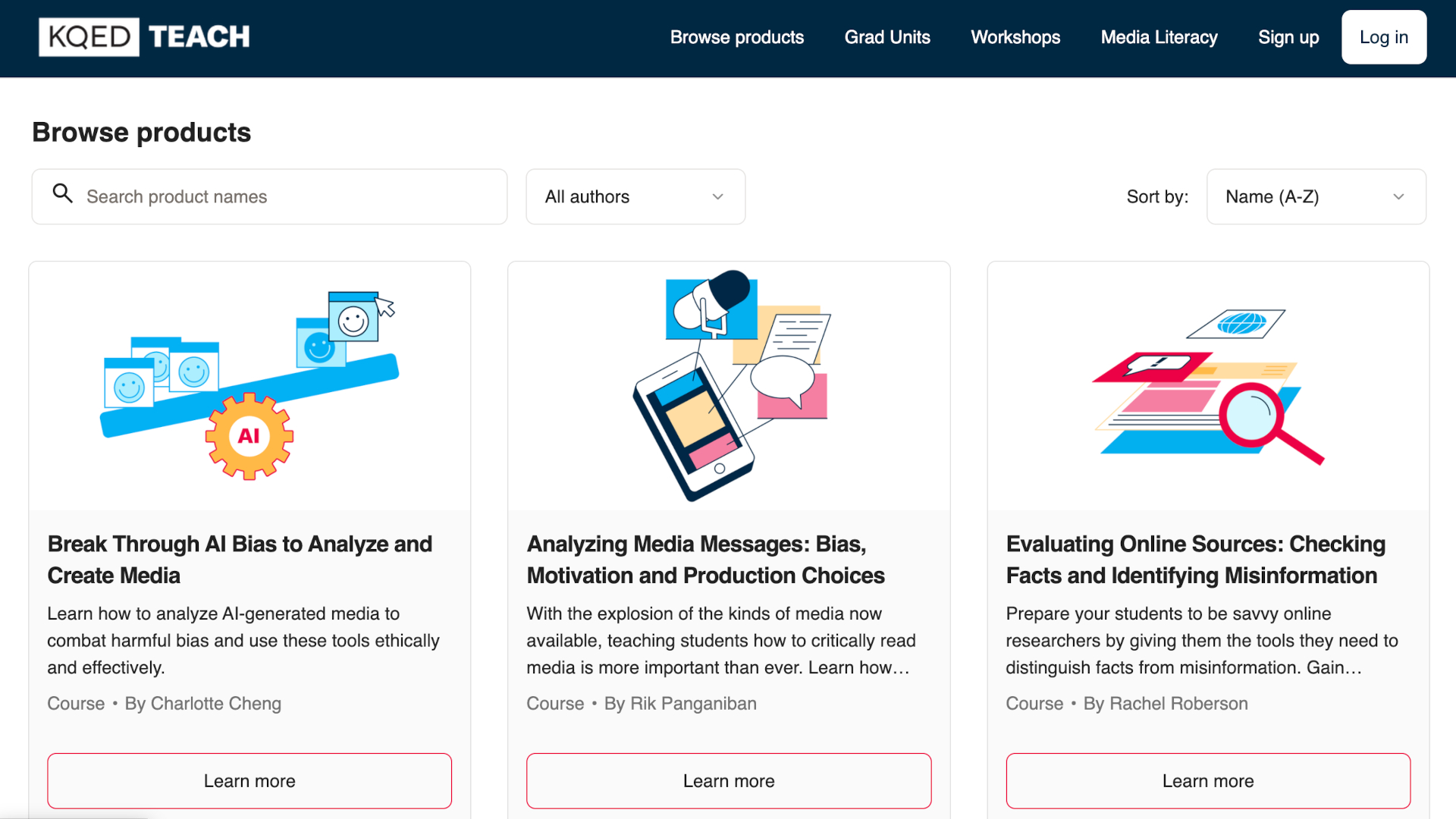
KQED Teach works across K-12 subjects and grade levels. The point is to help teachers to integrate digital media creation, analysis, and civic dialogue into classroom learning. This is done using a library of ever-growing self-paced online courses and live workshops. The courses include topics such as video storytelling, audio production, fact-checking, misinformation, infographic design, and the ethical use of generative AI.
A focus is on both reading and writing media across the courses. Thus, educators can learn critical analysis including examining bias, credibility, and persuasive techniques. They can also develop media creation skills across the likes of podcasts, graphics, and interactive content, too.
Teachers can attain certificates for professional recognition having completed these courses. Many courses allow participants to earn graduate-level credits through university partnerships.
How does KQED Teach work?
KQED Teach is a very practical platform built on creating, sharing, reflecting, and applying. All that should mean teachers are creating in a way that allows them to experience the challenges that their students could be facing.
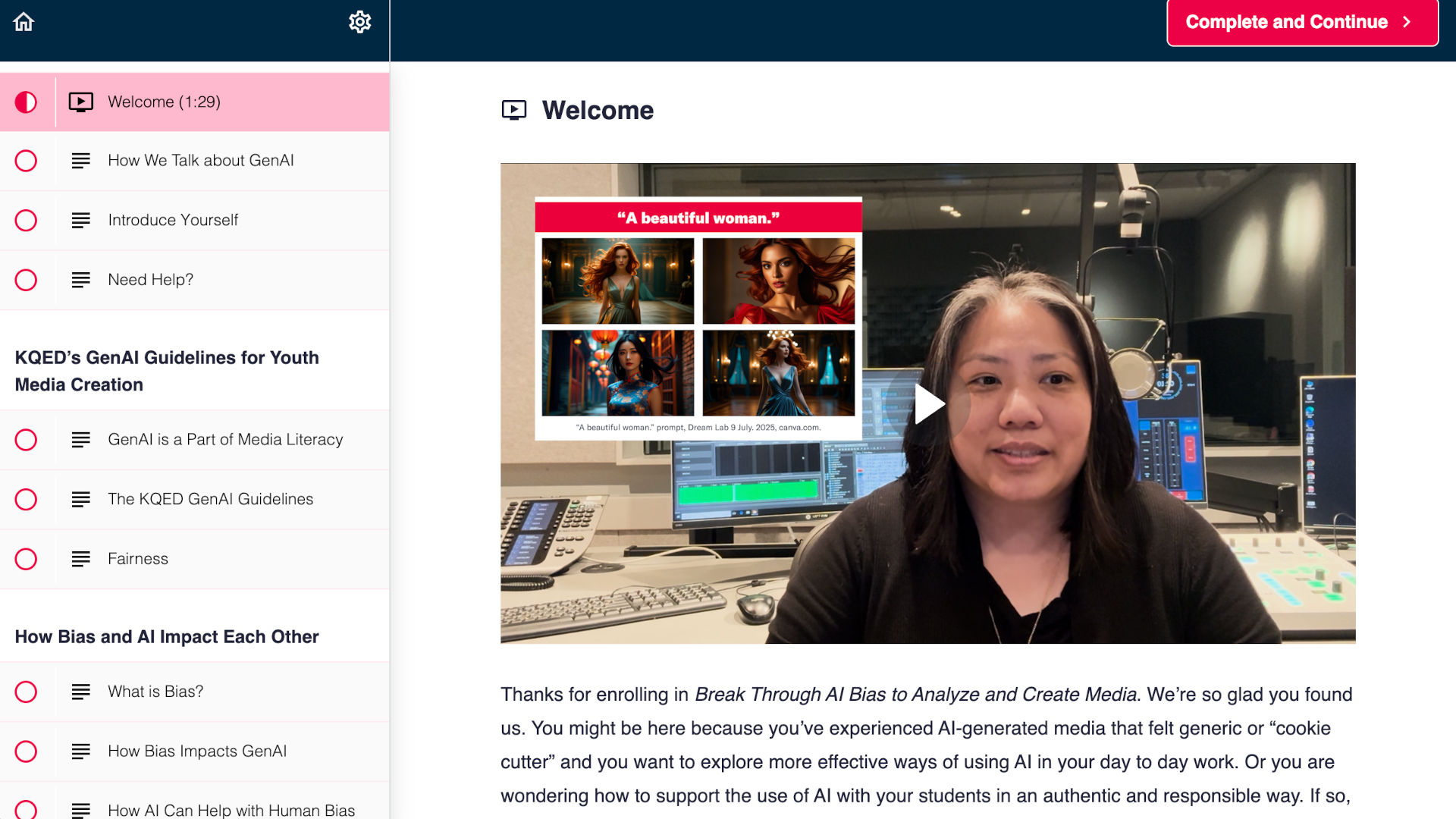
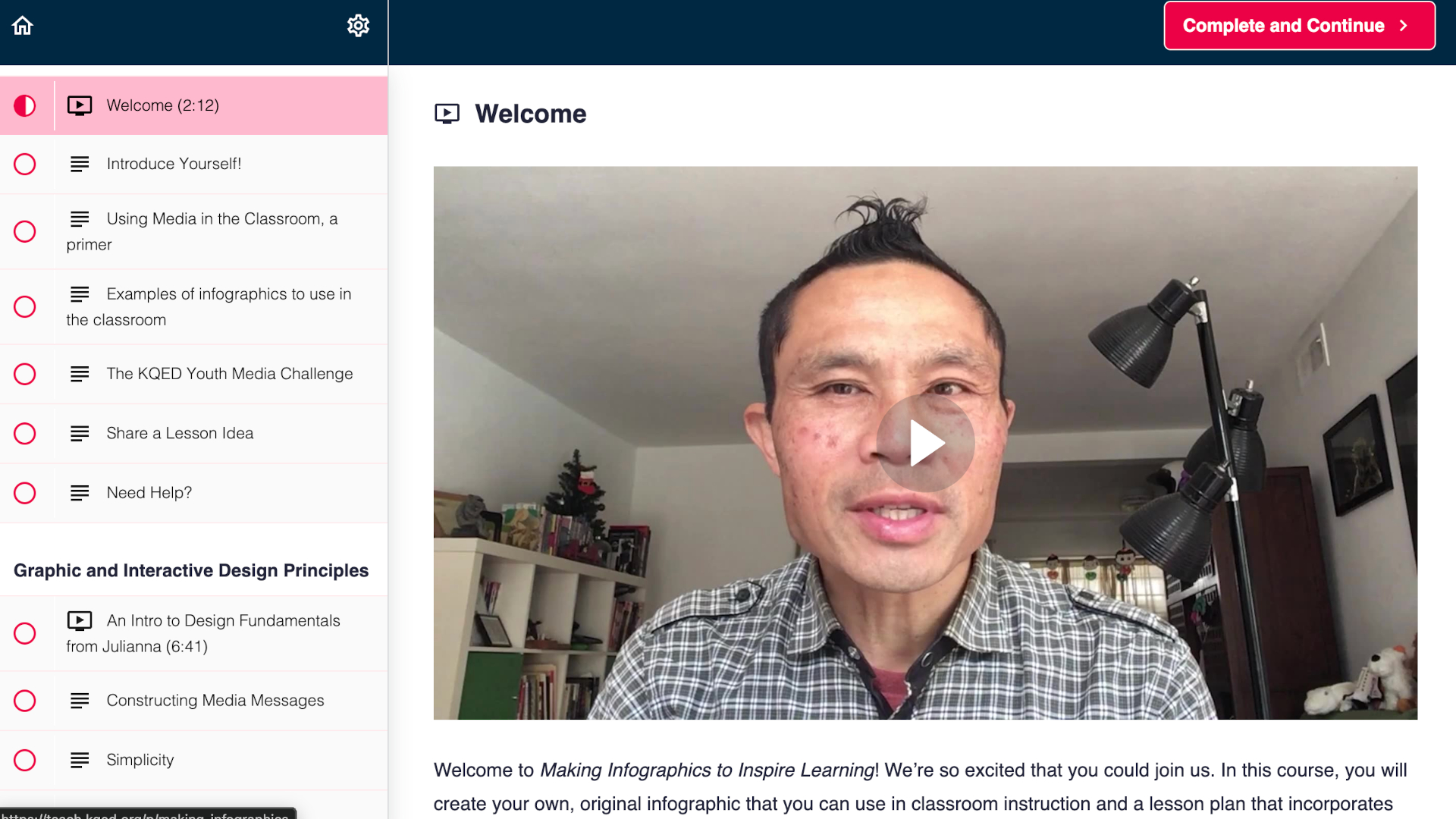
The courses themselves usually offer a combination of short instructional videos, guided activities, peer discussion, and classroom-ready planning tasks. The courses should leave teachers with tangible skills, not just knowledge.
Teachers might analyze real-world news examples, design media-based lesson plans, produce short videos or podcasts, or experiment with AI-powered tools under structured guidance.
KQED Teach also uses collaborative learning via community sharing. Participants can exchange ideas, showcase their projects, and discuss classroom strategies with other educators, fostering professional dialogue around best practices.
This peer-based approach is highly valuable in emerging areas such as generative AI literacy, in which classroom norms and ethical frameworks are quickly evolving.
KQED provides structured district and school-wide training programs.
What are the best KQED Teach features?
KQED Teach comprises several tools that include hands-on media creation, misinformation and media literacy, generative AI professional development, youth media challenges, and certification.
For media creation, teachers are guided through producing videos, podcasts, infographics, and interactive graphics, allowing teachers to build genuine creative confidence before implementing similar projects with students.
For misinformation and media literacy, courses explore how students can evaluate sources, detect misinformation, and understand algorithmic influence. All of which are deal right now as generative AI tools increase the scale and sophistication of synthetic content online.
On that subject, there is a section focused on AI bias, ethical AI use, and teaching students how to critically analyze AI-generated media.
Plenty of classroom ready content is also available, including lesson plans, student media challenges, and youth publishing platforms that allow learners to share work with authentic audiences.
Finally, there are those certificates, through which educators can gain graduate-level credits, supporting both career development and institutional professional learning requirements.
How much does KQED Teach cost?
KQED Teach is totally free. That makes this ideal for schools and districts looking to expand in this area while keeping budgets safe.
That also applies to educators who want to earn credits and certifications without spending money for the privilege.
KQED Teach best tips and tricks
Start with a single media project
Begin with a short, contained media task such as a short video explanation or podcast reflection to build confidence and classroom routines.
Integrate media across subjects
Science teachers can use infographics for data storytelling, while humanities teachers can explore audio documentaries or student journalism.
Use AI modules as discussion starters
Generative AI courses are especially effective when framed as ethical and critical thinking discussions, helping students understand bias, reliability, and responsible use.