

By Dr. Naomi Duran and Dr. Susan Kowalski
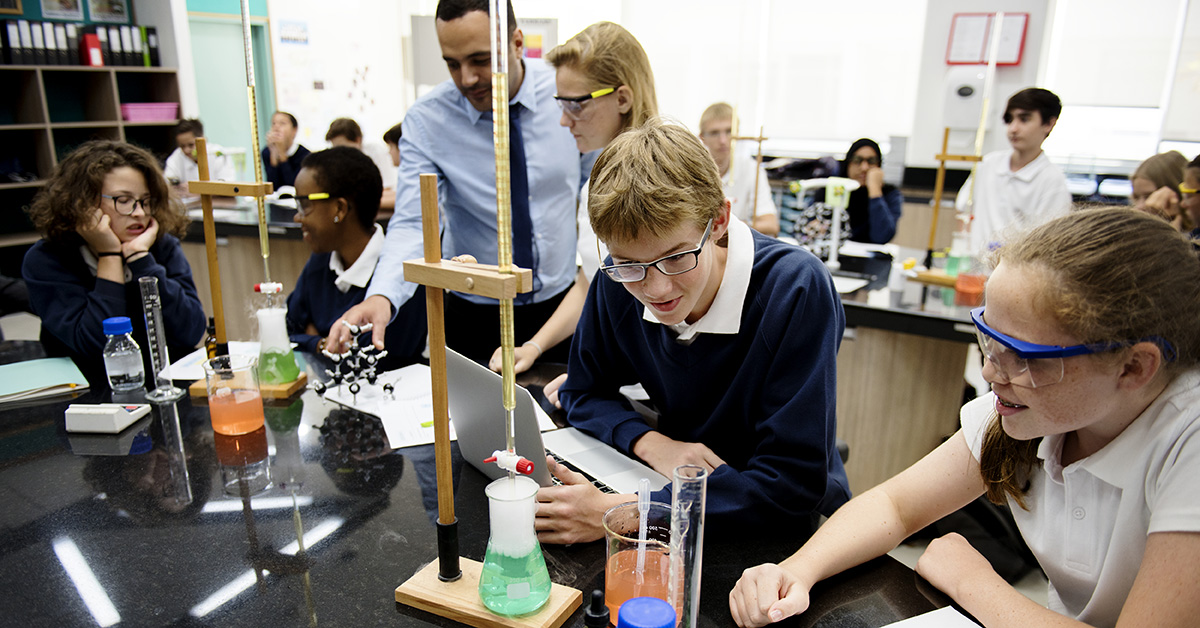
Middle school is a pivotal time for fostering students’ curiosity and shaping how they make sense of the world. It is also when science learning must begin to reflect the complexity of the challenges students are inheriting—from public health and new technologies to renewable energy, aging infrastructure, and access to clean water—by moving beyond memorizing facts to grappling with how systems interact in ways that are often messy and interconnected.
How we structure science learning at this stage matters.
Increasingly, schools are restructuring middle school science around integrated or multidisciplinary models, where students are not confined to a single discipline each year but instead engage with concepts that cut across life, physical, and Earth sciences. This approach better reflects how science is practiced and how real-world problems are structured.
Understanding challenges like environmental pollution requires more than isolated facts—it depends on systems thinking, the ability to connect processes across scientific domains, and an awareness of how human decisions shape environmental outcomes. Integrated science creates space for this kind of learning by organizing instruction around phenomena and real-world problems rather than isolated subjects.
By connecting science to real-world problems, integrated approaches may also shape students’ science identity: whether they see science as relevant to their lives and aligned with who they are. The formative middle school years are critical for science identity development and have real implications for whether students choose to engage with science, persist in it, or turn away.
This window is also where disparities emerge or deepen, particularly for girls, whose science identity often declines more sharply. If students are to see themselves as contributors to solving pressing issues, middle school science must give them opportunities to practice that role.
Because integrated approaches can organize learning around complex, real-world problems that ask students to connect scientific ideas, weigh evidence, and imagine solutions, it affords them these necessary opportunities. When students investigate questions that reflect the world they see, from local environmental changes to global climate patterns, they are more likely to develop both understanding and a sense of agency—the foundations of a science identity.
What happens in middle school science is not just about content coverage. It shapes whether students see science as relevant, empowering, and connected to the world they inhabit. As schools continue shifting toward integrated models, the opportunity is not simply to reorganize curriculum, but to rethink its purpose.
At a time when climate and environmental challenges demand informed participation, middle school classrooms are a critical starting point. The goal is not just for students to learn science, but to use it to understand the world around them and to engage with the challenges ahead.

Dr. Naomi Duran is a research scientist at NWEA, focused on examining neighbourhoods, schools, and equity in access to educational opportunities.
Dr. Susan Kowalski is a former high school educator and a lead research scientist at NWEA, focused on the intersection of educational policy and science instruction in the U.S.