

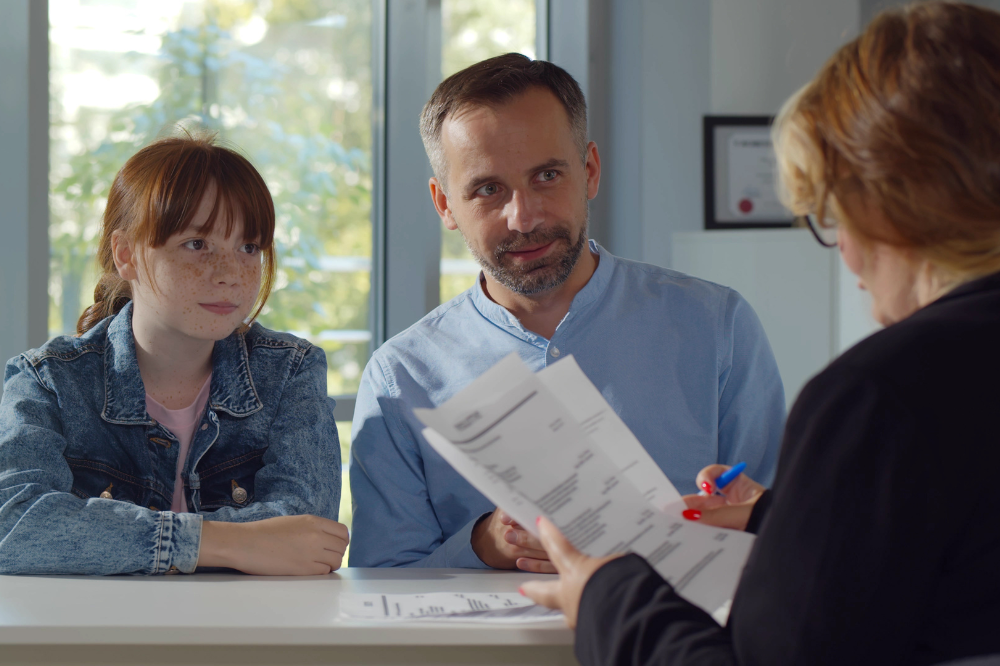
Anyone who has sat through a string of five-minute parent–teacher interviews knows how quickly those conversations come and go. Yet research consistently shows that when families are actively engaged in their child’s learning, student outcomes improve.
This raises an important question: how can teachers make these brief interactions count?
Teachers understand that building strong, positive relationships with parents is essential. So, when communication is clear, purposeful and collaborative, even a short exchange can strengthen trust, align expectations, and ultimately support better learning outcomes for every student.
Building a shared understanding
Ben Zunica is a secondary mathematics educator and researcher in the Sydney School of Education and Social Work at the University of Sydney.
He says parent-teacher interviews are short, so it helps to move quickly beyond ‘How are they going?’ and focus on how the child learns, as that’s where the most useful insights sit.
“Teachers can share what they see in the classroom, things like how the student responds to challenge, whether they ask for help, how confident they are,” Dr Zunica told The Educator. “Parents contribute what they observe at home.”
Dr Zunica pointed out that when both perspectives come together early, the conversation shifts from reporting results to building a shared understanding.
“An effective ‘team’ conversation is about combining insights to decide what will best support the student’s progress going forward.”
Translating feedback into results
Dr Zunica said teachers can play a key role in keeping the conversation focused by saying early on that it’s best to prioritise.
“For example: ‘If we think about one or two things over the next few weeks, this is what would make the biggest difference’,” he said.
“This helps avoid a long list of issues. From there, the goal is to translate general feedback into specific and practical actions that can be done at home. Clear, simple steps, such as short regular practice or building a routine, are far more likely to be followed.”
Don’t focus too heavily on marks alone
Dr Zunica said while it’s important to acknowledge results first, as they are often the starting point for parents’ concerns, the key is to then use those results to guide the next step, instead of letting them dominate the conversation.
“A helpful approach is to say: ‘Here’s where they’re at, and here’s what we can focus on next’,” he said.
“This keeps the concern intact while moving the interview toward progress. This helps parents feel heard while keeping the conversation forward-looking and constructive.”
Dr Zunica said parent-teacher interviews work best when they are seen as the starting point of an ongoing conversation, instead of a one-off event.
“Even within a short meeting, it’s possible to agree on one or two actions and how progress will be checked,” he said. “That gives the conversation continuity without requiring additional time.”
If more discussion is needed, schools can rely on simple, existing communication channels, such as email, Dr Zunica said.
“The key is to be clear. When parents understand what happens next and how communication will continue, they are much more likely to feel heard, even if everything wasn’t covered in the initial meeting.”