

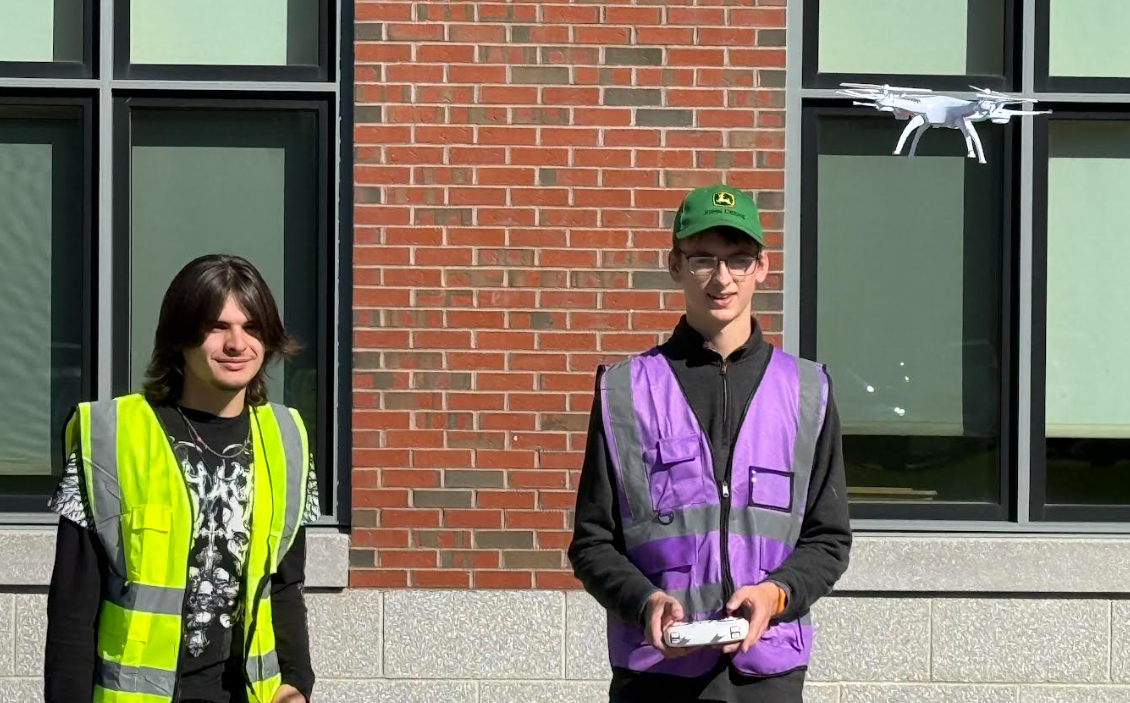
The high school tech department of RSU 22, located along the Penobscot River near Bangor, Maine, offers traditional programming, such as woodworking and shop, as well as a bringing variety of engineering tech tools and an extremely well-equipped makerspace secured through grant funds. However, through a series of community partnerships and funding opportunities, it was able to launch its Higher Vision Drone Program.
“One of the things that appealed to me is that we already have nine community partners, which represent a range of businesses and organizations,” says Jennifer Nickerson, the district’s Director of Curriculum, who saw an opportunity to add drones to its career pathways. “A little local blueberry farmer in one of our four towns uses the drone to inspect her crops and plan what she needs to do for work that day. The Maine Forest Service visited, sharing stories about their advanced, expensive drones. But they use the same skills our kids are learning to use the drones to find missing people or protect forests and Maine’s natural beauty.”
ESSER funds enabled the school to create an esports lab, tech which served perfectly to accommodate the drone program’s flight simulators. Nickerson worked with Charlie Huff, a technology teacher at Hampden Academy and the department head, Todd Moore, to implement the Higher Vision Drone Program. Title II funds secured out-of-state training for the pair to get certified to teach the young prospective pilots.
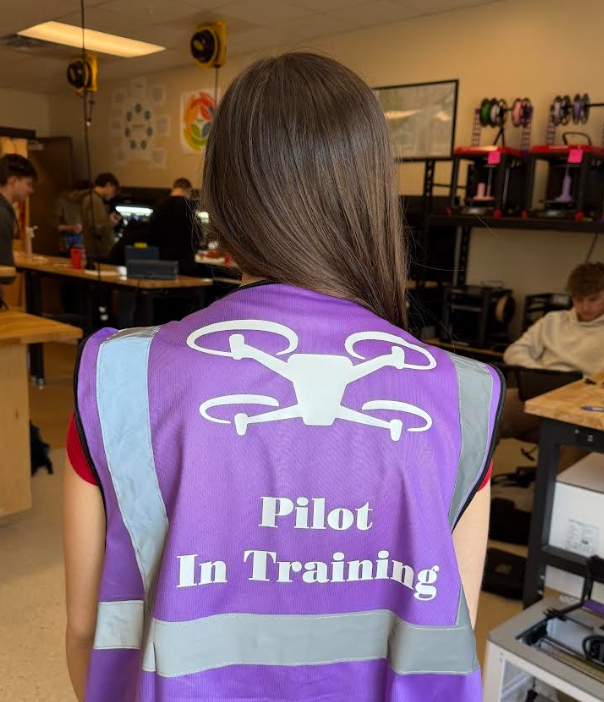
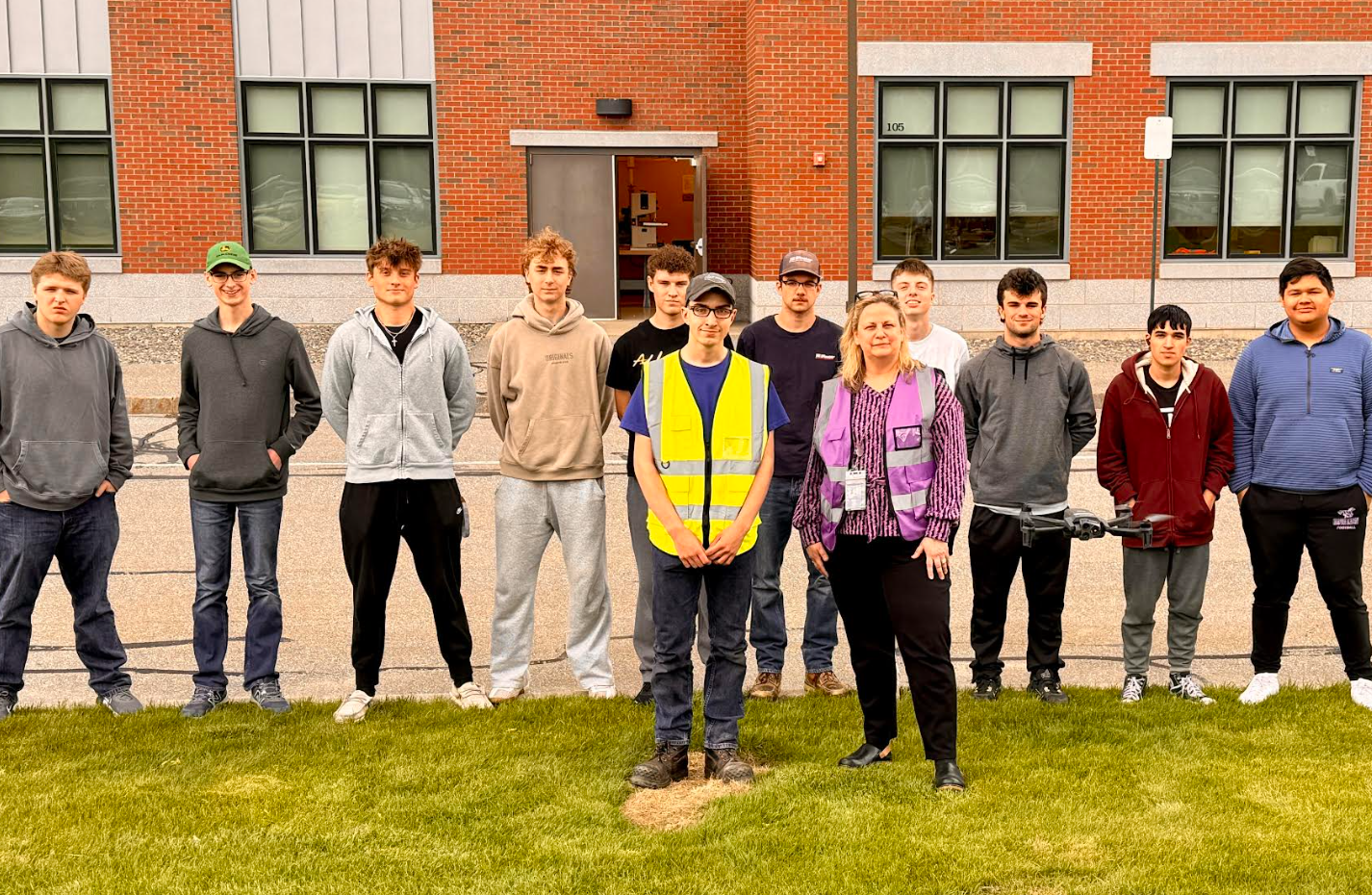
“Each certified instructor can have eight kids fly under their license,” says Nickerson. “The first year, they co-taught the intro class together with 16 kids in the program for the fall semester. Of the 16, 14 continued on to take the Commercial Drone course for the spring semester. We have 11 students scheduled for their FAA Part 107 tests, with two passing this week.”
And from there, the program has taken flight.
“Now other students are seeing all this hard work pay off and next year’s course enrollments have jumped up,” says Nickerson. “To be fair, some of it is probably because when you are sitting on the second floor in your English class and you see a drone fly by outside, it’s pretty good advertisement.”
For this and other efforts, Nickerson was recently honored with a Tech & Learning Innovative Leader Award. She shares her “Higher Vision Drone Program” implementation successes and tips for those interested in creating a similar program in their district.
Enrollment, Enlistment, Employment
RSU 22 dates back to 1803, and Nickerson’s family has long been a part of it.
“We like to say, ‘We’re rooted in tradition, but focused on the future,’” says Nickerson. “My kiddos are fifth-generation Broncos, I joke that I bleed purple. The success of RSU 22 is really personal to me and my family and to the four towns in our district. One of which is more affluent than the other three, which can cause issues with programming. However, it was also an inspiration to seek out the Teach with Tech grant from the Maine DOE, which includes a requirement to support underserved students.”
Nickerson saw it as a real way to level opportunities within her district.
”We have tons of AP classes in our high school, Hampden Academy, and we add to them every year,” she says. “But we wanted exciting opportunities for kids who don’t fit in that AP niche. I went to a conference which leaned heavily on the concept of three paths for kids, all being equally valuable. Enrollment, enlistment, employment — we need to honor those kids by supporting them with a clear path to success. This was a great motivation to create our drone program.
One very exciting opportunity has presented itself from Cianbro, a nationwide construction company.
“They learned about our program and told me, ‘If you get kids to take and pass the FAA Part 107 test to earn their drone license, we will hire them the day of graduation,’” says Nickerson. “We want those opportunities for our students, because not everyone is going to go to college.”
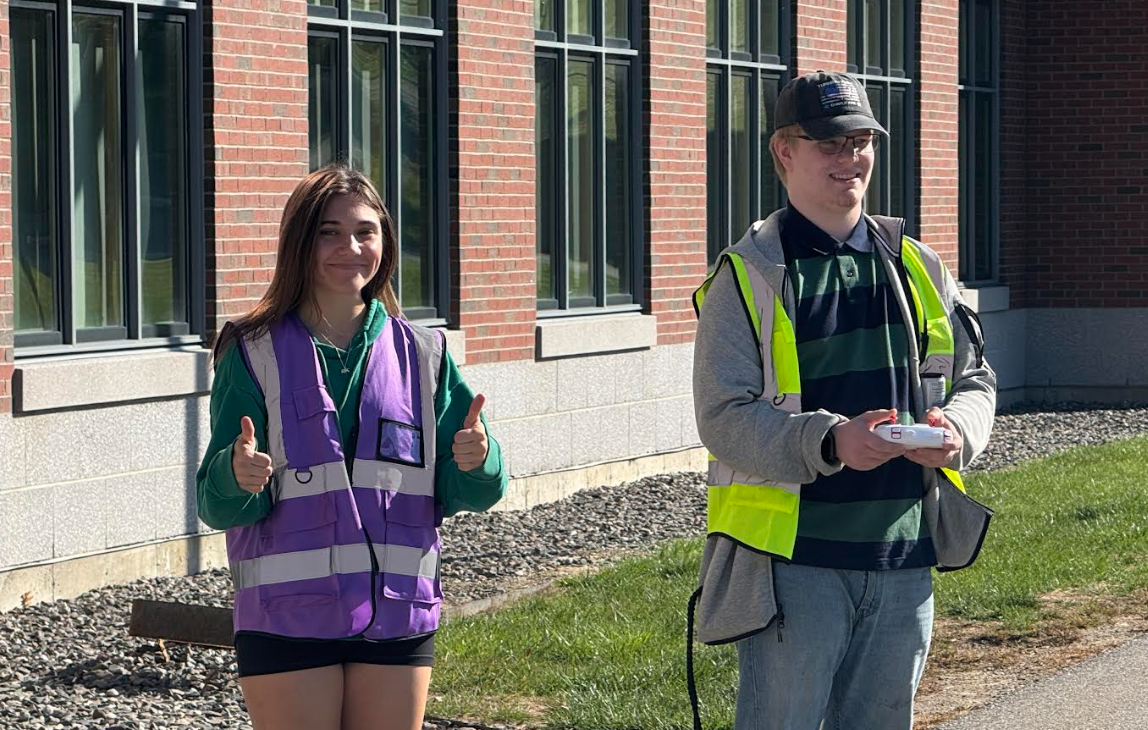
A distinctive feature of Hampden Academy’s drone program is its collaboration with nine community partners who share their expertise directly with students. These partnerships include:
- Hampden Public Safety: Demonstrating emergency response applications and public safety uses for drone technology.
- Cianbro: Showcasing industrial applications in construction and infrastructure development.
- News Center 2: Illustrating journalistic and media applications of drone photography and videography.
- Haley Ward Civil Engineering: Providing insights on surveying, mapping, and engineering applications.
- American Forestry Management: Highlighting environmental monitoring and forestry management techniques.
- Matt Thomas Media Productions: Sharing expertise in commercial drone photography and cinematography.
- Allan Gordon Jr Surveying: Demonstrating precision mapping and land surveying applications.
- United States Military: Offering perspectives on drone operations and career opportunities in defense.
- Maine Forest Service: Showcasing thermal imaging and precision aerial surveillance in public safety and natural resource management.
These partnerships provide students with real-world context for their learning and exposure to potential career pathways within their own communities.
“You can’t just do it alone,” says Nickerson. “When your community gets behind you to share their expertise and open kids’ eyes to possibility, that culture can be one of your greatest resources even in small, rural, less affluent parts of the world. That’s one way this drone program will be sustainable for the future.”
Ultimately, Nickerson’s goal is just to do the right things for her students by securing the best tools for success.
“No one wants to build a house with a hammer that doesn’t have a handle,” Nickerson says. “We need to have the best tools to do the best by our kids. Fortunately, this district has always put technology at the top of their priorities. We have a really supportive superintendent and assistant superintendent who believe in thinking outside the box. It’s just really great, because we need to prepare them. They are going to leave us one day, so we need to help them learn how to fly.”
4 Tips When Starting a New Tech Initiative
Nickerson offers advice to others who might be interested in launching a similar initiative:
- Don’t let lack of funds stop you. Think outside of the box and be creative and you will find the support.
- When securing grants, read the fine print. Some funds require specific choices in tech, such as drones that need to be made in the USA.
- Find your North Star and stay true to it. Think about what is most valuable to you and persevere. Don’t let setbacks stop you.
- Lean on your community. Resources don’t have to be financial, expertise is invaluable.
- Parrot ANAFI Drones
- Claude
- MagicSchool
- Google Suite
- Kibo Robots (Kinderlab)
- zSpace
- edWeb
- Chalk
- Smore
- SWIS/PBIS Apps
- Canva