


Student belonging in higher education has become a top priority for colleges and universities across the nation as they strive to retain and ensure students persist to graduation. In particular, multiple studies on belonging highlight the significance of developing academic experiences that encompass active learning and relationship building between faculty and students (Ahn & Davis, 2020; Lopez et al., 2020; Strayhorn, 2018). When reflecting on how we could enhance student belonging in our courses, we first recognized three commonalities in our thinking:
- Developing a sense of belonging is an incredibly important component of a course
- The courses that made the most impression upon us when we were students in higher education were those in which we felt valued and connected to the content, peers, and professors, regardless of the modality.
- Traditional classroom approaches tend to foreground what appears to be focused on student deficits instead of student strengths, and design activities to close gaps or absences
Ultimately, asset-based teaching is proactive and hands-on. It enables administrators and academic support professionals to explore the unique experiences that students bring to the classroom (see Figure 1). For example, instead of starting instruction from the perspective that some students lack mastery in academic writing content, asset-based teaching starts by asking what resources and background knowledge the student does have that can be leveraged to reach the goals for the course.
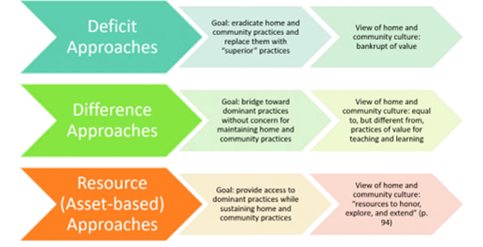
Figure 1: Deficit vs. Asset-Based Approaches
Based on Paris, D. (2012). Culturally sustaining pedagogy: A needed change in stance, terminology, and practice. Educational Researcher, 41(3), 93–97.
Asset-Based Teaching at Its Core
The research on asset-based teaching abounds with multiple strategies that are rooted in culturally responsive and culturally sustaining pedagogies (Shaw, 2020). When considering culturally responsive pedagogy and culturally sustaining pedagogy, it is important to highlight that it is more than just a prescribed set of strategies that are embedded in the curriculum to implement.
Culturally Responsive Pedagogy
Dr. Gloria Ladson-Billings coined and defined the term ‘Culturally Relevant Pedagogy’ (CRP): An approach to teaching that aims to integrate, promote, and maintain the cultural background of students in schools (Ladson-Billings, 2020). This approach to teaching is based on the cultural competence of the teachers. It is further situated in a framework that recognizes the rich and unique cultural wealth, knowledge, and skill sets students bring to the classroom that can be leveraged to engage students in a holistic learning process (academic, social, and emotional).
Culturally Sustaining Pedagogy
Culturally sustaining pedagogy is another asset-based framework in which we situate our classroom pedagogical practices. Culturally sustaining pedagogy extends CRP and seeks to not just be responsive to student backgrounds, but also to sustain the unique assets of students in the classroom (Paris, 20212). In the next section, we share asset-based practices that made a significant difference for students’ experiences in our courses.
How Does This Look in the Classroom?
By prioritizing belonging, we found that we are able to create a more inclusive learning environment, leading to improved student success and well-being. What matters most is making an effort to understand the backgrounds and experiences of your students and reflecting on how your teaching methods can best complement them. To this end, we outline strategies below that undergird asset-based teaching to increase student belonging.
This is How We Do It
The strategies listed below are ways in which we learn about our students and the assets they bring to the classroom. We also utilize various approaches to connect with students (especially in our online courses) in meaningful ways that make them feel part of the learning community. Strategies include:
Centering Student Voices and Experiences
Course welcome letter. The course welcome letter is an outreach letter via email that introduces the course, the instructor, and the main topics of focus for the course to students prior to the start of the course. It helps to build rapport, set expectations, and provide essential information to help students succeed and get excited about the course.
Social Emotional learning (SEL) Messages and Outreach. At the start of each week or online module, a message and/or email is sent that focuses on a specific SEL skill. The use of SEL outreach helps to validate student experiences and feelings as they navigate the course and provides active strategies through modeling how to support others’ emotional development. Use of SEL outreach has also helped to acknowledge diverse experiences and challenges students face as they navigate our courses.
Diversify Course Content and Materials. Include assignments that allow students to connect course content to their lived experiences. Since many of our students are practitioners in K12 schools, we ensure assignments are relevant to their daily lives. For example, students have opportunities to complete action research and advocacy projects on topics in education that are meaningful to them and their educational contexts.
Reflecting on Teaching Practices
Effective teaching involves more than just applying best practices—it also requires thoughtful reflection to determine whether those practices are truly working in your specific context. Taking time to reflect on your teaching practice helps you to identify more than just what was effective (or not). It also helps you to start to challenge any underlying beliefs and assumptions that define how you work. To this end, we regularly do the following:
- Ask ‘Am I recognizing and building on students’ assets?’
- Seek feedback from students about what is working and what could be improved to better support their learning.
- Act on the feedback gathered from students through course adjustments and increased outreach to students for additional support.
Final Thoughts
Fostering student belonging through asset-based teaching is both a mindset and a practice. By centering students’ voices, valuing their cultural and experiential assets, and continually reflecting on our methods, we create learning environments where all students feel respected, connected, and empowered. In doing so, we not only enhance academic success but also strengthen the inclusivity and resilience of our learning communities.
Disclosure of interest: The authors report there are no competing interests to declare.
Dr. Andrea Crenshaw, EdD, is an Associate Professor at the University of West Georgia in the Department of Early Childhood through Secondary Education. Andrea received a BS in Early Childhood Education, an MS in Social Foundations in Education from Georgia State University and an EdD in Educational Leadership from the University of Georgia. Her scholarship examines these issues by illuminating the voices of youth and adults who have been historically and traditionally marginalized in schools and society. Prior to her appointment at the University of West Georgia, Dr. Crenshaw worked in K12 as a teacher and administrator in which she was committed to an interdisciplinary approach of inquiry and advocacy in urban contexts. Dr. Crenshaw has been able to take her knowledge, experience, and skill to higher education as she trains the next generation of educational leaders. Dr. Crenshaw is committed to embedding relevant issues of diversity into her practice, scholarship, and service.
Dr. Natasha Ramsay-Jordan, EdD, was born and raised in the Caribbean country of Guyana, South America, and is an associate professor of mathematics education at the University of West Georgia. Her teaching interests include mathematics education and methods, exploring social and cultural perspectives on diversity in education, examining diverse classrooms within a global society, and STEM preparations for K-12 teachers. Dr. Ramsay-Jordan has several years of teaching experience in K12 and Higher Education. Her teaching philosophy centers on love and logic, respect, critical empathy, great determination, and personal integrity. Dr. Ramsay-Jordan intentionally guides and supports teachers and students in ways that help them to become educators of a pluralistic community. Her research interests include the intersection of educational policies and urban education with respect to diverse student learners, especially as these relate to teacher quality and professional development; issues of equity in education; STEM equity and development in grades K-12; and the role of culture in mathematics education and development. Much of Dr. Ramsay-Jordan’s work explores social and cultural perspectives on diversity in education, examines diverse classrooms within a global society, and addresses equity issues in education. As a mathematics educator, her work centers on the intersection of educational policies and diverse student learners, especially as these relate to access, teacher quality, professional development, and the role of culture in mathematics education and development.
References
Ahn, M. Y., & Davis, H. H. (2020). Four domains of students’ sense of belonging to university. Studies in Higher Education, 45(3), 622-634. DOI: 10.1080/03075079.2018.1564902
Kahu, E. R., Ashley, N., & Picton, C. (2022). Exploring the complexity of first-year student belonging in higher education: Familiarity, interpersonal, and academic belonging. Student success, 13(2), 10-20. https://doi.org/10.5204/ssj.2264
Ladson-Billings, G. (2014). Culturally relevant pedagogy 2.0: aka the remix. Harvard educational review, 84(1), 74-84.
López, F., Wiener, R., & Cox, L. (2024). A Crisis of Student Belonging. Aspen Institute.
Paris, D. (2012). Culturally sustaining pedagogy: A needed change in stance, terminology, and practice. Educational researcher, 41(3), 93-97. https://psycnet.apa.org/record/2012-08712-002
Renkly, S., & Bertolini, K. (2018). Shifting the paradigm from deficit oriented schools to asset based models: Why leaders need to promote an asset orientation in our schools. Empowering Research for Educators, (2)1, Article 4. https://openprairie.sdstate.edu/ere/vol2/iss1/4
Shaw, J. T. (2022). Culturally Responsive, Relevant, and Sustaining Pedagogies. The Choral Journal, 63(3), 51-60. https://acda-publications.s3.us-east-2.amazonaws.com/CJ/October2022/ShawOct22.pdf
Strayhorn, T. L. (2018). College students’ sense of belonging: A key to educational success for all students. Routledge.