

Tucked away in Melbourne’s south-east, Melbourne Montessori College has carved out a name for itself by doing things a little differently. From toddlers to Year 12 students, the focus is simple: give young people the space, structure and trust to take charge of their own learning.
Leading the next chapter is newly appointed Principal Janis Coffey, a Montessori educator with more than two decades’ experience in Australia and abroad. She’s quick to point out that much of what mainstream schools are now embracing – student agency, wellbeing, self-paced learning – has long been part of the Montessori DNA.
For Coffey, the real opportunity lies in adolescence, where independence, purpose and self-management can truly take root.
Below, The Educator speaks to Coffey about the philosophy shaping her leadership, what mainstream schools can learn from Montessori’s century-old evidence base, how student agency plays out in practice at MMC, and where she sees independence and purpose heading next.
TE: Can you tell our readers about the philosophy that underpins your approach to education?
In her book, ‘The Science behind the Genius’, Angeline Lillard writes about the 8 key principles that underpin the Montessori philosophy. These are:
Movement and Cognition – Movement and cognitive processes are closely linked, and physical activity can enhance thinking and learning.
Choice and Perceived Control – Learning and psychological well-being improve when learners have autonomy and a sense of control over their activities.
Interest – People learn better when they are genuinely interested in and engaged with what they are learning.
Avoidance of Extrinsic Rewards – Using external rewards (like grades or stickers) can undermine intrinsic motivation to learn when the reward is removed.
Learning from Peers (Collaborative Learning) – Collaborative and peer interactions can be highly conducive to learning.
Learning in Meaningful Contexts – Learning that is grounded in meaningful, real-world contexts tends to be deeper and richer than learning that is purely abstract.
Adult Interaction Styles and Child Outcomes – The particular ways adults interact with children (supportive, respectful guidance rather than control) are linked to more optimal developmental outcomes.
Order in Environment and Mind – Physical and conceptual order in the environment supports children’s internal cognitive organisation and learning.
These principles enact these principles in a Montessori environment in a multitude of ways. From the way teachers speak with students to the way we arrange our timetables, these principles are woven into everything we do.
TE: What can today’s schools learn from Montessori about independence, wellbeing and engagement?
Firstly, I’d say that schools can learn from Montessori that things can be done differently and still yield excellent results on both academic and non-academic outcomes. Two meta-analyses have been published in recent years demonstrating that Montessori students outperform their peers in literacy and numeracy, have more highly attuned executive functioning skills, and increased levels of enjoyment and engagement. Dr. Maria Montessori, the first woman to attend university in Italy, asked the question: what if we designed an educational approach that catered to the cognitive and psychological needs of students at each age and stage? She started with a blank slate, and designed the approach based on the needs of the students with whom she worked. I’d say that schools could use this ‘blank slate approach’ to consider how they can best serve their students to become capable and independent young people, and enable them to engage and experience a sense of wellbeing. School leaders need to be brave in evaluating, and possibly eliminating, some age-old traditions in schools, or practices that are not supported by educational neuroscience, cognitive psychology and wellbeing science.
TE: You say student agency isn’t a trend, but a practice with a 100-year evidence base. How are you using this evidence at Melbourne Montessori College for impact?
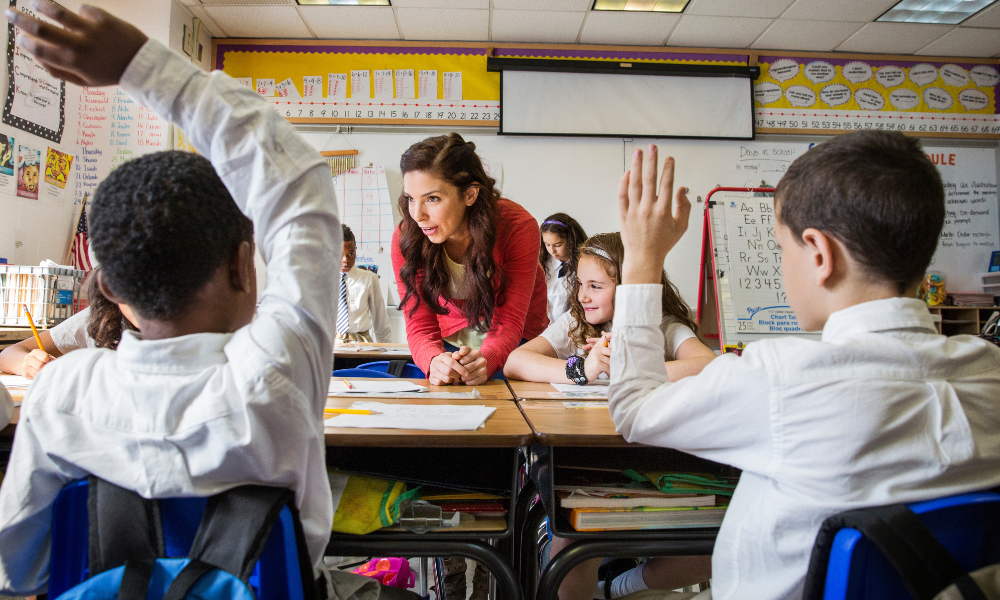
Student agency empowers learners to take ownership of their growth, make meaningful choices, and develop intrinsic motivation. In the early years, you’ll see young children choose work from carefully prepared materials, decide how long to engage with a task, and move freely within the classroom. There are no formal recess breaks in the morning session in a Montessori program. When children are hungry, they stop and invite a friend to the snack table, cut their own fruit, wash the dishes and utensils and place them back again independently. To observe 3yr old and 4yr old children managing their environment in this way is extraordinary. Children are more capable than we often think. As children get older and more independent, they have more freedom which is balanced with more responsibility. Students will keep a record of how they have spent their time in a work journal, and will conference with their teacher about their goals and what they are hoping to achieve across the week. Multi-age environments also encourage students agency through peer teaching and leadership. This often happens naturally without being prompted by a teacher. I observed a Year 3 student who saw a younger peer struggling. They turned to help them, “Come over here and I’ll show you an example of what I mean.” They walked off together to a different part of the classroom where the older child could demonstrate a lesson to the younger student. Teachers act as guides, observing and supporting rather than directing, fostering responsibility, curiosity, and self-discipline. What results is a harmonious community of learners where students are trusted to make decisions, supported by highly-skilled teachers
TE: Looking ahead, as more schools adopt ideas Montessori has long championed, how do you see those principles evolving) especially in adolescence) and what excites you most about strengthening independence, purpose and teacher autonomy?
The science of reading and the shift towards synthetic phonics in literacy is a great example of how schools are adopting ideas that the Montessori approach has long championed. Another example is the focus on ‘growth mindset thinking’ in schools. Montessori teachers are trained to give feedback that places the student at the centre, rather than focusing on the teacher’s validation of their work. It is an exciting period of growth and innovation in Montessori schools across the country, particularly in regard to Adolescent Programs. While we have only a select few Montessori Adolescent Programs in Victoria, they are flourishing in other parts of the country. Sydney Montessori Training Centre now offers a Montessori Adolescent Diploma for ages 12 – 18. This diploma program focuses on the psychological needs of adolescents and how teachers can best shape an environment that helps them build independence and experience a sense of purpose in their work. Adolescents need to know that their work matters; they need to make connections between theory and the real world. We trust teachers to help shape these experiences in our adolescent years. Students get involved in re-wilding projects; host book clubs; manage a bed and breakfast; run a kitchen café; and, develop, market and sell their own products. They are learning by doing. And, they make mistakes. When they do, they learn from them, and teachers are there to offer support and guidance. In the Montessori approach we use the phrase ‘friendliness with error’. We want to encourage students to take measured risks, to learn from mistakes, and grow as a result. This is real student agency in action.