

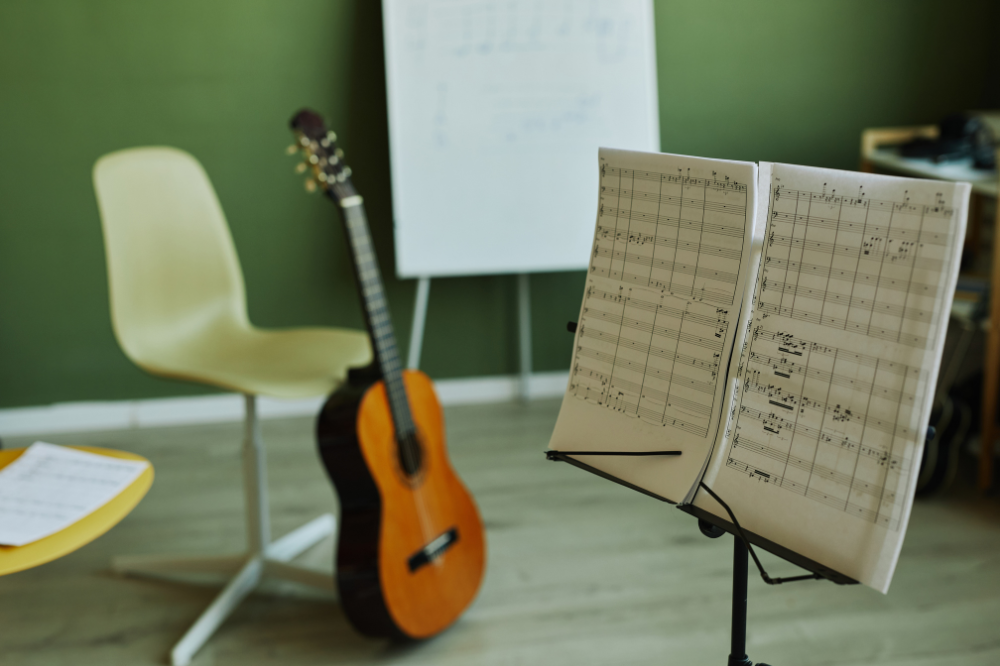
In many Australian classrooms, a quiet contradiction playing out.
While an ever-growing body of research shows that music education lifts engagement, supports wellbeing and strengthens academic outcomes, it’s often the first thing pushed aside.
One of the clearest pressure points is teacher confidence. Many primary teachers receive only minimal training in music, sometimes just a handful of hours, leaving them unsure how to deliver it well. Unsurprisingly, that hesitation shows up in the classroom, with lessons delivered less often or with less depth.
At a time when schools are being asked to do more with less, music is too often treated as optional rather than essential.
Closing the music education access gap
With hundreds of thousands of Australian students missing out on specialist music teaching, one not-for-profit has stepped in to fill this gap in a meaningful way. The Song Room, launched in 1999, provides research-backed programs that support disadvantaged schools to re-engage students.
The company’s recognised expertise has led to the development of its unique, national online arts education portal, ARTS:LIVE – an award-winning platform that provides curriculum-aligned digital arts education resources for Foundation to Year 10. Today, it is used by over 10,000 teachers in over 60% of Australian schools.
In April, The Song Room announced the national launch of ‘The Bridge’, a first of its kind music education program supported by Creative Australia that embeds practising contemporary music creators directly into primary school classrooms.
The program is designed to strengthen music learning, improve student wellbeing, and build sustainable pathways for Australia’s creative workforce.
Alongside the program launch, The Song Room has also unveiled its new Ambassador Team, featuring celebrated Australian artists trials, Ali McGregor, and L FRESH The LION – all committed to championing equitable access to arts education for every child.
Rolling out from Term 2, The Bridge will be introduced across five schools nationwide, spanning metropolitan and regional communities in NSW, QLD, SA, WA and VIC. Each site brings together experienced educators and co-delivery partners, combining local knowledge with specialist expertise to ensure the program is grounded, practical and responsive to each school’s unique context.
The program pairs experienced Song Room Teaching Artists with contemporary music creators to co design rich, curriculum aligned learning experiences. Students engage in songwriting, music making and creative collaboration, while artists receive training and support to build long term, sustainable careers in education and the arts.
From humble beginnings to national reach
“When I look back over The Song Room’s 27-year history, what stands out most is how much we’ve grown alongside the education and community sectors,” Alice Gerlach, CEO of The Song Room told The Educator.
“We began with a simple focus: bringing arts learning to students who otherwise wouldn’t have access, but as the needs of schools have shifted, so have we. Today, we understand more clearly than ever the powerful role the arts play in shaping the whole child.”
Gerlach said creativity, collaboration, critical thinking and self-expression are not “nice to haves”, but rather the critical skills young people need to learn, connect and thrive at school and in life and the arts provides all these benefits.
“From those early single performance incursions in 1999, The Song Room has evolved into a leader in high quality, sequential in school arts learning,” she said.
“Each year, around 70 Teaching Artists work directly in classrooms, delivering arts programs that build engagement and help children grow as confident, connected learners.”
Building capability, not just programs
In 2025 alone, The Song Room partnered with more than 300 teachers to strengthen arts education capabilities that Gerlach said continues delivering long after the company’s programs finish.
“More than 500,000 students and educators have taken part in our programs, and we’ve worked in over 2,500 schools across Australia,” she said. “That reach matters, but what matters even more is what it represents: creativity, confidence and lifelong learning taking root in school communities.”
Gerlach said equity has always been at the heart of The Song Room’s mission.
“Every child deserves access to the benefits of arts learning, no matter their background or postcode,” she said.
“A big part of that is ensuring schools and teachers have the tools they need to confidently deliver the arts curriculum.”
Gerlach said The Song Room’s digital learning platform, ARTS:LIVE, launched in 2023, now provides over 45,000 subscribers with access to online lessons, activities and courses to do just that.
“Our history and evolution reinforce The Song Room’s value in Australia’s education ecosystem,” she said.
“By working alongside schools to build capability and deliver accessible, inclusive programs, we respond flexibly and continue supporting student engagement, wellbeing, and learning outcomes despite complex community environments.”
Gerlach said The Song Room delivers initiatives focused on student wellbeing, professional learning for generalist teachers, First Nations arts and culture led by Aboriginal and Torres Strait Islander artists, community engagement, and pathways that support artists to develop their skills as music educators.
“The impact is felt every day – from 300 students connecting in an interschool workshop to a single student finding confidence in a dance class, the stories stay with you,” she said. “One moment I often think about is a student who usually communicates non verbally.”
After rehearsing with his partner, Gerlach said the student felt so supported and encouraged that he chose to perform in front of his class, even verbalising the rhythms.
“It was a small moment, but a powerful reminder of what creative learning can unlock.”
The three obstacles to quality music education
When asked about the biggest professional development gaps she is seeing in classrooms in 2026, Gerlach pointed to three persistent challenges that are shaping both teaching practice and students’ access to quality arts learning.
“First, there is a clear shortage of specialist arts educators in primary schools,” she said. “Too many schools simply don’t have access to trained arts educators, which means students miss out on high quality creative learning. Generalist teachers are doing their very best, but they’re often doing it without the specialist support they need.”
Secondly, says Gerlach, there is a real confidence gap among early years and generalist primary teachers when it comes to teaching the arts.
“This isn’t a reflection of their commitment — it’s a reflection of the lack of arts in ITE provision. Most primary teaching degrees include very limited arts training,” she said.
“The Music Education: Right from The Start Fading Notes report (2023) highlights that compulsory music education training has dropped to an average of just eight hours across an entire degree, and fewer universities are offering pathways to become primary music specialists.”
Gerlach said teachers are being asked to deliver a curriculum they haven’t been adequately prepared for.
“Our observation on the ground is that most early years and primary educators have never experienced a music lesson in action.”
The third challenge, says Gerlach, is that the equity gap is widening.
“Teachers are navigating increasingly complex classrooms and are expected to be across social emotional learning, inclusive education practices and differentiated instruction,” she said. “These are essential capabilities, but they require time, training and ongoing support.”
Practical support for teachers and artists
Gerlach said many teachers, especially in communities experiencing disadvantage, report feeling underprepared to meet the breadth of student needs while also managing full classrooms and competing demands.
“Song Room programs respond to these gaps by bringing skilled music creators and Teaching Artists into classrooms to model inclusive, highly engaging arts practice lifting engagement, building belonging and giving teachers practical strategies for diverse learners,” Gerlach said.
“It’s about supporting teachers and ensuring students experience the joy and depth of high quality arts learning.”
Gerlach said the program is also tackling a broader challenge beyond the classroom—creating more sustainable pathways for musicians while strengthening the future of arts education
“Importantly, Song Room programs like The Bridge are also designed to strengthens Australia’s creative workforce by testing new pathways for musicians to bring their rich creative practice to young people in the music classroom by developing teaching capability,” she said.
“In turn they increase their income and build more sustainable portfolio careers. At a time when many musicians earn well below a sustainable annual income, this matters.”
Gerlach said The Bridge is The Song Room’s way of responding to what schools, teachers and the creative industries are saying they need.
“And it’s a way of ensuring that more children, from metropolitan to remote communities, have access to the transformative power of the arts.”