

By Naomi Nicholas
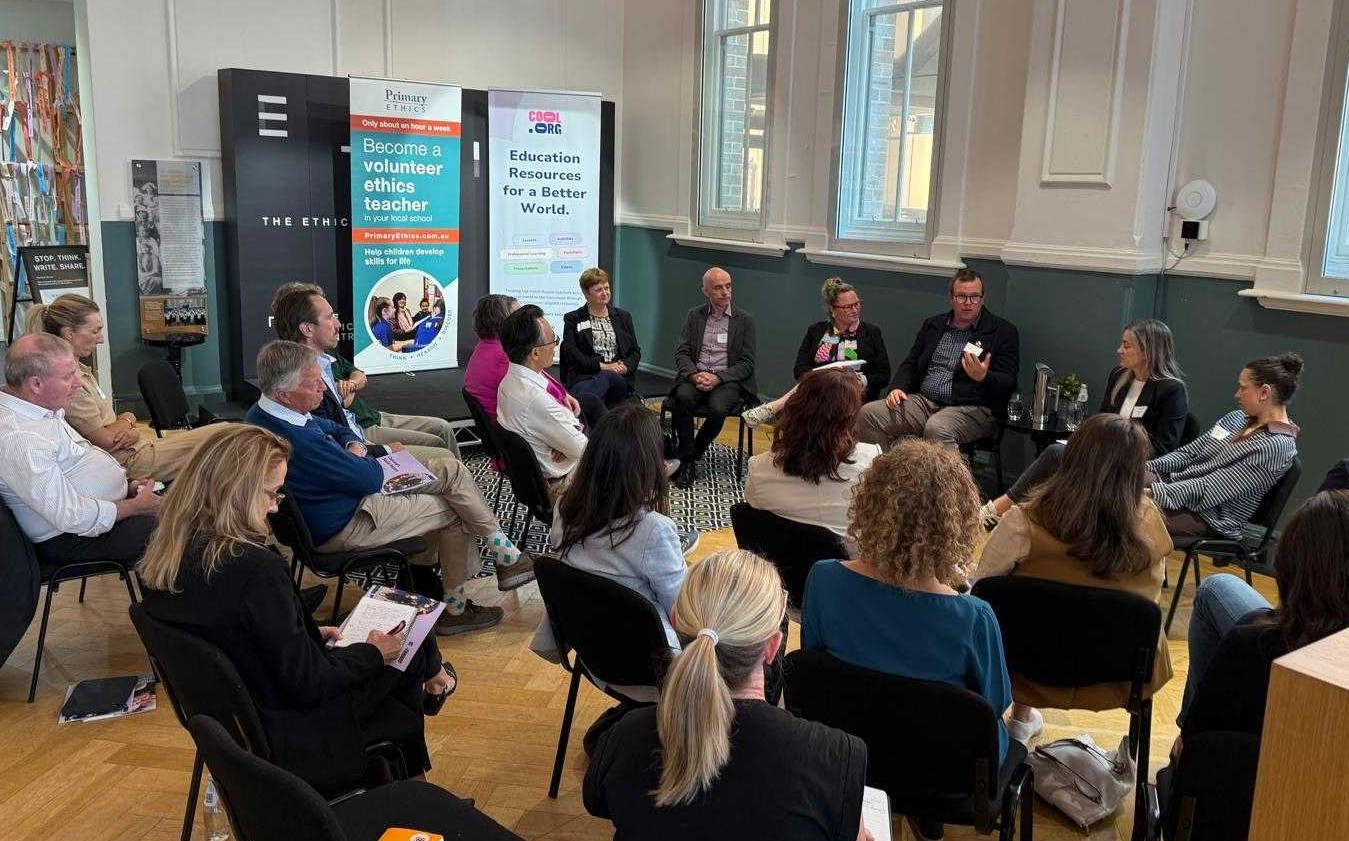
In November 2025, educators, funders, and sector leaders gathered in Sydney for The Reality of Teaching: Insights from Australia’s Educators, a conversation grounded in lived experience and honest reflection.
Hosted by Primary Ethics in partnership with Cool.org, and proudly supported by The Waratah Education Foundation, the event created space for teachers to speak candidly about the realities of teaching in Australia today.
At a time when schools are navigating rising workloads, growing youth wellbeing concerns, and constant change, the discussion centred the voices of educators working at the frontline.
The panel consisted of very experienced and passionate educators, including Alex Wharton (Rural NSW Government school), Samira Gashi (VIC FLO School), and Tanna Hardinge (proud Byelle and Kanaka woman, Cool.org First Nations Education Lead and experienced secondary educator). What they shared was confronting, moving, and deeply instructive.
Teachers are often described as the backbone of society, but at the Reality of Teaching event in Sydney, it became clear that they are much more than that. Teachers are counsellors, advocates, protectors, connectors, and, in many cases, the last consistent adult in a young person’s life. What they are carrying, and what they are being asked to carry, has fundamentally changed.
This event brought together educators, service providers, and people working across the education ecosystem with one shared purpose, to listen. Not to prescribe solutions from a distance, but to hear directly from teachers about the realities they face every day, and what they need in order to keep showing up for children and young people.
Teaching has changed, and the challenges are deeper than ever
Teachers spoke about how different the classroom feels compared to even a decade ago. Many are working with students experiencing complex mental health challenges, family instability, trauma, poverty, and disengagement from school that begins well before the school day starts.
In flexible learning and low socio-economic settings, success is no longer measured by traditional academic milestones alone. Sometimes success looks like a student simply showing up. Sometimes it looks like sitting with a young person who arrives at school in tears, or creating a space where it is safe to feel, not just perform.
Attendance is inconsistent. Class sizes fluctuate daily. Some students come for only a few hours, others disappear for weeks at a time. Teachers must constantly adapt, redesign lessons on the spot, and meet students where they are emotionally, not just academically.
Relationships are the foundation, but they come at a cost
Again and again, teachers returned to the importance of relationships. Connection is what makes learning possible. Without it, literacy and numeracy simply do not land.
Teachers described small moments that stay with them, a disengaged student lighting up when asked about motorbikes or mechanics, a quiet student who never speaks leaving a heartfelt message in a card on World Teachers’ Day, a classroom coming together to grieve after the loss of a student to violent crime.
These moments are why teachers stay. But they also take a toll.
Unconditional positive regard, treating every child with care and respect no matter what they bring into the room, is powerful, but exhausting. Many teachers spoke honestly about going home depleted, crashing emotionally, and struggling to find that same compassion for themselves.
The system often undermines the very people it relies on
A recurring theme was the growing sense that teachers are not trusted as professionals. Constant reforms, new frameworks, shifting pedagogies, audits, and compliance requirements have left many feeling micromanaged and devalued.
Teachers described the anxiety of being observed, judged, and measured against narrow indicators while juggling the real human needs of students in front of them. Unlike other professions, teaching is subject to intense public scrutiny, media narratives, and political intervention, often without meaningful consultation.
There was deep frustration about the disconnect between policy decisions and classroom reality. Teachers asked, where is the evidence behind these reforms? Where are the voices of educators in shaping them? Why are we treated as implementers of change, rather than experts in our own practice?
Leadership, support, and wellbeing matter
The difference strong leadership makes was clear. Teachers who felt supported by principals spoke with gratitude and resilience. Those without that support described isolation and burnout.
There was also recognition that schools cannot do this work alone. Teachers highlighted the urgent need for multidisciplinary support in schools, social workers, youth workers, mental health professionals, and family support services, particularly in flexible learning environments.
Expecting teachers to meet every need, academic, emotional, social, and behavioural, without adequate resourcing is neither fair nor sustainable.
Why teacher voice must be at the centre
Perhaps the most powerful message from the event was this, real change starts by listening to teachers.
Not token consultation. Not one-off surveys. But ongoing, respectful engagement that recognises teachers as skilled professionals with deep insight into what children need to thrive.
Teachers are not asking for praise alone. They are asking for trust, flexibility, investment, and systems that value relationships as much as outcomes. They are asking for time to collaborate, to learn from one another, and to participate in shaping the future of education.
Despite everything, the commitment in the room was unmistakable. Teachers continue to show up, even when it is hard, even when they are tired, because they believe in young people and the power of education to change lives.
If we want a prosperous, fair, and compassionate society, we must start by listening to those who are holding it together every day.
Naomi Nicholas is the Social Impact and Fundraising Manager at Cool.org.