

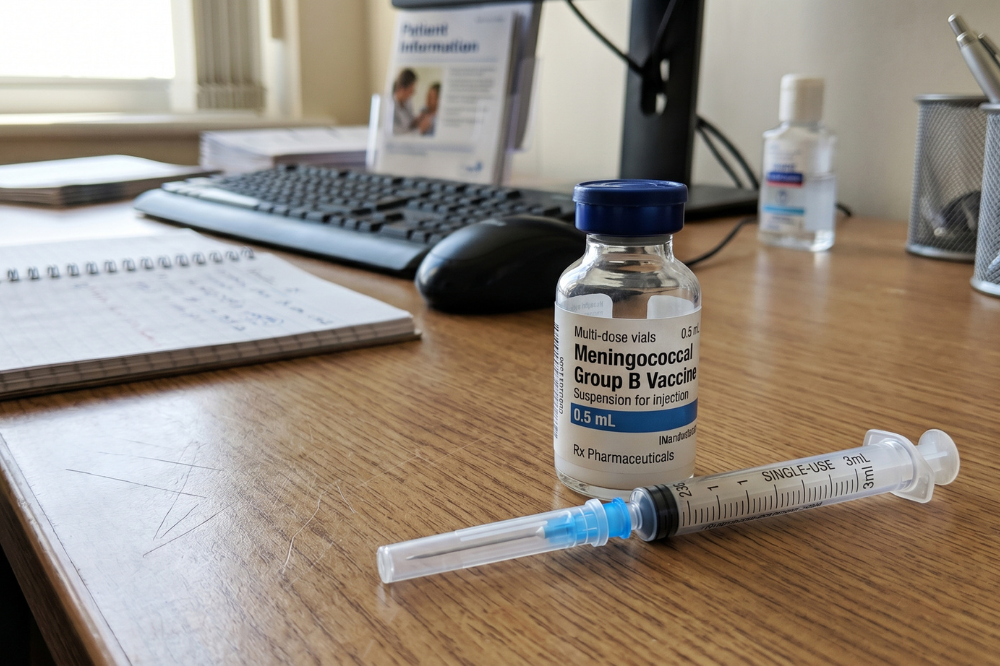
Victorian Year 10 students will receive free meningococcal B vaccinations from January 1 next year under a state government program that health experts say addresses a critical gap in adolescent immunisation — and carries direct implications for how schools communicate with families about student health.
The $9 million initiative adds the B strain of meningococcal disease to the existing meningococcal A, C, W and Y vaccines already funded under the National Immunisation Program (NIP). Until now, the B strain vaccine — one of the most dangerous forms of the disease — has only been available privately through GPs, at a cost of hundreds of dollars across multiple doses, placing it out of reach for many families.
RACGP Victoria chair Dr Anita Muñoz welcomed the announcement, framing it as both a health and an equity issue.
“I think in a country such as ours, a first world country, it’s not acceptable for any adolescent to die of meningococcal B,” she said.
“I don’t feel comfortable with the notion that something as fundamental to our health system as vaccination should be determined by the disposable income of a child’s parent.”
A disease that moves with brutal speed
Meningococcal B is a contagious bacterial infection that can cause life-altering injury and death, sometimes within 24 to 36 hours of the first symptoms. According to the Australian Centre for Disease Control, up to one in ten patients with meningococcal disease will die, and around one in three people who survive will develop long-term complications including limb amputation, hearing loss and permanent brain damage. The Australian Immunisation Handbook puts the long-term consequences figure at 30–40 per cent of survivors.
Adolescents and young adults are among the highest-risk groups, partly because of the social environments of school life — shared spaces, close contact, and the proximity that defines secondary school communities. It is precisely this vulnerability that makes secondary schools a critical setting for vaccination programs.
Four cases of meningococcal disease have been reported in Victoria this year, with 18 cases in the past 12 months.
What this means for schools
For principals and teachers, the program creates both an opportunity and a responsibility.
Secondary schools have consistently been the delivery mechanism for state-funded vaccination programs in Australia, and the meningococcal B rollout is expected to follow the same model — school-based immunisation teams visiting campuses to administer doses, with parental consent required.
This means school leaders will need to plan for communication with families well in advance of January, ensure consent processes are in place, and be prepared to answer questions from parents about the vaccine’s safety, schedule and purpose. The program requires multiple doses, so coordination across visits will be important.
The announcement also arrives at a time when school leaders are already managing complex student wellbeing demands. As The Educator has reported extensively on principal health and wellbeing, administrative burden is a persistent concern — and vaccine programs, while vital, add coordination work to already stretched school teams. Proactive planning now will reduce the pressure when the rollout begins.
For health and PE staff and school nurses, the program is a chance to have conversations with students and families about meningococcal disease more broadly. In a school community, where adolescents share classrooms, canteens, sport facilities and social spaces, awareness of symptoms — sudden fever, headache, neck stiffness, a characteristic rash — can be genuinely lifesaving. The disease progresses so rapidly that early recognition matters.
Questions that remain
While the program has been broadly welcomed, several important questions remain open for school communities.
Health Minister Harriet Shing confirmed the program was funded for Year 10 students and said the government was “continuing to advocate to the Commonwealth to consider adding this important vaccine to the NIP.” However, she would not confirm whether funding would continue beyond next year, leaving the program’s longevity uncertain.
Dr Muñoz pressed for expansion of the program to cover more cohorts, particularly infants who are also at risk. “I think that we are halfway there. I would like the conversation to continue,” she said.
Other states, including South Australia and Queensland, already fund free meningococcal B vaccines for eligible infants as well as teenagers. Victoria’s program, as announced, covers only the Year 10 cohort.
The private cost barrier that Dr Muñoz identified — “hundreds of dollars” and “multiple doses” — means that families of students in other year groups remain exposed to the same access inequity the program seeks to address for Year 10s. Schools with families across the socioeconomic spectrum may find that conversations about the vaccine surface the very gap it has not yet filled: parents of Year 9 or Year 11 students who cannot afford the private alternative.
What principals can do now
The rollout is months away but preparation should begin now. Schools can expect communications from the Victorian Department of Education with specific operational guidance as the program’s delivery logistics are confirmed.
In the meantime, principals and deputy principals may wish to:
— Familiarise themselves with the program and be ready to brief staff, particularly year-level coordinators and school nurses, on what it covers, what it does not, and what the administration process will look like.
— Plan family communications carefully. The story of Norliah Syer-Peterson and her son Levi is powerful, and the ABC’s reporting on this announcement has already reached a large audience. Families will have questions. Schools that get ahead of those questions with clear, factual, compassionate communication will be better placed than those that wait.
— Use the program as a teachable moment. Meningococcal disease sits within the senior health curriculum and within the broader conversation about adolescent wellbeing that The Educator has highlighted as central to school community building. A vaccination program is also a health literacy opportunity.
— Advocate, if appropriate. Dr Muñoz’s call for the program to be expanded is a call the school community is well-placed to amplify. Principals’ voices carry weight in these conversations.
For more on student wellbeing in Australian schools, see The Educator’s coverage of building a wellbeing-focused school community and principal health and wellbeing in 2025. For context on vaccination programs in schools, see The Educator’s earlier reporting on COVID-19 vaccination and the education workforce.